How to Visit Meteora
Meteora is a UNESCO World Heritage Site with six cliff-top monasteries. Learn when to visit, where to stay, monastery entry fees, and how to plan the perfect trip.
Once your dates and base are set, compare whether transport, local context, trail access or an additional evening and morning would add the most value to your Meteora visit. Choose A Tour For This Itinerary
Last updated: June 28, 2026
Quick Facts: Visiting Meteora
| Location | Kalambaka, Thessaly, central Greece |
| UNESCO Status | World Heritage Site (inscribed 1988) |
| Active Monasteries | 6 (of 24 originally built) |
| Entry Fee | €5 per adult per monastery, cash only (Prices verified June 2026) |
| Children Under 12 | Free entry at all monasteries |
| Opening Hours (Summer) | Generally 09:00-17:00, April 1 to October 31 |
| Opening Hours (Winter) | Generally 09:00-15:00, November 1 to March 31 |
| Closures | Each monastery closes one different day per week. All six open on Saturdays and Sundays. |
| Distance from Athens | ~350 km, 4 hours by car or bus |
| Distance from Thessaloniki | ~220 km, 2.5 hours by car |
| Best Time to Visit | April-May and September-October |
| Recommended Stay | 2 nights minimum |
| Nearest Town | Kalambaka (train/bus hub); Kastraki (village, closer to rocks) |
Enter your party size and expected transport, admission, accommodation and activity totals to compare the complete visit options on the same basis.
What Is Meteora and Why Do People Come Here?
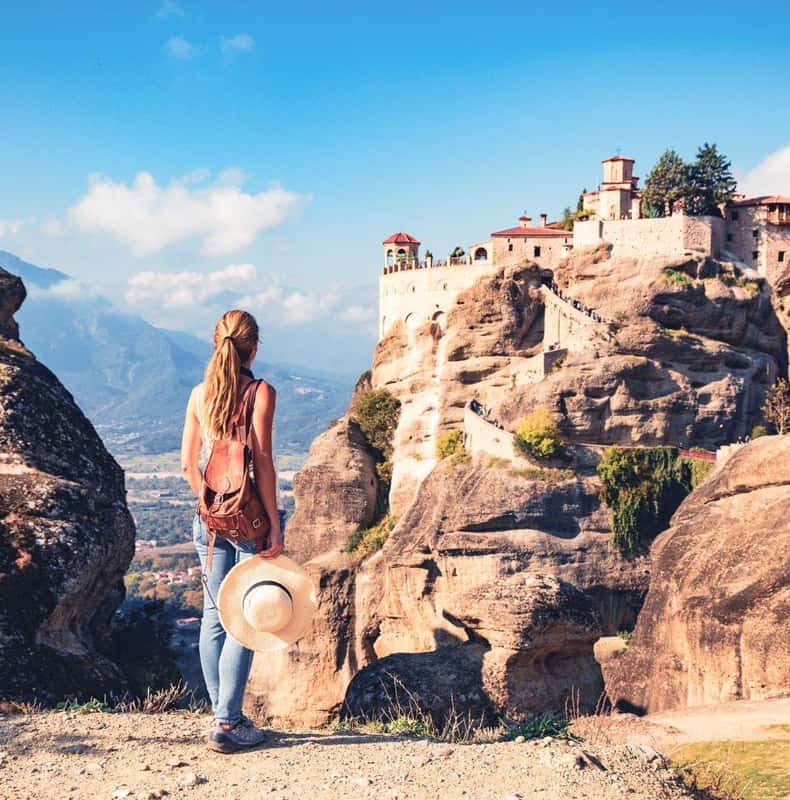
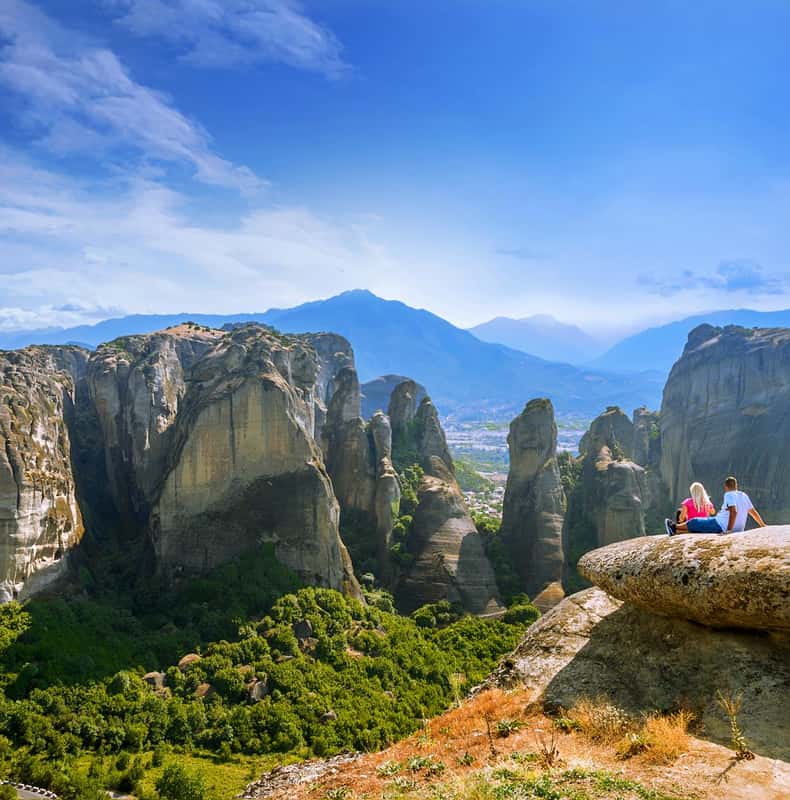
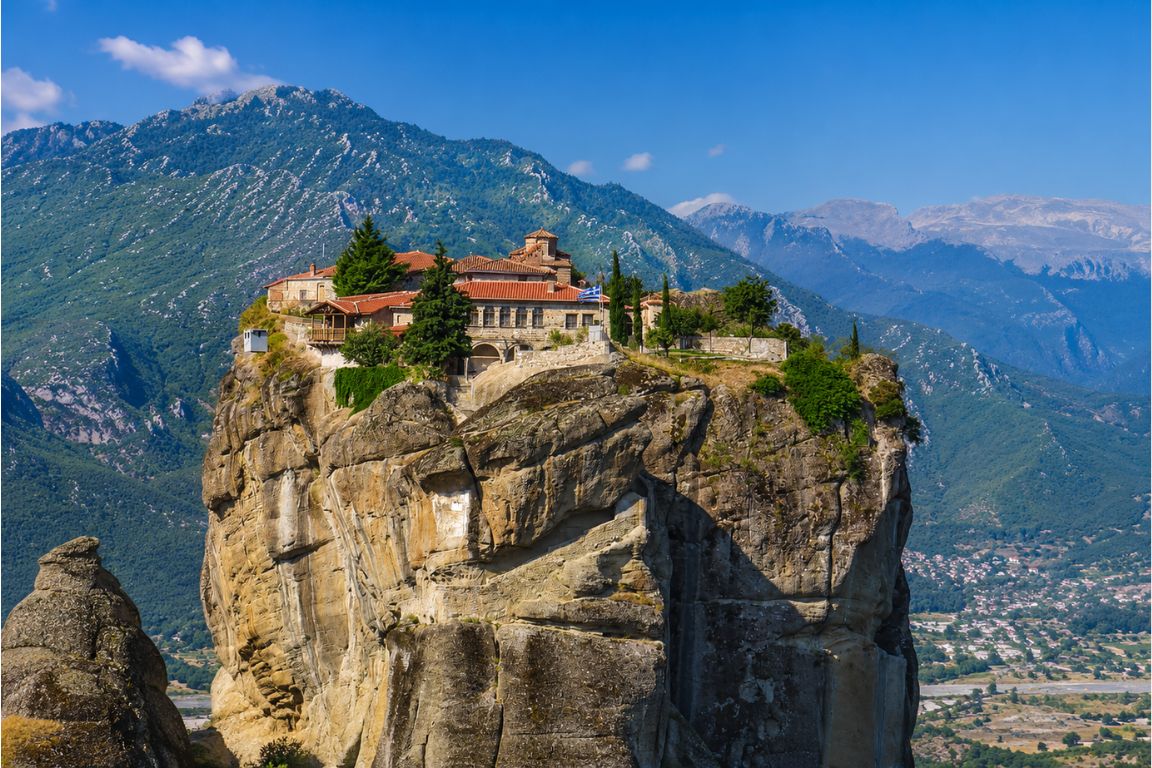 Meteora is a complex of six active Eastern Orthodox monasteries built atop massive sandstone rock pillars in central Greece, near the town of Kalambaka. The name translates to “suspended in the air.” Together with the geological formations beneath them, the monasteries form a UNESCO World Heritage Site that draws travelers for reasons that are hard to put into words until you actually stand there and look up.
The rocks came first. Over 60 million years, extreme weathering and prehistoric seas carved these pillars out of the Thessalian plain. They stand between 300 and 400 meters high. For centuries, hermit monks lived in the caves along their faces, seeking altitude as a form of solitude. Then, starting in the 14th century, those monks did something almost incomprehensible: they started building monasteries on the summits. No stairs. No roads. Building materials hauled up by rope and basket, one piece at a time. At the peak, more than 24 monasteries stood here. Six survive today.
People come for the monasteries. They stay because of the rocks. There’s a specific feeling this place produces, something between awe and quiet, that visitors consistently describe long after the photos are deleted. It is not like the Acropolis, which you walk around and photograph. Meteora is a place you have to be inside of. The scale doesn’t register from a distance. You need to stand at the base of a pillar and look up, then climb the steps, then look down. Both directions matter.
The James Bond film For Your Eyes Only used the Holy Trinity Monastery in 1981. Game of Thrones borrowed its visual language for the Eyrie. Linkin Park named an album after this place. None of that explains why it matters. The rocks were here before any of that, and they’ll outlast all of it.
Still on the fence? Here’s an honest look at whether Meteora is worth visiting for different types of travelers.
Choose whether you want monastery transport and context, an Athens departure, an overnight stay, sunset viewpoints, hiking or an independent visit.
When Is the Best Time to Visit Meteora?
April through May and September through October are the best months. You get mild temperatures ideal for walking between monasteries, landscapes that are green or golden rather than baked, and significantly fewer tour buses than the July-August peak. Weekends in shoulder season are noticeably busier than weekdays, so if your schedule allows, a Tuesday or Wednesday in October will give you the closest thing to a quiet Meteora experience.
Summer deserves a specific note. The heat at Meteora is real. The monasteries sit at altitude but the steps and paths are exposed stone with zero shade in places, and by midday the rocks radiate heat back at you. Coach groups from Athens arrive by 9:30am and fill the two big monasteries, Great Meteoron and Varlaam, until early afternoon. If summer is your only option, get to the first monastery before 9am and be done by noon. Then return late afternoon, when most groups have left and the light is better anyway.
Winter is genuinely beautiful and almost nobody talks about it. Snow on the pillars is a different place entirely. The monasteries run shorter hours November through March, roughly 09:00 to 15:00, but the reduced visitor numbers and the mist that sits between the rocks on cold mornings make it worth considering. Just check that the specific monasteries you want to see haven’t added extra winter closures before you go.
One date to avoid: Greek Orthodox Easter weekend. Most monasteries restrict tourist entry during the Easter liturgies, and the roads around Kalambaka fill fast. The Tuesday or Wednesday after Easter, on the other hand, is historically quiet.
The season you choose changes everything from prices to photo opportunities. Here’s the best time to visit Meteora tours so you show up when it counts.
| April-May | Mild, green, occasional rain | Moderate, building | Best overall |
| June-August | Hot, dry, 30-38°C possible | Peak, very busy | Avoid if possible |
| September-October | Warm days, cool evenings, foliage color | Moderate, dropping | Best overall |
| November-March | Cold, possible snow, shorter hours | Low | Good for photographers, limited access |
Compare seasonal conditions, changing monastery hours and packing considerations before fixing your travel dates.
How Do You Get to Meteora from Athens (and Other Cities)?
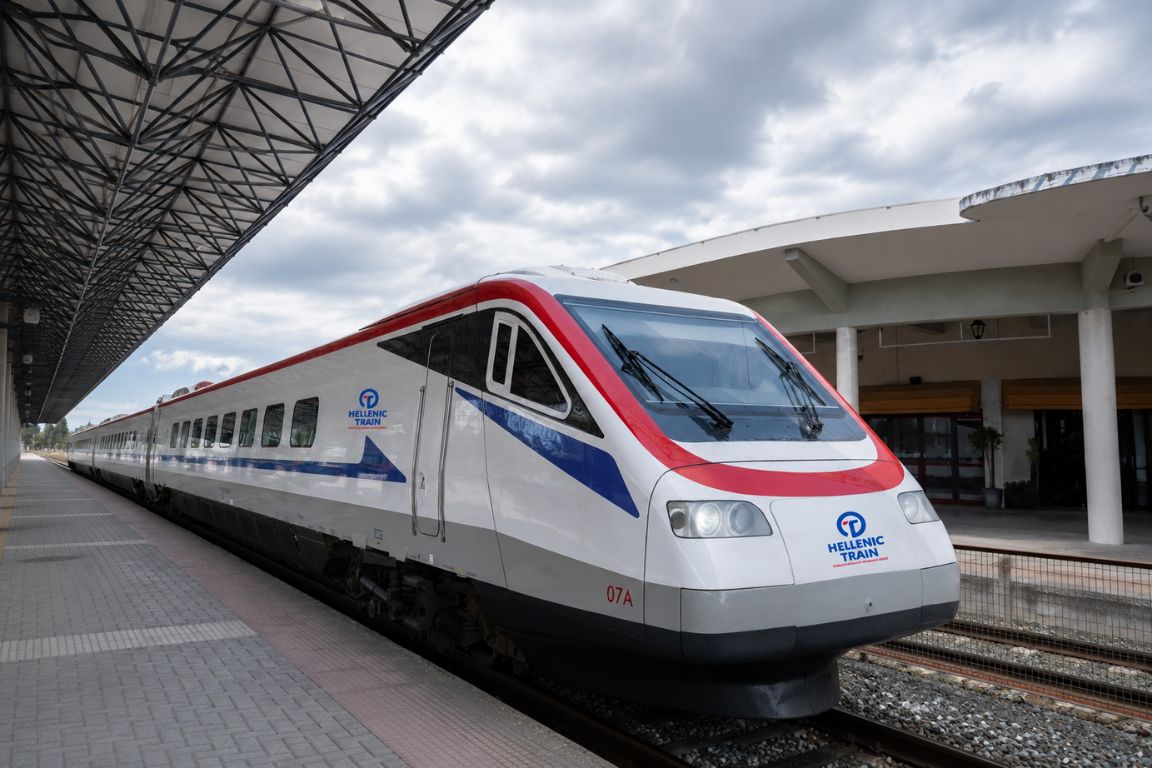 The most practical option from Athens is a direct bus to Kalambaka operated by KTEL Trikala, roughly 4 to 5 hours and around €32.50 one way. Driving takes about 4 hours on the motorway and gives you the most flexibility at the site. Train service from Athens was suspended after 2023 flood damage to the line; check current status before planning around it. From Thessaloniki, the drive is 2.5 to 3 hours and buses are running.
A note on the train: what used to be the most atmospheric way to arrive, rolling into Kalambaka with the rock pillars suddenly filling the window, has been disrupted by flood damage to the line south of Meteora. Some travelers have reported partial service restored by 2025-2026 with a bus transfer mid-route; others have found it added two hours and a confusing connection at Trikala. Verify directly with Hellenic Train before banking your itinerary on it.
If you have a car, the drive is the right call. Not because the bus is bad, but because having a car at Meteora matters. The monasteries connect by a loop road, and the rhythm of self-guided visiting, pulling off at a viewpoint when the light is doing something, doubling back, sitting in the car between sites without waiting for a group, is genuinely different from a guided coach experience. The road is narrow in places and parking fills at the big monasteries between 10am and 2pm in peak season, but outside those hours it’s fine.
Questions about the right approach for your schedule? The full-day tour from Athens includes pickup and a local guide, or take the two-day trip with a hotel stay if you can overnight.
Not sure which transport option makes the most sense from Athens? This guide on how to get to Meteora covers bus vs train vs tour with honest pros and cons for each.
| Athens | KTEL Bus | 4-5 hrs | ~€32.50 one way |
| Athens | Car (tolls ~€2/stop) | ~4 hrs | Fuel + tolls |
| Athens | Train (check status) | 4-5 hrs (when running) | Varies |
| Athens | Guided Day Tour | Full day | €59-€120+ |
| Thessaloniki | Car or Bus via Trikala | ~2.5-3 hrs | ~€20 bus |
Explore a return coach itinerary with local guiding, panoramic stops and time inside three monasteries, all within a full day from Athens.
Which Monasteries Should You Visit and In What Order?
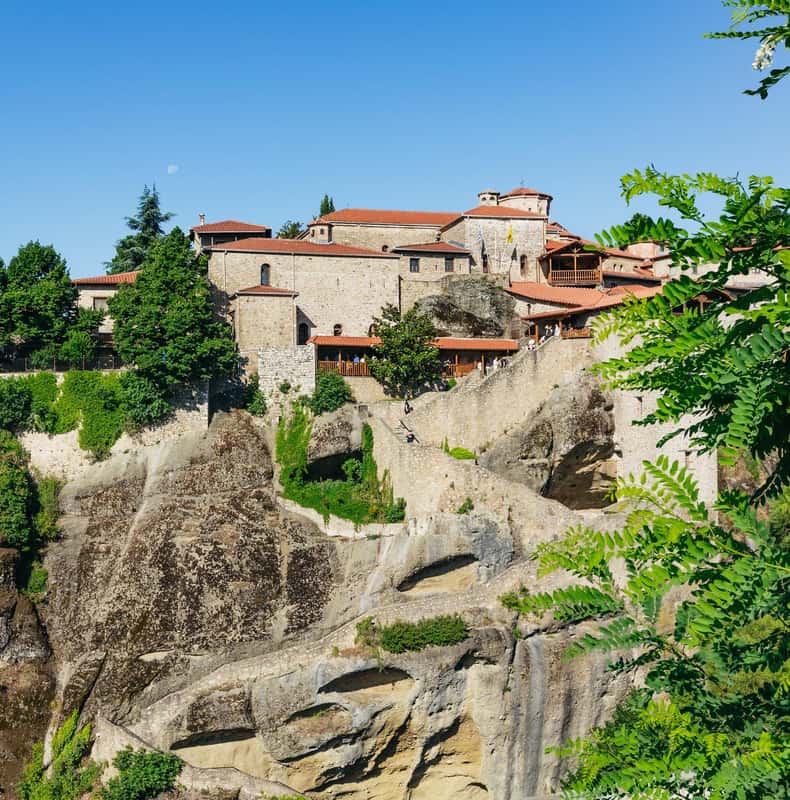
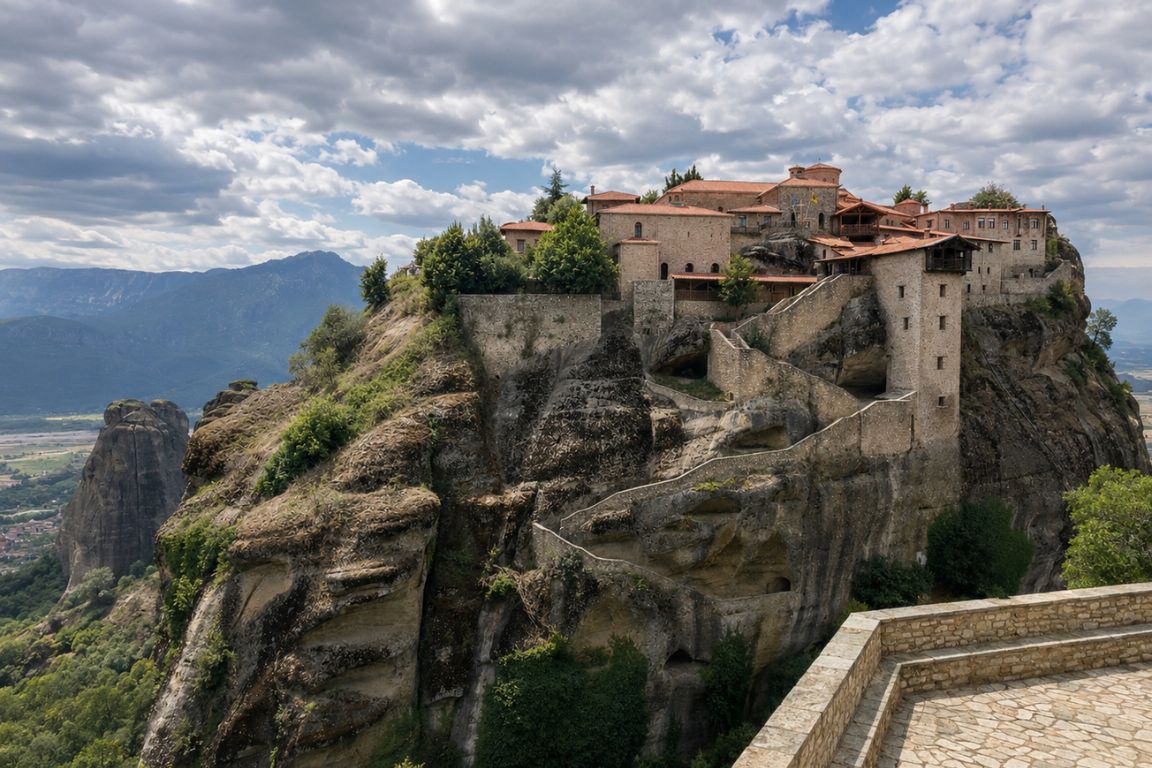 For a first visit, prioritize Grand Meteoron and Varlaam for scale and history, then Roussanou for photography and its dramatic bridge approach. Holy Trinity rewards the climb with the most iconic exterior view. St. Stephen’s is the easiest access, ideal for visitors with limited mobility. St. Nicholas Anapafsas is the quietest and least visited, with exceptional frescoes by the Cretan master Theophanis. Visit in the order that works around that day’s closures, not in any fixed sequence.
Every monastery closes one day per week, and the closure days are staggered deliberately. No single day of the week allows access to all six simultaneously, except Saturdays and Sundays. Before you build your itinerary, check which monastery closes on which day. Grand Meteoron is closed on Tuesdays. Varlaam closes on Fridays. Holy Trinity closes on Thursdays. Plan backwards from those facts.
One thing that takes people by surprise: the coach groups know the pattern. Most commercial tours visit Grand Meteoron and Varlaam first, then usually St. Stephen’s or Roussanou as a third stop. They rarely go to St. Nicholas or Holy Trinity because the stair count is higher and the groups are already tired by that point in the day. That means the two hardest climbs give you the most solitude. If frescoes matter to you, St. Nicholas Anapafsas on a Tuesday morning, when Grand Meteoron is closed and coach groups have fewer stops, can feel like a private viewing.
Visiting all six in a single day is technically possible in summer. It takes around seven hours including drives. In practice, the fourth monastery is where everything starts feeling the same. Better to choose four or five, take your time at each one, and let the place land properly.
We’ve got a full breakdown on which Meteora monasteries are best to visit if you want to know exactly which ones are worth the climb and which you can skip.
| Grand Meteoron | Tuesday | History, scale, museum | High |
| Varlaam | Friday | Frescoes, winch tower, views | High |
| Roussanou | Wednesday | Photography, bridge entrance | Moderate |
| Holy Trinity (Agia Triada) | Thursday | Iconic exterior, Bond film location | Moderate |
| St. Stephen’s (Agios Stefanos) | Monday | Easiest access, nunnery, sweeping plains view | Moderate |
| St. Nicholas Anapafsas | Open daily | Quiet, Theophanis frescoes | Low |
Check the local morning tour for your date before planning separate rides. The four-hour route includes three interior visits and photo stops.
What Are the Entry Rules, Dress Codes, and Ticket Prices?
Review the clothing rules for men and women, what happens at the gate and the wider etiquette expected inside the monasteries.
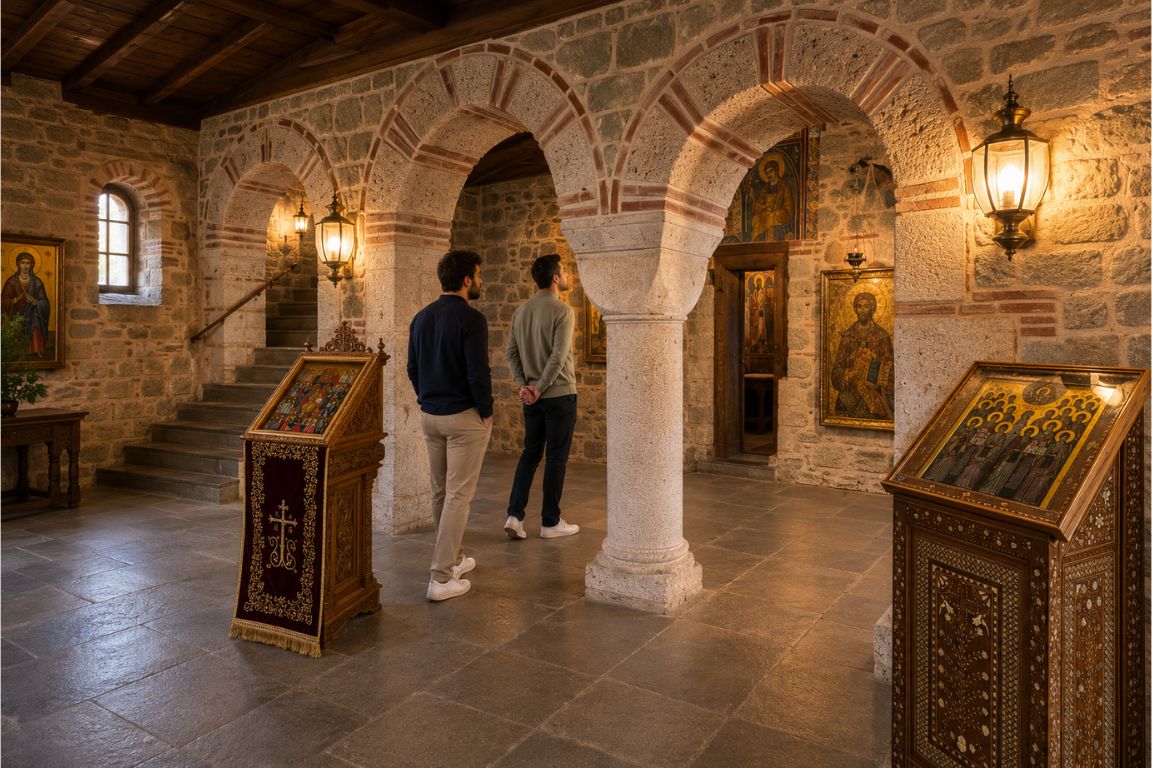 Entry is €5 per adult per monastery, paid separately in cash at each gate. Children under 12 enter free. There is no all-site pass and no online ticketing. The dress code is enforced at the entrance: women must wear skirts below the knee and cover their shoulders; men must wear long trousers with shoulders covered. Wrap skirts are available to borrow at most monastery gates, but no wraps are provided for men in shorts. Men in shorts will be turned away.
The cash requirement is the one that catches the most people off guard. There are no card machines at any monastery entrance. If you plan to visit all six, bring at least €30 per adult in small notes. The ticket sellers do not love breaking €50 bills at 9am, and the nearest ATM is in Kalambaka. Go to the ATM before you drive up.
The dress code is not symbolic. At Grand Meteoron and Varlaam, staff check at the gate and will not let you through in shorts or with uncovered shoulders regardless of temperature. Most monasteries keep a stack of wrap skirts for women who arrive in trousers or shorts. They are essentially long printed fabric pieces tied at the waist. They work fine and cost nothing to borrow. But men in shorts get turned away with no alternative provided. If you’re hiking between monasteries in warm weather, pack long trousers in your bag and change before entering.
One practical note on timing: the monasteries open at 09:00 in summer. Coach buses from Athens are at the gates by 09:30. “Getting there early” does not solve the crowd problem the way many guides imply. What actually works is visiting the less-popular monasteries first, specifically St. Nicholas and Holy Trinity, in the morning while the crowds cluster at Grand Meteoron and Varlaam, then visiting the big two after 13:00 when groups have moved on toward their lunch stop.
The rules are stricter than most people expect. Here’s the Meteora monastery dress code so you show up dressed right and spend your time inside instead of waiting at the entrance.
Should You Hire a Guide or Explore Meteora on Your Own?
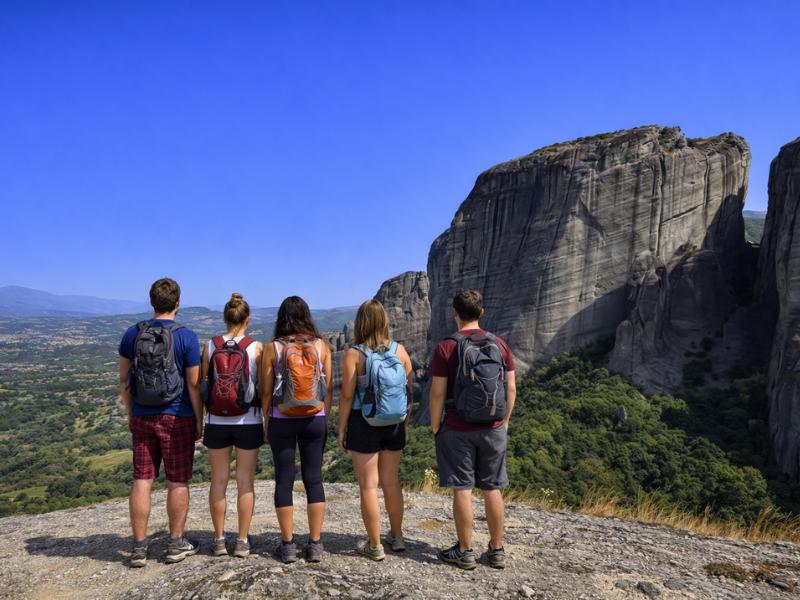
Both approaches work, but they produce different trips. Self-guided with a car gives you full timing control and the ability to linger or move on as you choose. A knowledgeable local guide fills in the history and context that makes the monasteries more than beautiful buildings, and gets you to viewpoints and hermit caves that most independent travelers miss entirely. If this is a once-in-a-decade trip, the guide adds more than it costs.
Here is what a guide actually provides at Meteora that a blog post cannot: they know which specific rock shelf gives you the photograph of Roussanou with the valley behind it. They know that the hermit caves below the monasteries predate the buildings by centuries and that the monks who carved them lived in conditions that put the monastery lifestyle to shame by comparison. They know that Tuesday morning at St. Nicholas is when the light hits the frescoes from the east window and makes Theophanis’s work look the way it was meant to be seen. You could discover all of that yourself on a fourth visit. A guide gives it to you on the first one.
What a guide cannot give you is the experience of sitting alone on a rock shelf above the valley with nobody else nearby. That requires going independently and being willing to walk off-road a bit. The two experiences are genuinely different. For first-time visitors, we lean toward a guide for at least one half-day, such as the early morning small-group tour. For repeat visitors, self-guided with a car is often the right call.
We’ve been running tours here since 2009. A private monastery tour with a local guide is the closest option to a tailored first visit.
Explore a morning with an English local guide, three monastery visits and transport through the rock formations. The route leaves the rest of your local stay to plan independently.
How Long Do You Need in Meteora?
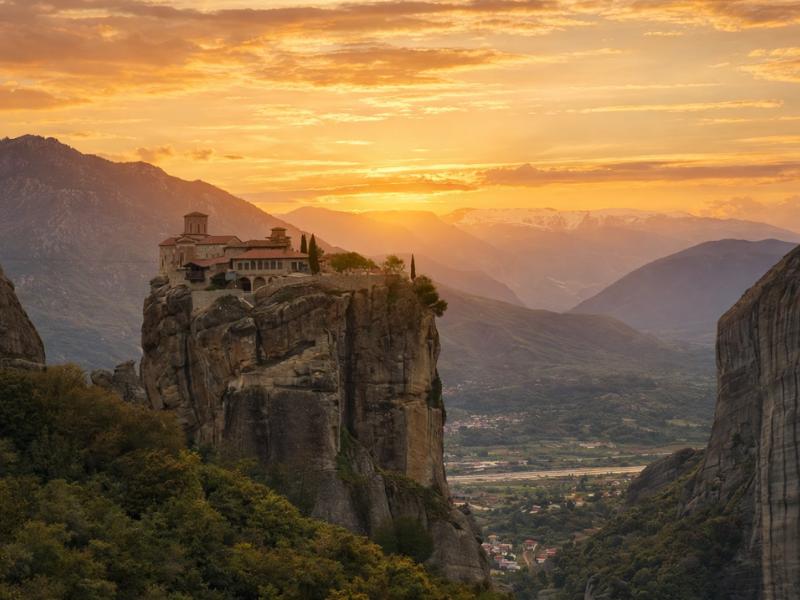
Two nights and two full days is the minimum that allows you to see all six monasteries without rushing, catch at least one sunset from the viewpoints, and still have time to walk one of the trail routes through the rock formations. One night and one day is survivable if you’re well-organized and using a car. A day trip from Athens gets you the monasteries, but not the place.
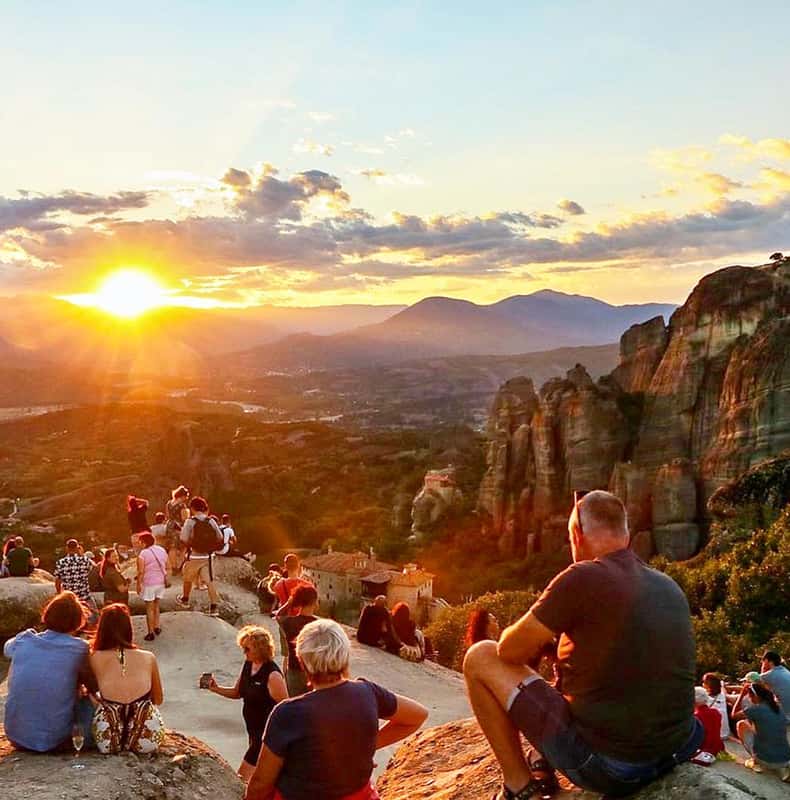
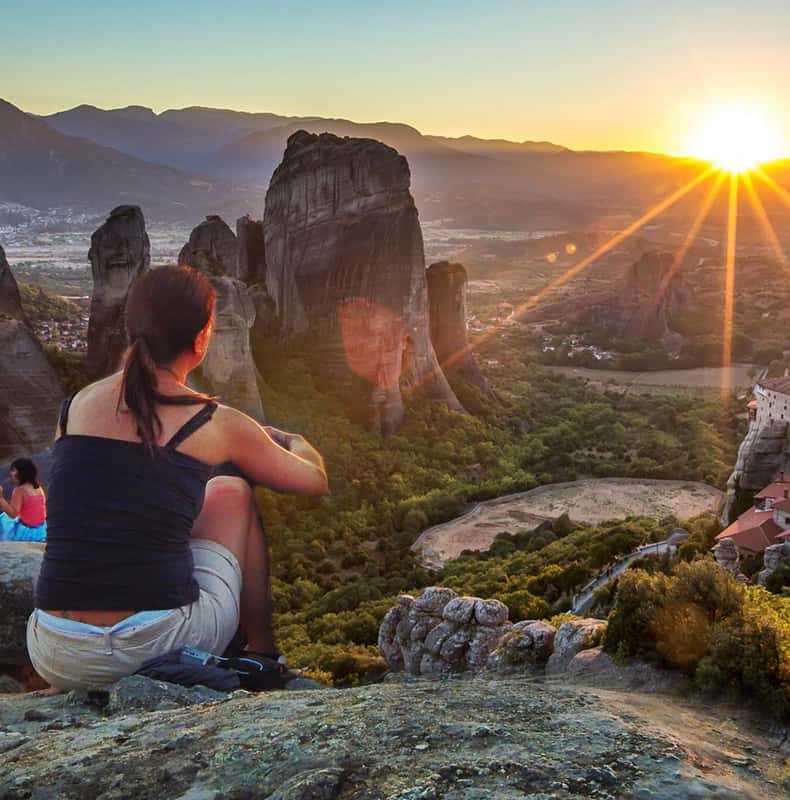
The day trip debate is worth addressing directly. You can cover the highlights in a day trip from Athens. Many people do and leave satisfied. But Meteora is a place that changes with the light, and you only see one version of the light on a day trip. The rock formations at sunset, when they go from ochre to deep copper as the sun drops behind the Pindos range, is a different place from the same rocks at noon. The morning mist that sometimes fills the valley between pillars is something you can only witness by staying.
From our experience guiding 14,400+ travelers through here since 2009: the ones who come back tend to be the ones who only stayed one night the first time. They always say the same thing. They wish they’d stayed longer.
Trying to fit Meteora into a tight Greece itinerary? This guide on how many days you need in Meteora tours helps you decide without cutting the wrong corners.
Recommended tours by season
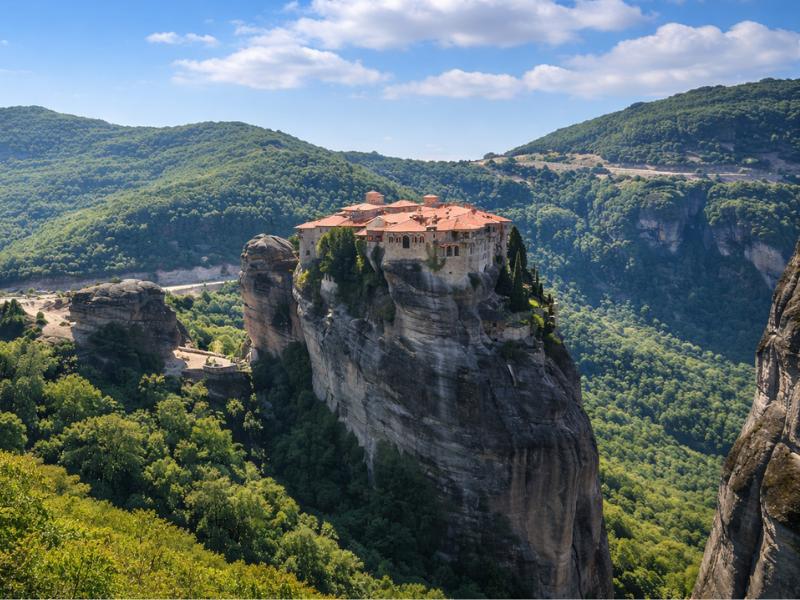
Early Morning Meteora Tour – Small Group with Local Guide
A four-hour small-group tour with a local guide, departing in the morning from the Meteora area.
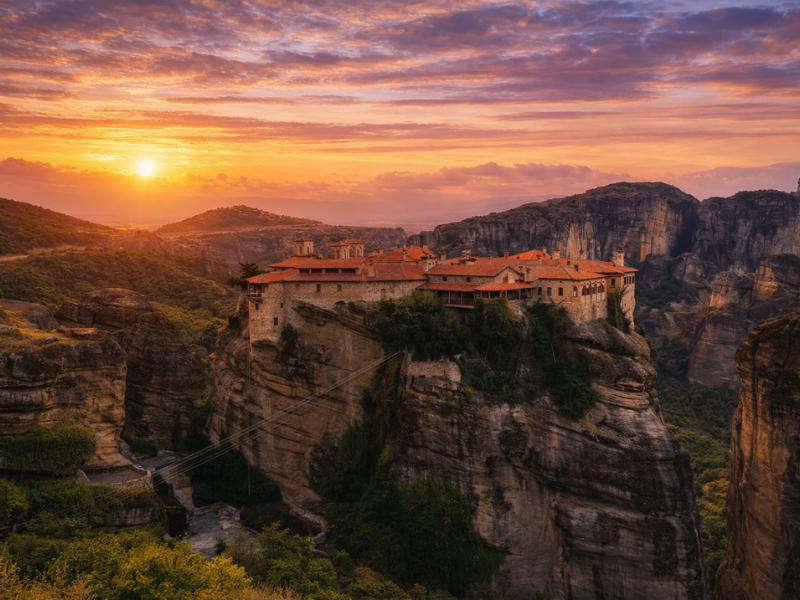
Small-Group Meteora Sunset Tour – Monasteries Glow & Hermit Caves
A four-hour small-group tour in the late afternoon, covering monasteries and hermit caves.
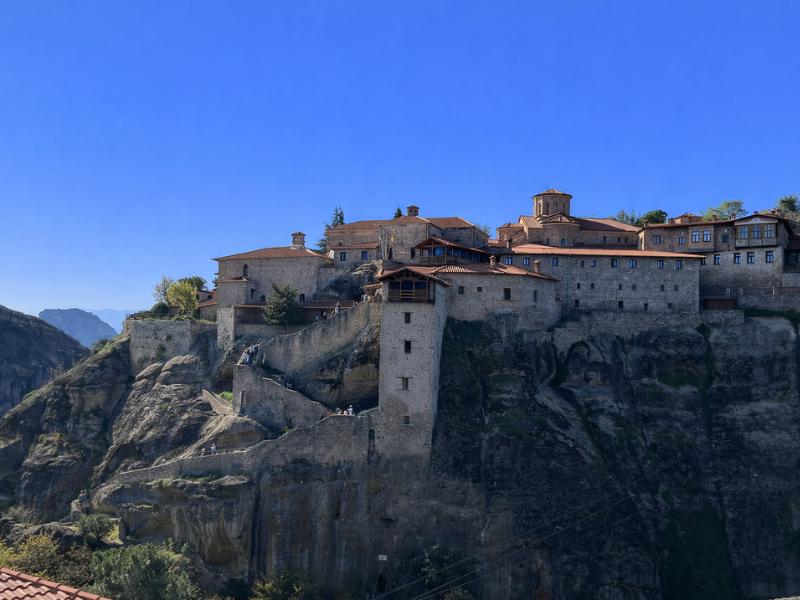
Small-Group Meteora Hiking Tour from Kalambaka – Transfer & Monasteries
A four-hour hike from Kalambaka with a transfer and monastery stops.
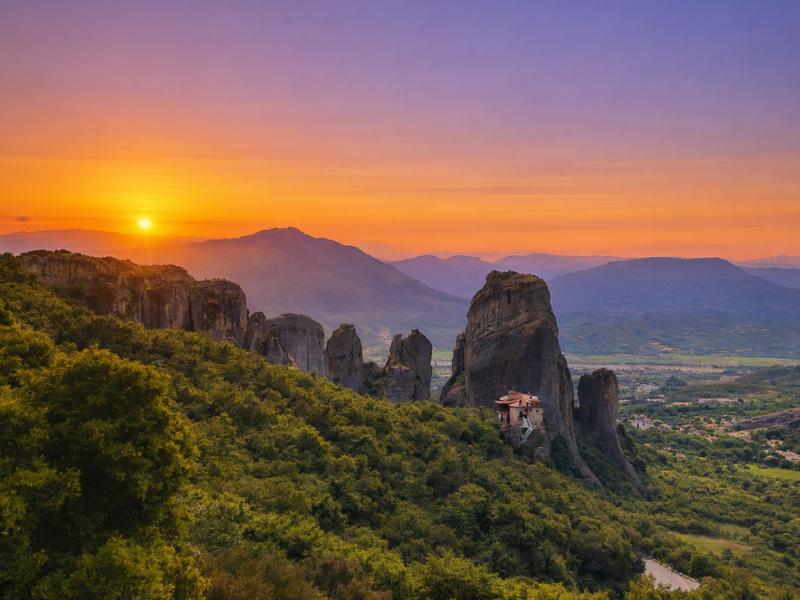
2-Day Meteora Experience from Athens – Sunset, Sunrise & Hotel Stay
A 48-hour trip from Athens that includes a hotel night, plus sunset and sunrise at the rocks.
| Day trip from Athens | 2-3 monasteries, viewpoints | Sunset, trails, caves, the quiet |
| 1 night / 2 days | 4-5 monasteries, sunset | Caves, hiking, early morning atmosphere |
| 2 nights / 2+ days | All 6 monasteries, sunset, trails, caves | Very little |
| 3+ nights | Everything above, rock climbing, e-bike, Theopetra Cave, day trips nearby | Nothing |
Check the overnight Athens itinerary before committing to a same-day return. It combines a sunset tour with a second morning activity and hotel options.
Where Should You Stay: Kalambaka or Kastraki?
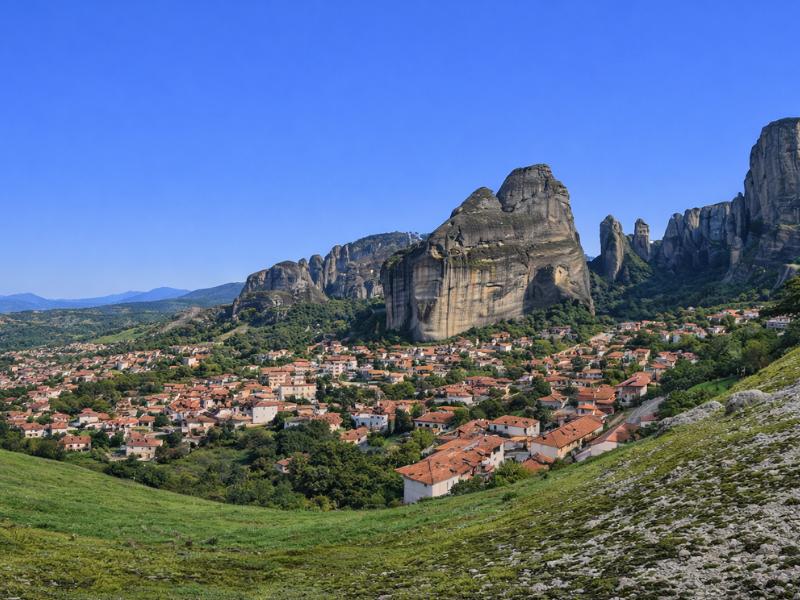
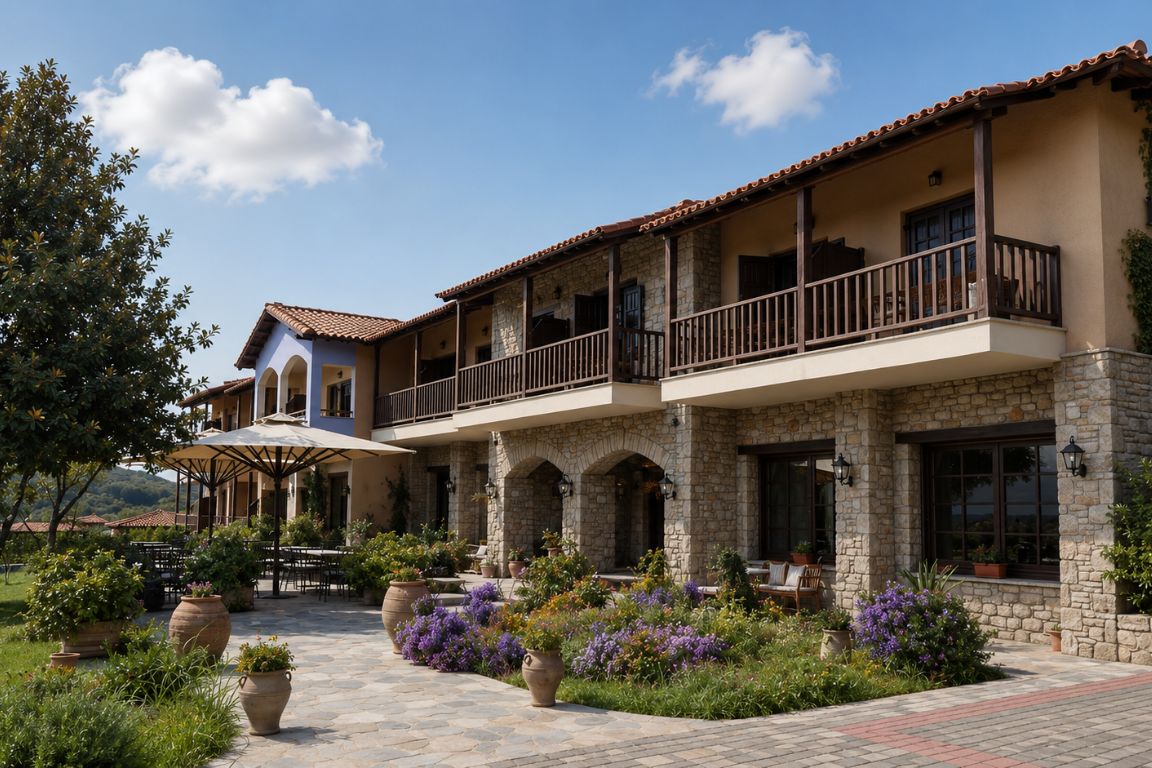 Kastraki is the better base for atmosphere and views. It’s a small village built right against the rocks, with some hotels close enough that the pillars fill your balcony view completely. Kalambaka is the larger town with the train station, more restaurant options, and easier logistics for travelers arriving without a car. Both are under 15 minutes from any of the six monasteries. The two towns are about 2 km apart, connected by a well-lit road.
Kastraki is not a resort village. It’s a real place where people live, with roosters in the morning and older men at a table outside the kafeneion in the evening. The streets are narrow and some are cobbled. The rocks loom directly overhead in a way that doesn’t happen in Kalambaka, which sits slightly further back from the base of the formations. If you want to walk from your hotel to the first monastery trailhead rather than drive, Kastraki puts you at the start of several routes.
Kalambaka makes sense if you’re arriving by train or bus and don’t have a car, because the transport infrastructure is there. It has a wider range of hotels, more dinner options in the evening, and faster access to ATMs and supermarkets. The rock views from Kalambaka are good but not as immediate as Kastraki. Some travelers split the difference by staying in Kalambaka for the convenience of the first night, then seeing whether they’d move on a second trip.
| Atmosphere | Village, intimate, rocks overhead | Town, lively, more modern |
| Views | Immediate rock views from many hotels | Good views, slightly more distant |
| Restaurants | Several tavernas, closes earlier | Wide variety, open later |
| Transport | Car or taxi recommended | Train station, buses, easy taxis |
| Walking to Monasteries | Some monasteries walkable from village | Requires drive or tour |
| Best For | Couples, photographers, hikers | Families, train travelers, first-time visitors |
One practical tip: if you’re in Kastraki and want dinner, the evenings close earlier than in Kalambaka. It is not a party town, which is either a feature or a problem depending on what you’re after. If you want taverna food with a view of the rocks glowing red after sunset, it’s a feature.
Not sure whether to base yourself in Kalambaka or Kastraki? Here’s a full guide on where to stay in Meteora tours for every budget and travel style.
Compare Kalambaka and Kastraki by atmosphere, transport convenience, views and walkability before choosing accommodation.
Beyond the Monasteries: What Else Can You Do in Meteora?
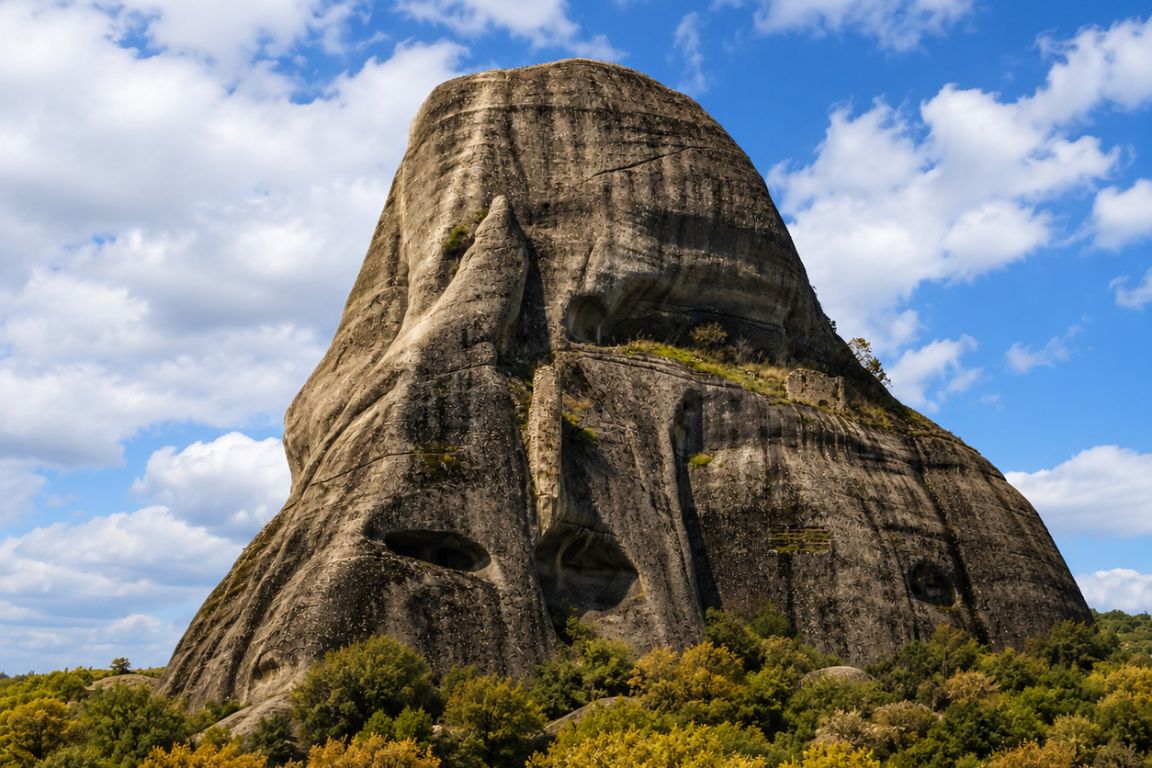 The monasteries are the reason people come. The rock forest, hermit caves, hiking trails, via ferrata routes, and the prehistoric Theopetra Cave are the reasons people stay longer than planned. Meteora’s outdoor activities range from easy forest walks to serious climbing on the Great Saint, the highest peak at 430 meters above Kalambaka. A second full day here pays back immediately once you step off the monastery circuit.
The hermit caves are something most visitors never see because they’re not on the monastery road. Before the monasteries existed, solitary monks lived in hand-carved cave cells along the cliff faces. Guides know where the entrances are and what each cave was used for, including some that served as isolation cells for monks who broke the community’s rules. The stories are specific and strange in a way that contextualizes everything you saw inside the buildings. This is the kind of information that doesn’t exist on a plaque.
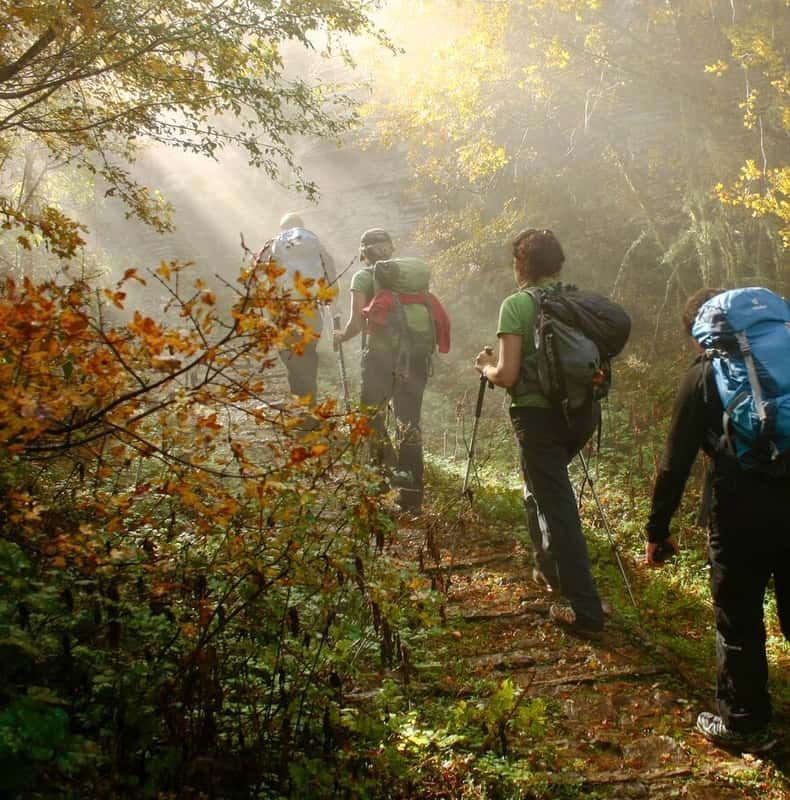
For hikers, there are two main trail systems. The Eastern Trail from Kalambaka climbs to St. Stephen’s through oak forest. The Western Trail is a full-day route through the rock forest, passing Grand Meteoron, Varlaam, Roussanou, and St. Nicholas, with good chances of finding viewpoints that the road never reaches. Guided hiking tours typically cover about 7 kilometers over four to five hours with around 200 meters of elevation gain. Moderate fitness is enough. The terrain is mixed: forest paths, stone staircases, some exposed rocky sections.
Rock climbing in Meteora is serious. These are the same sandstone pillars that the original monks used to scale with ropes and bare hands, and the climbing community here is not tourist-oriented in the way that some destinations are. The Great Saint via ferrata, a rope-assisted scramble route to the highest point in the area, requires a guide and dry weather. Beginner climbing is available on the Doupiani rock near Kastraki, which is where local operators run introduction sessions. If you’ve climbed before and want a full day on the rock, book well in advance.
Theopetra Cave, about 7 kilometers from Kalambaka, contains human markings estimated at over 130,000 years old and has been actively excavated since the 1980s. It’s an easy half-day detour and almost completely off the tourist circuit. The Meteora Natural History Museum in Kalambaka is worth an hour for context on the geology, which explains how the formations were built by the earth before anyone tried to build on top of them.
If you want to go deeper into what this landscape actually offers, beyond the monastery loop, start with the light-trail hiking tour or the via cordata tour to the Great Saint summit.
Meteora is more than just monastery hopping. Here’s a full guide on what to do in Meteora tours covering hiking trails, viewpoints, and experiences most visitors overlook.
Explore roughly eight kilometres of forest and rock formations with a mountain guide, with local accommodation transfers included.
What Are the Biggest Mistakes First-Time Visitors Make?
Check the opening-day pattern before fixing transport, especially when one monastery is central to your plans.
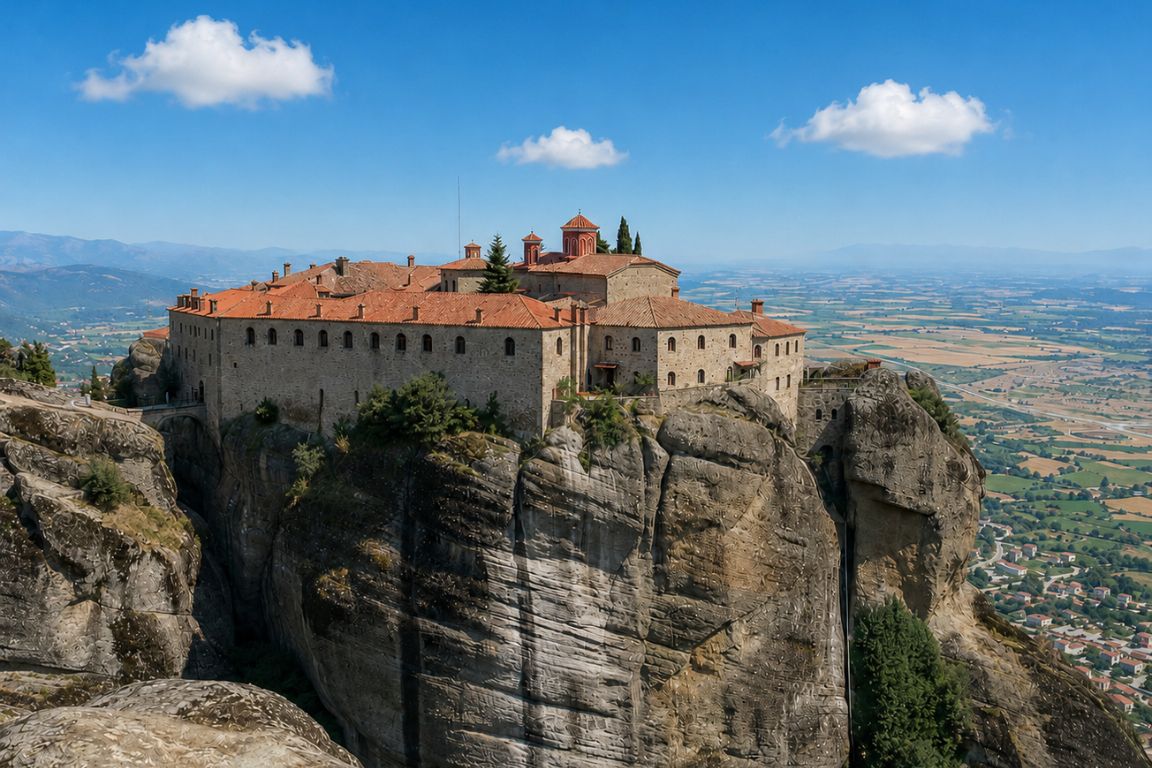 The five most common errors at Meteora: arriving without cash, planning around a day that a key monastery is closed, wearing shorts and getting turned away at the gate, treating it as a day trip from Athens when two nights would have been possible, and visiting only Grand Meteoron and Varlaam because the tour bus stops there, while the less-crowded monasteries with the best frescoes sit mostly empty a few minutes away.
The cash thing deserves emphasis. It is not a minor inconvenience. There are no card machines at any monastery entrance. Arriving at the gate of Grand Meteoron at 9am with only a credit card means driving back down to Kalambaka, finding an ATM, and returning, all while the window before the coach buses narrows. Bring cash from your hotel before you go up.
The weekday closure pattern trips up more itineraries than anything else. Tuesday at Grand Meteoron is closed. If you plan your whole Athens day trip around seeing the largest monastery and you arrive on a Tuesday, you see the exterior from the road and leave. This is not a hypothetical. It happens consistently and it is completely avoidable by checking the timetable before you book the bus.
From seventeen years of watching travelers arrive here, these are the patterns we see from the ones who have the best experiences: they stay at least two nights. They check which monasteries are open on their specific days before leaving the hotel. They visit one of the smaller monasteries, St. Nicholas or Holy Trinity, before the crowds build. They eat lunch somewhere in Kalambaka or Kastraki rather than trying to eat on the monastery road, where options are limited to snack canteens. And they walk at least one section between monasteries rather than driving the full circuit. The road view is fine. The walking view is different.
First time heading up from Athens? Our guide on the Meteora day trip from Athens walks you through departure times, transport options, and how early you need to leave.
What Our Travelers Tell Us: Patterns from 14,400+ Guided Visitors
| Which monastery was most memorable? | Varlaam (for interior); Roussanou (for photography) | ~62% |
| What would you do differently? | Stay an extra night | ~54% |
| What surprised you most? | How physically demanding it was | ~41% |
| Would you recommend Kastraki over Kalambaka? | Yes (those who stayed in Kastraki) | ~78% |
| Was the guide worth it for a first visit? | Yes, added significant context | ~89% |
Choose according to your available time, comfort with walking and stairs, preferred level of context and starting point.
Frequently Asked Questions
After reviewing the practical answers, compare the available Athens, local, overnight, sunset, hiking and independent formats.
Do I need to book monastery tickets in advance?
No. All six monasteries sell tickets at the gate in cash. There is no online booking system and no advance reservation for individual entry. Just bring €5 per monastery per adult in small notes.
Add expected gate payments and the rest of your visitor-entered expenses to compare the total cost of independent and guided plans.
Can I visit Meteora without a car?
Yes. During summer months, a local bus runs from Kalambaka to the monasteries multiple times daily. Taxis and local tour operators also provide transfers. If you’re staying in Kastraki, some monasteries are reachable on foot. Outside summer, the local bus schedule reduces significantly, so check in advance.
Check the morning minibus before arranging separate taxis. Pickup, transport between monastery stops and return to Kalambaka or Kastraki are included.
Is Meteora accessible for visitors with limited mobility?
Partially. St. Stephen’s is the most accessible monastery, reached via a flat bridge with no significant stairway. Grand Meteoron and Holy Trinity involve steep staircases carved into the rock face and are not suitable for visitors who struggle with stairs. Roussanou and Varlaam fall somewhere in between. A guide can advise on the best route for specific mobility needs.
Compare the approach and stair demands at St. Stephen’s with the other monasteries before deciding which stops are appropriate for your visit.
Can I fly a drone in Meteora?
No. Drone use is restricted in the Meteora UNESCO site. This is actively enforced and fines apply.
Keep the camera on the ground and use the sunset photography guide to plan viewpoint choice, timing and composition within site rules.
Are pets allowed in the monasteries?
No. Pets are not permitted inside any of the monasteries, with the exception of certified service dogs.
Review the conduct expected inside the monasteries and plan separately for anything that cannot enter with you.
What is the best viewpoint for photographs?
The main observation deck on the upper road (marked on Google Maps as Observation Deck 1) gives you five monasteries in one frame and is the best general photography point. For Roussanou specifically, there is a viewpoint from the Psaropetra lookout that frames the monastery against the valley. Holy Trinity’s exterior is best photographed from the path below rather than from the road above.
Explore monastery scenery, hermit caves and sunset viewpoints on a four-hour local outing, with the transfers between stops handled for you.
Ready to see Meteora properly?
We’ve been guiding travelers through these monasteries and rock formations since 2009. We know the order that works, the viewpoints most people miss, and the timing that puts you at each monastery before or after the crowds. The full-day tour from Athens handles the drive and guided monastery visits so you can focus on being here.
Written by Michael AngelosGreek tour guide since 2009 · Founder, Meteora Tours
Michael has guided over 14,400 travelers through the monasteries and rock formations of Meteora since founding the agency.