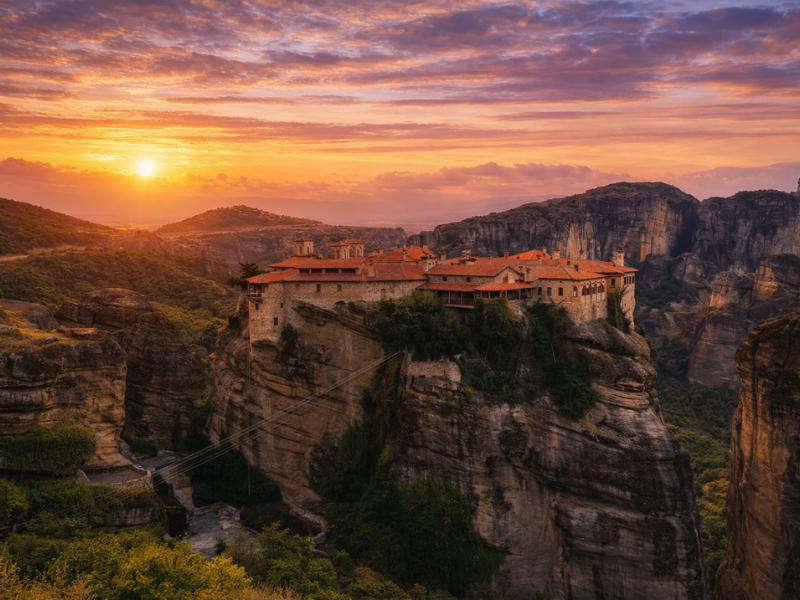
Is Meteora Worth Visiting?
Yes, Meteora is absolutely worth visiting. Discover why it’s one of Greece’s most unforgettable destinations and how to avoid the common mistakes that disappoint visitors.
Yes, Meteora is worth visiting. The key decision is whether your itinerary supports a long Athens day, a locally based visit, or enough time for sunset and a second morning. Choose A Tour For This Itinerary
Last updated: June 28, 2026
Quick Reference: Meteora at a Glance
| UNESCO Status | World Heritage Site since 1988 (natural and cultural) |
| Active monasteries open to visitors | 6, of 24 originally built |
| Entry fee | €5 per adult per monastery, cash only (Prices verified June 2026) |
| Religious requirement | None. Dress code required; faith is not. |
| Best for | History, geology, photography, hiking, cultural curiosity, families with older kids |
| Honestly less suited for | Toddlers, travelers with serious mobility limitations, beach holiday seekers |
| Best time to visit | April-May, September-October |
| Worst time to visit | July-August midday (crowded, hot, parking chaos) |
| Minimum stay recommendation | 2 nights for the full experience; 1 day trip still worthwhile |
| Traveler satisfaction rate | Consistently among the highest-rated UNESCO sites in Europe on TripAdvisor |
Compare what one, two or three days can realistically include before deciding whether Meteora fits your itinerary.
What Makes Meteora Different from Other UNESCO Sites?
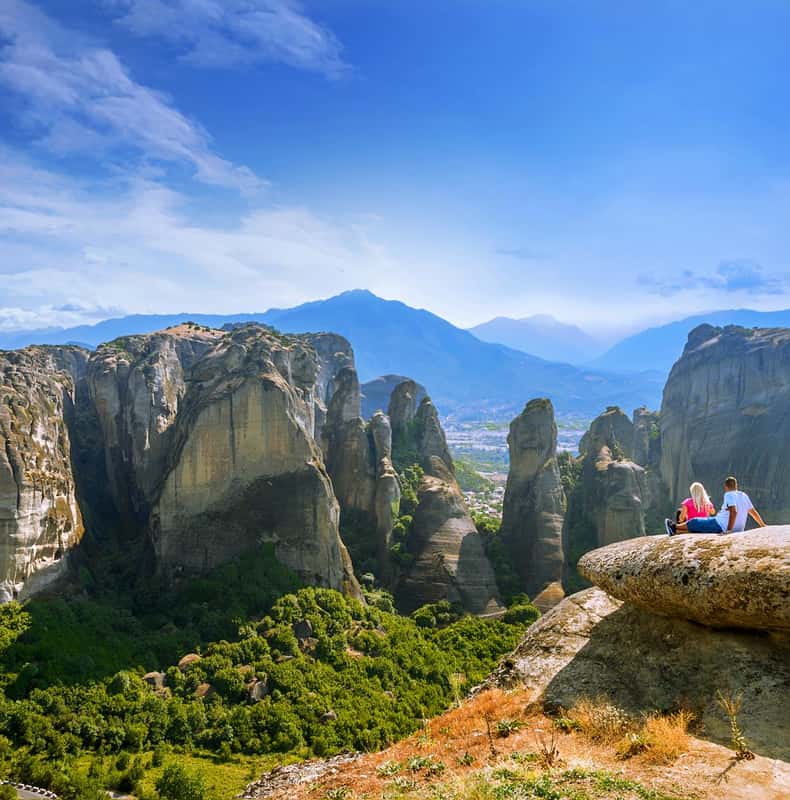
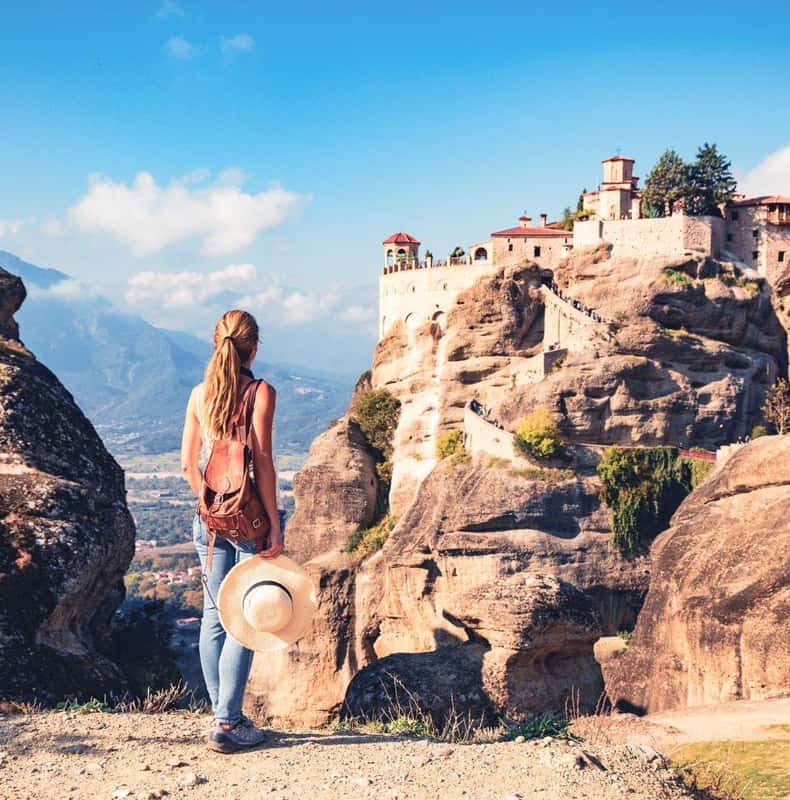
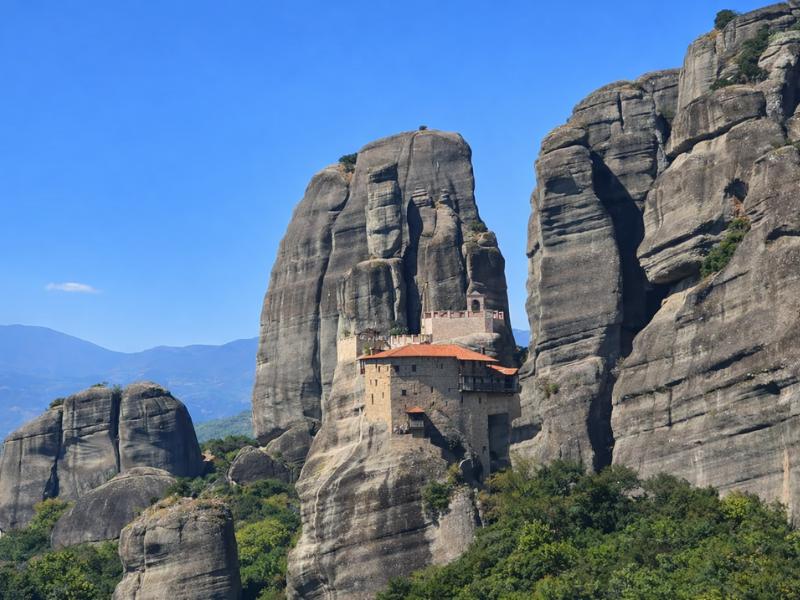
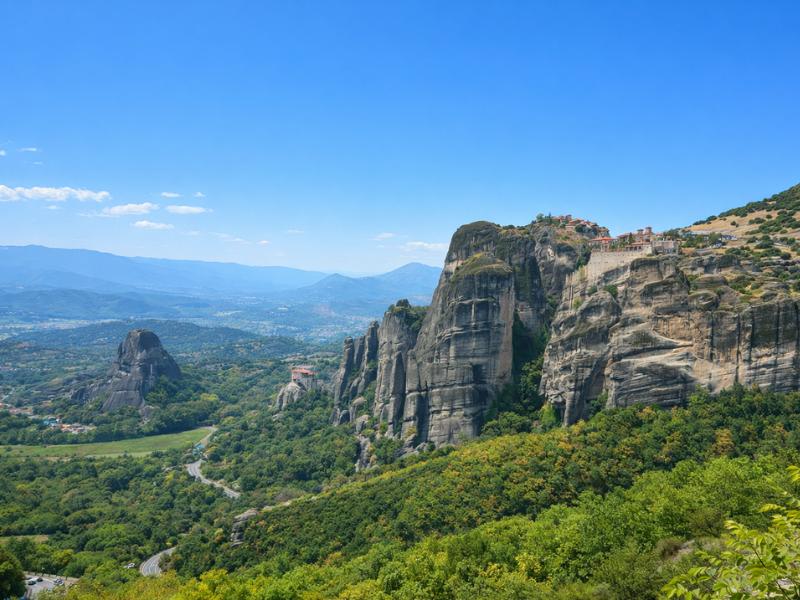
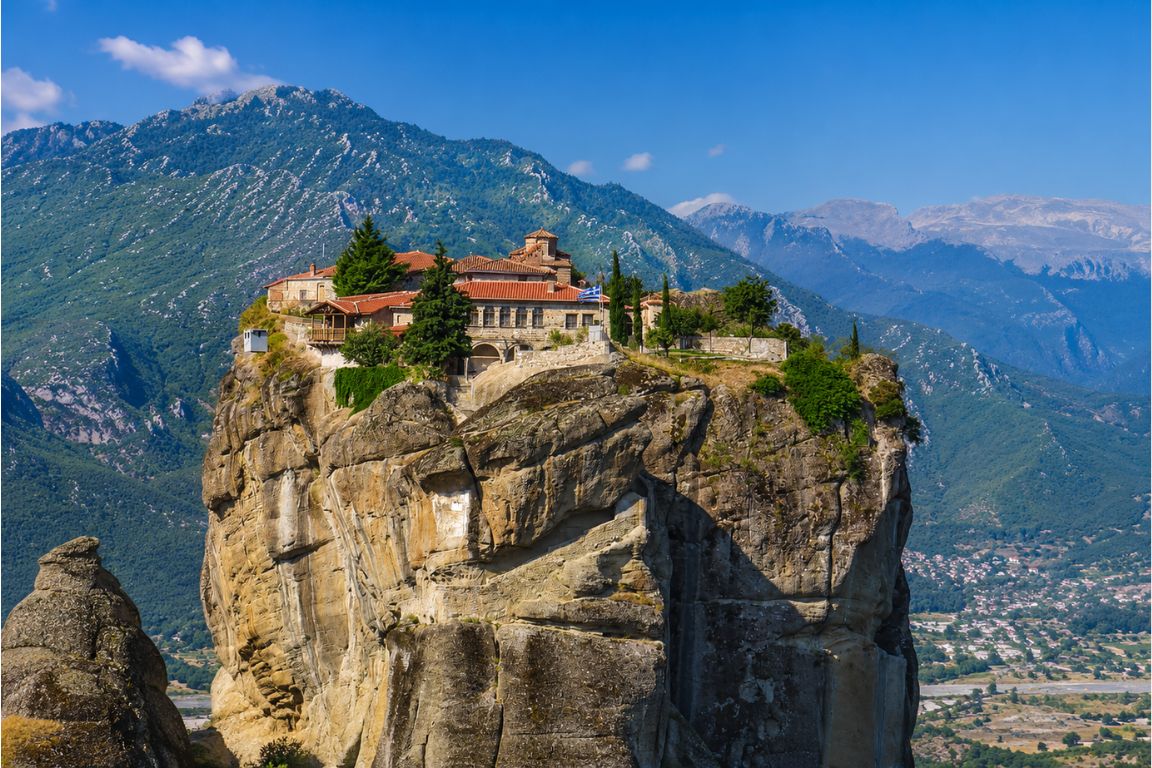 Meteora is the only place in the world where Byzantine monasteries sit on top of free-standing rock pillars 400 meters high. That combination, the geological improbability of the rocks and the human improbability of what people chose to build on them, produces a visual experience that has no real parallel anywhere in Europe. Most UNESCO sites are significant. Meteora is singular.
There’s a useful comparison to make here. The Acropolis in Athens is magnificent, historically irreplaceable, and sits in a city with three million people around it. You understand its importance immediately and you process it through knowledge. Meteora you don’t process through knowledge. The first time you see the rock pillars rising from the Thessalian plain with buildings on top of them, your brain runs through its catalog of things it has seen before and finds nothing to match. The scale doesn’t register from photographs. You have to be standing at the base of a pillar, craning your neck back, to understand what was built here and why that required extraordinary human will.
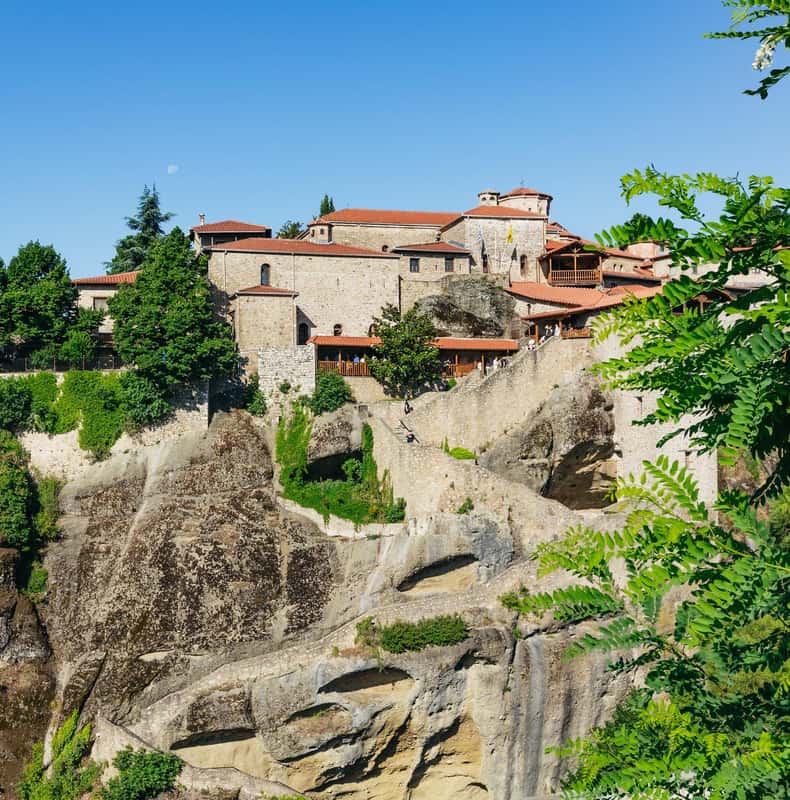
The two things that make Meteora different from other great UNESCO sites are this: the geology preceded the history by sixty million years, and the history is still alive. These are not ruins. Roughly 60 monks and nuns live and worship in the six active monasteries today. The frescoes inside Varlaam are not behind glass in a climate-controlled museum. They are inside a working chapel that monks walk through every morning. That liveness changes the experience in ways that are hard to articulate but easy to feel when you’re there.
Linkin Park named an album here. Game of Thrones borrowed the visual language for the Eyrie. A James Bond film used Holy Trinity Monastery. None of those references are why Meteora matters. They are symptoms of a place so visually arresting that storytellers keep reaching for it. The rocks were here sixty million years before any of those stories. They will be here long after.
Explore three monastery interiors and hear local stories between visits on a morning minibus route through Meteora’s formations.
What Do First-Time Visitors Actually Feel When They Arrive?
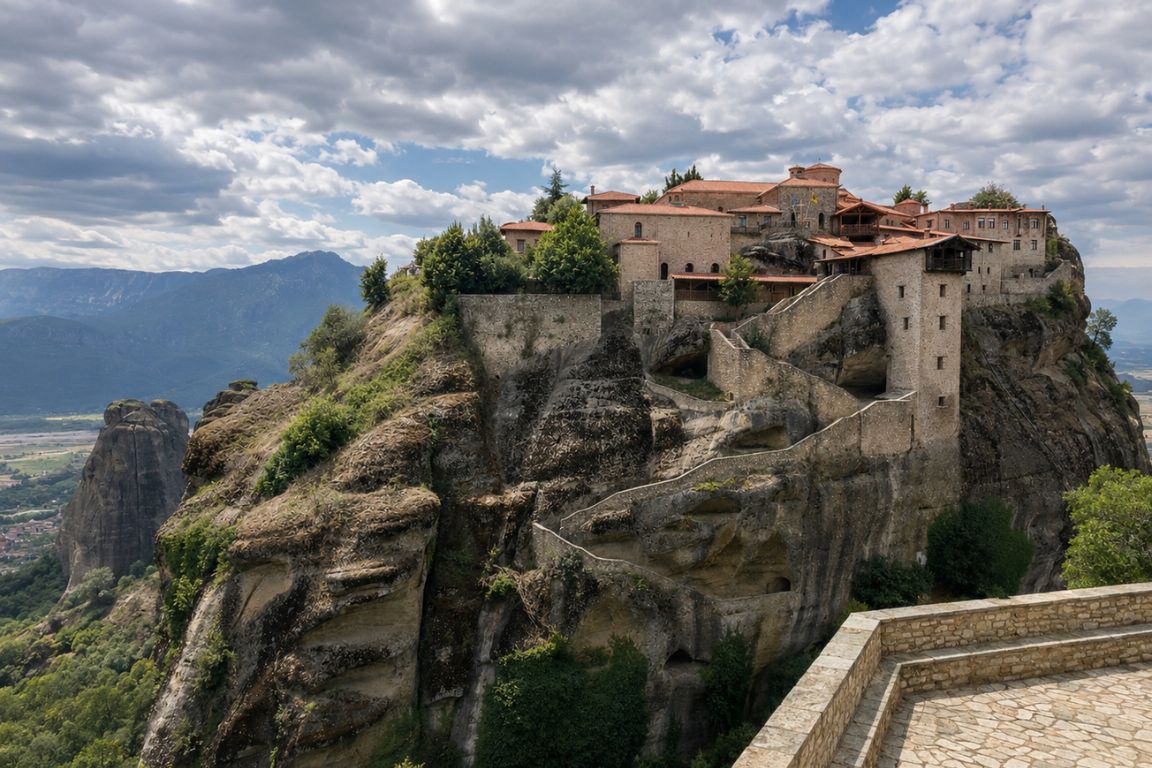 The most consistent first reaction to Meteora, across thousands of travelers and from cultures all over the world, is a version of disbelief. Not wonder, not awe, not beauty: disbelief. The rocks do not look like they belong in Greece, or on Earth, and the monasteries on top of them compound the impossibility. That feeling usually arrives within the first thirty seconds of seeing the formations and it doesn’t fully leave.
What people tend to describe afterward: they expected something beautiful and got something disorienting. The photos don’t scale it. You can look at a hundred images of Meteora and still pull over on the road from Kalambaka, look up, and have a moment of recalibration. That’s the pillar at around 400 meters. That’s a building on top of it. Built by people pulling materials up by rope.
The second reaction, the one that takes longer, is the one that comes from being inside. Inside Varlaam when the morning light comes through the small window onto the frescoes. Inside Grand Meteoron when the tour groups haven’t arrived yet and the only sound is the wind across the rock face below the courtyard wall. Travelers who’ve been to Angkor Wat, Machu Picchu, the Colosseum, consistently describe Meteora in a different category. Not better, but different. Less ruined. More present.
The travelers who feel underwhelmed are almost always the ones who visited between 10am and 2pm in summer. The combination of crowds, heat, parking chaos, and tour group commentary in five languages simultaneously is genuinely a worse version of Meteora. The place itself hasn’t changed. But the atmosphere has been traded for logistics. That is fixable with timing. It is not a flaw in the destination.
First time in the region? Our guide on how to visit Meteora tours walks you through getting there from Athens, what to wear, and how long you actually need.
Season and time of day can shape a first visit significantly. Review how crowds and monastery hours change before choosing your arrival window.
Is Meteora Worth It If You Only Have One Day?
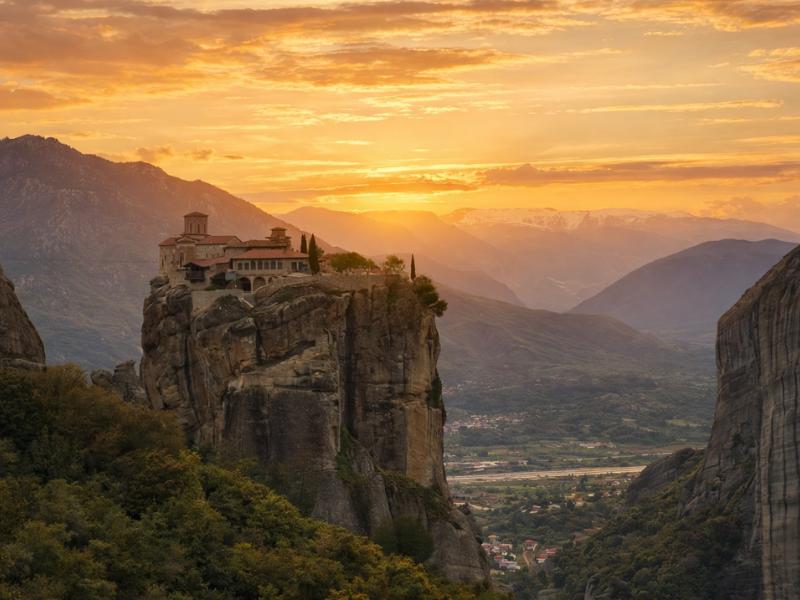 Yes, with honest expectations. One day, whether as a day trip from Athens or based in Kalambaka, gives you enough time to see all six monasteries from the outside, enter two to three, understand the scale of the rock formations, and register what makes this place unlike anything else in Greece. You won’t see the sunset. You won’t see the mist between the pillars at dawn. But you will see enough to know why people come back.
The one-day case for Meteora is strong precisely because the core visual impact is immediate. Unlike some UNESCO sites that reward deep historical knowledge to fully appreciate, Meteora announces itself the moment you arrive. You don’t need three days to understand why the rocks are extraordinary. You do need more than one day to absorb the place in the way that separates a travel memory from a travel photograph.
Trying to plan your last afternoon around the light? Here’s a look at the best Meteora sunset spots so you don’t end up at a mediocre viewpoint while the good ones empty out.
| Day trip from Athens | 4-5 hrs at site, 2-3 monasteries entered | Worth it. Not the full experience. |
| 1 night / 2 days | Sunset, 4-5 monasteries, basic hiking | Much better. The minimum for depth. |
| 2 nights / 3 days | All 6 monasteries, sunset, sunrise, trails, caves | The sweet spot. Nothing left to miss. |
| 3+ nights | Everything above plus rock climbing, day trips, real village time | For the place to really settle in. |
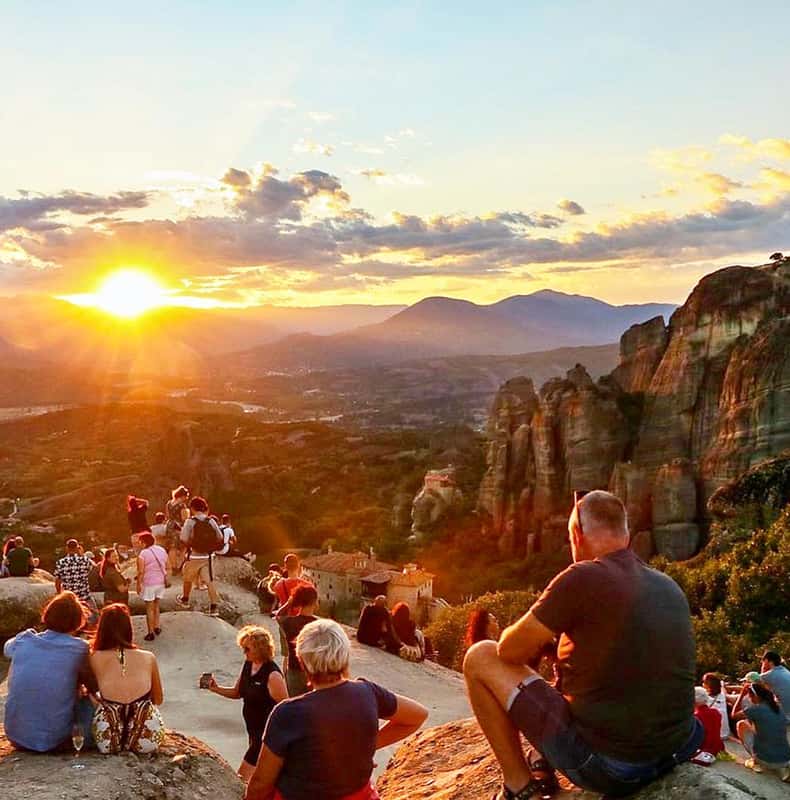
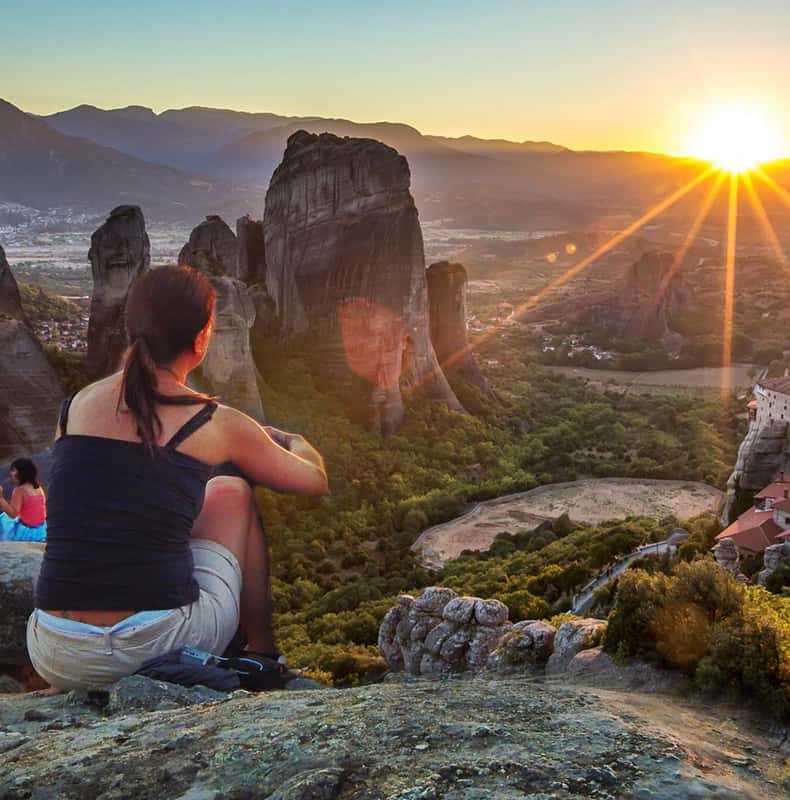
The sunset is not a bonus feature. It is a separate experience. When the light drops toward the Pindus Mountains and the conglomerate rock shifts from ochre to amber to something closer to burnt copper, the formations look different than they do at noon. Different shape, different weight, different relationship to the sky above them. A traveler who only saw Meteora in midday light has seen one version of the place. The person watching from the observation deck at 19:30 in October is seeing another.
If you only have one day and the choice is between Meteora and not going: go.
Not sure whether one day is enough or if you’re better off staying longer? Here’s how many days you need in Meteora tours depending on your travel pace.
Check your date before committing a day of your Athens stay. This return coach itinerary includes local guiding, viewpoints and three monastery visits.
Is Meteora Worth It for Families with Kids?
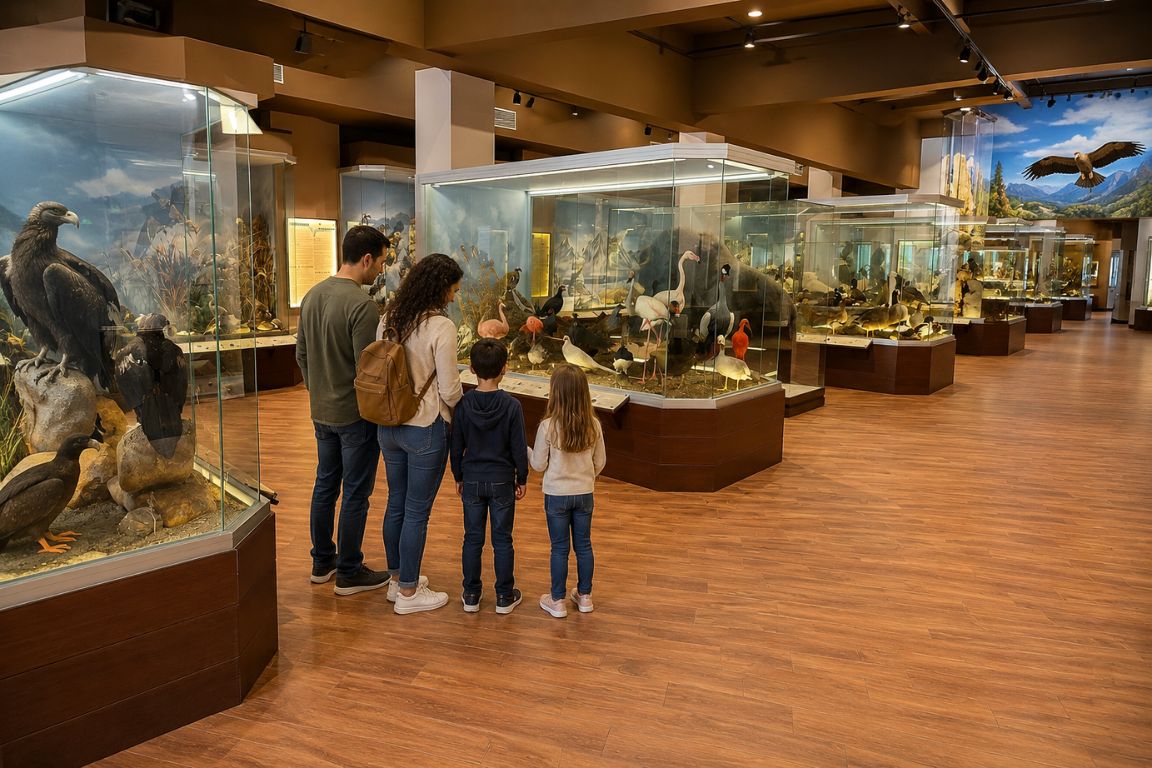 Yes, for families with children aged roughly 7 and older. The rocks and monasteries are visually spectacular enough that most children engage immediately, the hermit caves are genuinely interesting to young minds, and the physical challenge of the staircases functions as an adventure rather than an obstacle for kids with reasonable fitness. For families with toddlers or pushchairs, it’s more difficult: none of the monastery paths accommodate strollers, and the stairs are steep.
The questions children tend to ask at Meteora are better than the ones they ask at most historical sites. How did they get up there? Did the monks ever fall? What did they eat? Why did they want to live somewhere so hard to reach? Those questions have real answers that a guide can bring to life, and the physical environment makes the answers matter in a way that standing in front of a ruin does not. The monks hauled building materials up by rope in baskets, one piece at a time. Some monasteries took decades to build. You can still see the winch towers at Varlaam. When a child sees that and understands it, the monastery stops being a backdrop for photographs and starts being something a person made with extraordinary effort.
St. Stephen’s is the best starting monastery for families with younger children. It is accessed via a flat bridge with no significant staircase and accommodates visitors with limited mobility. For families wanting to go further, the Natural History Museum in Kalambaka has fauna exhibitions of 350 species and family workshops. The hermit cave tours, which explore monk-carved cave cells below the main monastery circuit, are consistently cited as a highlight for children who find monastery interiors less engaging than the landscape.
One practical note: the monastery dress code applies to children too. Boys in shorts are turned away the same as adult men. Pack light trousers or a long skirt in your day bag regardless of temperature.
Bringing the whole family? Here’s an honest guide on visiting Meteora tours with kids covering what’s actually manageable, what to skip, and how to keep younger travelers engaged.
For a family visit, compare manageable monasteries, step counts, child-focused activities and practical packing before setting the day’s pace.
Is Meteora Worth It If You’re Not Religious?
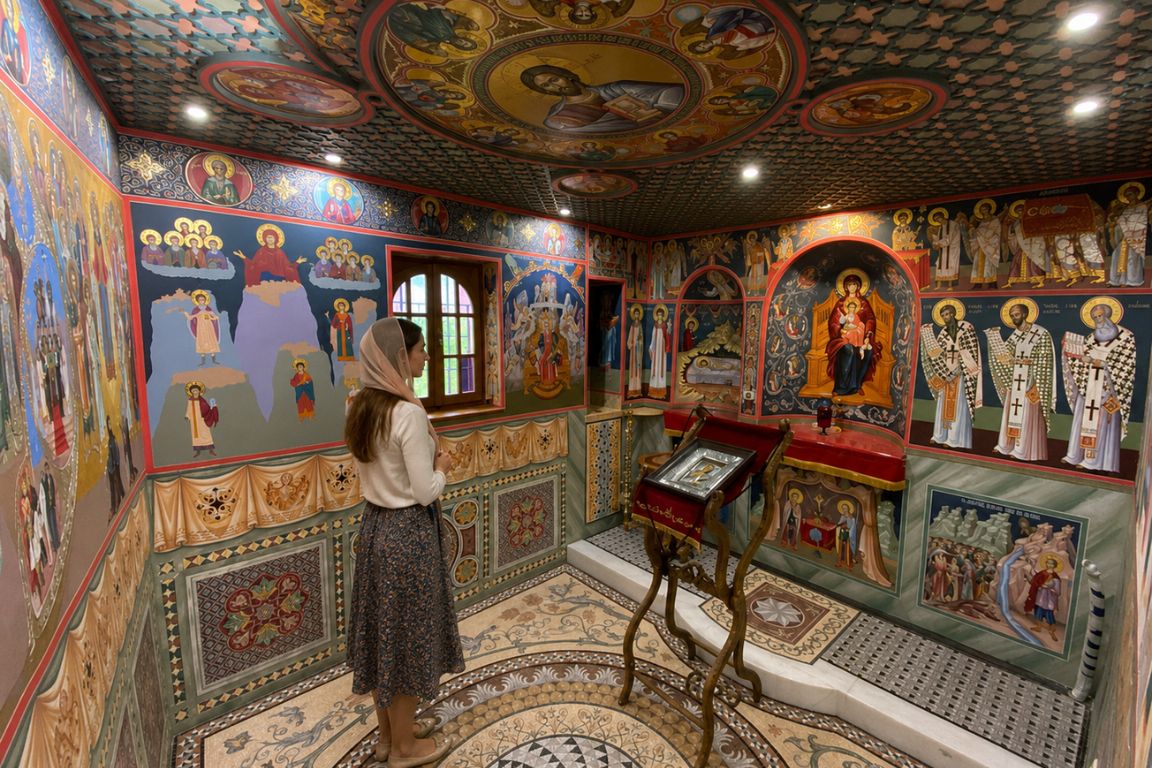 Completely. The majority of the 14,400+ travelers we’ve guided through Meteora over the years were not Orthodox Christians, and most were not religious in any formal sense. The monasteries reward visitors who come for the history, the architecture, the frescoes, the geology, or simply the visual experience. The religious context adds depth but is not required for the place to be extraordinary.
Here is what non-religious visitors consistently find worth their attention: the frescoes in Varlaam are among the finest surviving Byzantine art in Greece, produced by craftsmen who were also devout monks, and you don’t need to understand the theology to recognize the skill. The hermit caves below the main circuit were carved by people who chose extreme isolation for reasons of faith, and understanding that human choice makes the caves interesting regardless of whether you share the faith. The story of how these buildings got built, and why anyone chose to build here rather than anywhere more logical, is a story about human determination and human extremity that speaks to anyone.
The dress code is the only practical imposition on non-religious visitors. Women wear a skirt. Men wear trousers. It takes thirty seconds to change at the monastery entrance, where wrap skirts are available for women who arrive in shorts. It is a small price for access to something genuinely remarkable.
One thing that surprises secular visitors: the silence. Inside a working monastery on a weekday morning before the tour groups arrive, when the only sound is wind and distant bells, there is a quality of stillness that is not religious but is real. You feel it regardless of what you believe. Most people don’t expect that, and most people mention it afterward.
We’ve got a full breakdown on the Meteora monastery dress code if you want to know exactly what men and women need to wear to get through every entrance without issues.
Discover local history and the rock landscape on a morning with three monastery visits and panoramic stops, connected by minibus.
What Are the Honest Downsides of Visiting Meteora?
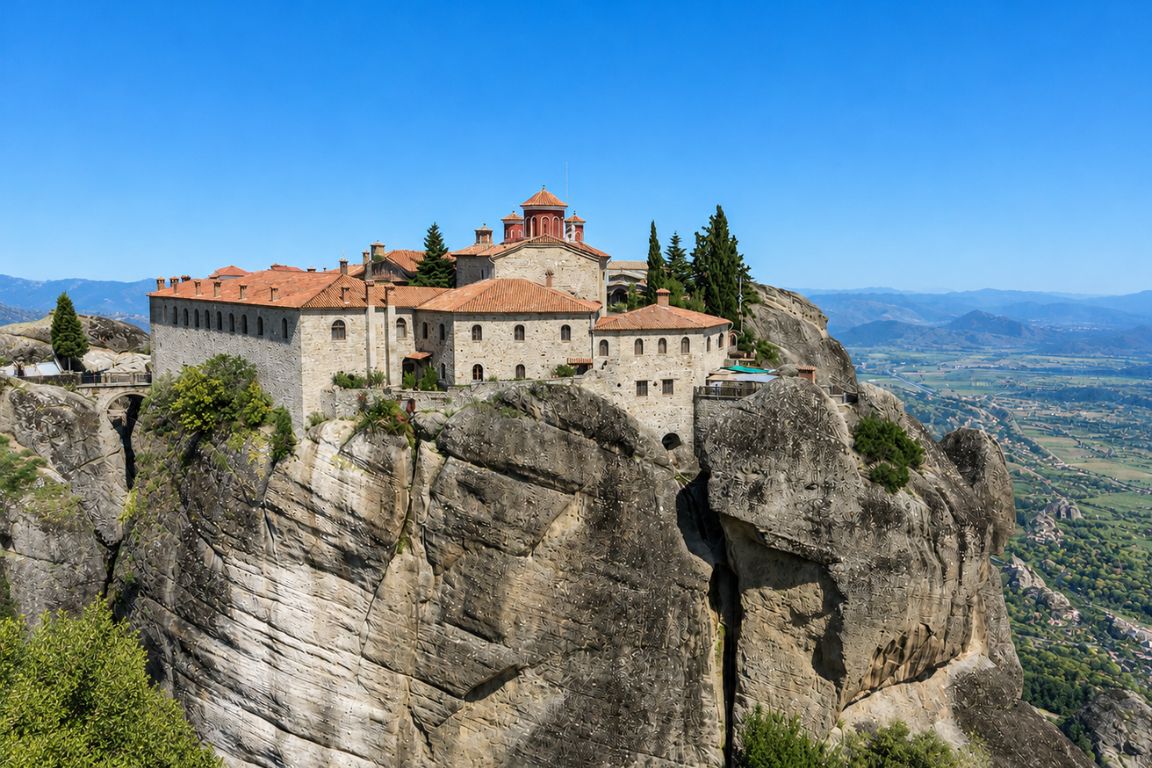 Four honest downsides: the summer midday crowds are genuinely bad and make the most popular monasteries feel like an airport terminal with frescoes. The physical demands are underestimated, specifically the carved-rock staircases, which are steep, uneven, and take a toll on a long day. The food and amenity options on the monastery circuit are nearly zero. And the journey from Athens is four hours each way, which makes a day trip a full commitment with little room for delays.
The crowds deserve specifics. Grand Meteoron and Varlaam, the two most visited monasteries, receive the bulk of coach tour groups between 10:00 and 14:00 every day in peak season. During that window, the small chapels fill quickly, the viewpoints have queues, and the parking areas above the rock road are blocked. This is not an exaggeration for effect. It is consistently reported across review platforms by travelers who went mid-morning in July or August and left describing a different experience than the one the photographs promised. The fix is simple: go before 09:30 or after 14:30 at those two monasteries, and front-load your morning with the smaller sites.
The stairs are a serious consideration for older travelers or anyone with knee issues. Grand Meteoron involves a sustained climb of several hundred steps carved into the rock, some without handrails. Holy Trinity has an even steeper approach. St. Stephen’s is the exception, reached by a flat footbridge. If the stairs are a real concern, there are still two monasteries accessible with minimal physical effort: St. Stephen’s and, to a lesser extent, Roussanou. It is worth knowing this before the trip, not discovering it at the base of the first staircase.
The other consistent complaint: no restaurants near the monasteries. There are snack canteens with limited options in peak season. Everything else requires driving back down to Kalambaka or Kastraki. On a long hot day, this matters. Pack water before you go up. Lunch in town first, or bring it with you.
Trying to fit more than two monasteries into a single day? Here’s which Meteora monasteries are best to visit and how to sequence them without backtracking.
Check the local morning tour before arranging a rental car for the monastery roads. Hotel transfers and travel between the formations are included.
How Does Meteora Compare to Other Greece Destinations?
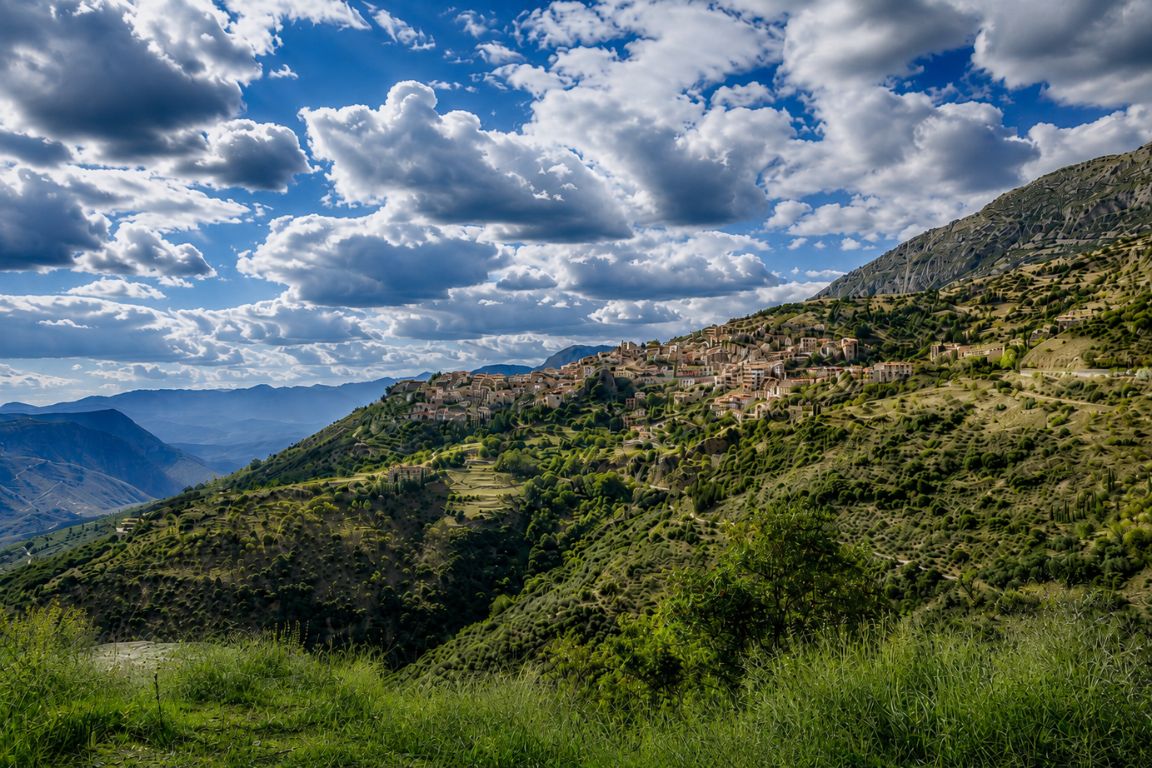 Meteora occupies a completely different category from Athens and the islands. Athens is about history and urban energy. The islands are about light, sea, and leisure. Meteora is about landscape and human audacity. You don’t choose between them on quality; you choose on what kind of experience you’re after. Among travelers who have visited both Santorini and Meteora, a consistent thread appears: Santorini is what they expected Greece to look like. Meteora is what surprised them most.
| Meteora | Landscape, geology, monastic history, hiking | Moderate (manageable outside summer) | Low-Moderate | Singular. Nothing else like it. |
| Athens | Ancient history, museums, food, urban culture | High at main sites | Moderate | High. The Acropolis is irreplaceable. |
| Santorini | Caldera views, romance, sunset, wine | Very high in summer | High-Very High | Iconic but increasingly replicated. |
| Delphi | Ancient ruins, mythology, mountain setting | Moderate | Low | Strong. Pairs well with Meteora on same trip. |
| Crete | Beaches, food, Minoan history, hiking | Varies by area | Moderate | Rich and diverse. Needs more time. |
The Santorini comparison is worth addressing directly because it comes up constantly in travel forums. Santorini is beautiful and its reputation is earned. But it is also the most expensive place in Greece, the most crowded in summer, and a place that feels increasingly designed for tourism rather than lived in. Meteora is not like that. The villages of Kalambaka and Kastraki are real places where local people live. The monasteries are active religious communities. A gyros in Kalambaka costs what a gyros costs in a Greek town, not what it costs in Oia with a caldera view behind it.
Among experienced travelers planning a second or third trip to Greece, Meteora appears frequently as the thing they wish they’d done on the first trip. The islands stay on the itinerary. But Meteora moves up.
If you’re deciding whether to add Meteora to your Greece trip, our team is here to help you work out how it fits.
We’ve got a full breakdown on the Meteora day trip from Athens if you want to know exactly how to structure your time and what not to miss.
Enter the totals for the Greece itinerary options you are considering to compare their per-person costs on the same basis.
What Type of Traveler Gets the Most Out of Meteora?
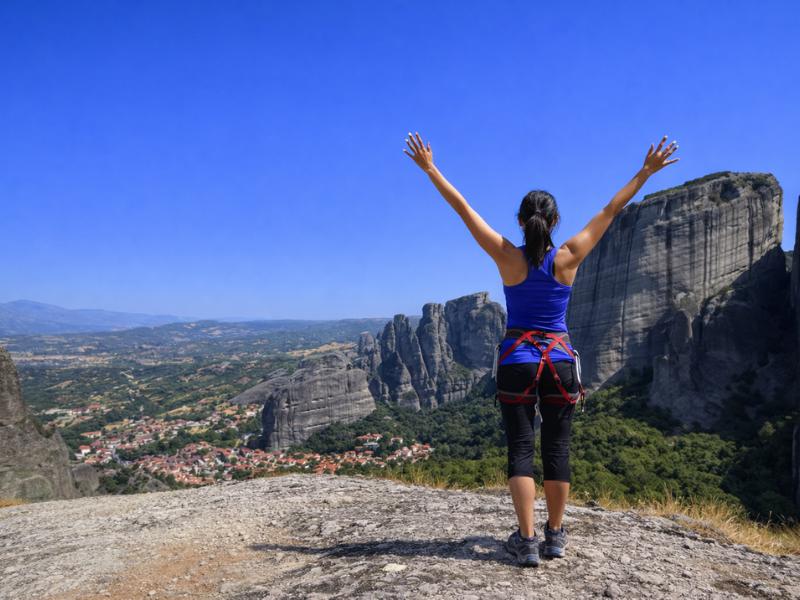
The travelers who get the most from Meteora are the ones who slow down. Not the ones with the most historical knowledge, not the most devout, not the most physically fit. The ones who sit on a rock for twenty minutes and look at the valley below without photographing it. Who walk between two monasteries instead of driving. Who come back at 17:30 when the light is different and the crowd has thinned. The place rewards attention more than activity.
History travelers find Meteora rich: six centuries of Byzantine art, manuscripts, and monastic tradition concentrated in a small area, with a living community still maintaining it. Photographers find it transformative: the light does different things at different hours, the mist between the pillars is seasonal and unrepeatable, and the relationship between stone and sky changes across the day in ways that reward patience. Hikers find an unexpectedly varied trail network that lets you approach the monasteries on foot the way the monks once did.
Travelers who come only for the famous viewpoint photograph and leave get the most compressed version of what Meteora offers. It’s still impressive. But it’s the version designed for a two-hour visit, and Meteora was not designed for two-hour visits.
Over seventeen years of guiding travelers here, the types who consistently leave with the strongest reactions: couples with two or three nights who aren’t rushing a bigger itinerary. Solo travelers who hike rather than drive. Families whose children have enough stamina to climb without being carried. People who’ve been to Machu Picchu, Angkor Wat, Cappadocia, and still find Meteora occupies its own space in memory. That last pattern is the one that tells you the most about the place.
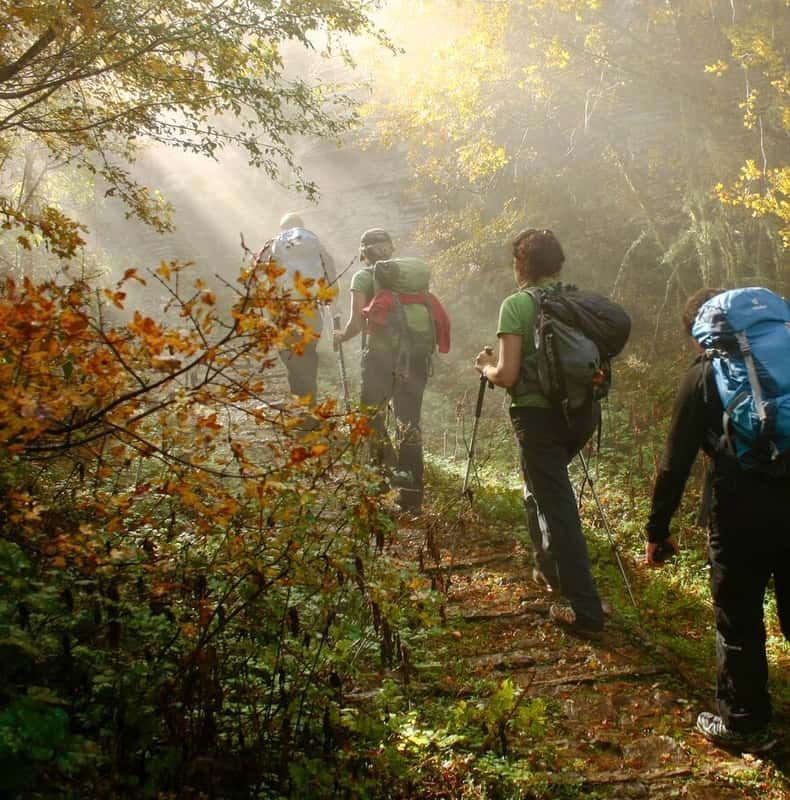
Explore forest paths and rock formations on an eight-kilometre guided walk. Four hours on the trails gives the landscape a different role from a roadside stop.
What 14,400+ Guided Visitors Tell Us About Meteora
| Would they recommend Meteora to a friend? | ~96% yes |
| Did it meet or exceed expectations? | ~89% met or exceeded |
| Most common regret? | Not staying long enough (~57%) |
| Most common surprise? | The silence and scale in person vs. expectations from photos (~44%) |
| Travelers who were not religious but rated it 5/5? | ~78% |
| Families who said children engaged strongly? | ~82% (children aged 7+) |
Check the overnight departure before fixing your Athens return. A sunset tour and another guided morning bring two different outings into the same trip.
Frequently Asked Questions
Use the trip-format selector after reviewing the questions below to compare Athens, local, overnight and combined routes.
Is Meteora worth it compared to the Greek islands?
They offer completely different experiences and aren’t really in competition. The islands give you sea, sun, and relaxation. Meteora gives you something visually and historically unlike anything on the islands or in mainland Greece. Most travelers who do both say Meteora surprised them more. Many wish they had added it to their first Greece trip instead of their second.
Compare how Meteora time differs from time on the Greek islands before deciding whether the inland detour adds the contrast you want.
Is Meteora worth visiting in summer?
Yes, but the experience is significantly better outside peak hours. July and August between 10:00 and 14:00 are the most crowded times at the main monasteries. Visiting before 09:30 or after 14:30, starting at the less-visited monasteries first, or staying overnight to access sunrise and sunset, all improve the summer experience substantially. Spring and autumn remain the best seasons overall.
Explore an Athens trip that makes room for a sunset tour and a second morning, with hotel options available for the overnight stay.
Is Meteora worth visiting for non-religious travelers?
Yes. Most of our guided groups over the past 17 years were not Orthodox Christians. The frescoes, the hermit caves, the geological formations, the human story of how these monasteries were built, all reward secular interest. The only practical requirement is the dress code at the monastery entrances. Faith is optional; covered shoulders and knees are not.
A non-religious visit still requires respectful clothing and conduct. Review the monastery dress and etiquette rules before packing.
Is Meteora worth it if I’ve already been to Cappadocia?
Yes. The comparison comes up often and the places share the visual language of rock formations and ancient habitation. Meteora’s monasteries are architecturally distinct from Cappadocia’s cave dwellings, the Byzantine art tradition is different from the early Christian cave churches of Turkey, and the landscape has a different character. Travelers who’ve done both consistently describe them as complementary rather than redundant.
Estimate how much Meteora time your remaining mainland itinerary can support before adding another distinct rock and cultural landscape.
Is Meteora worth visiting with elderly parents or grandparents?
With appropriate planning, yes. St. Stephen’s monastery is fully accessible with no major staircase, reached via a flat bridge. Roussanou requires modest climbing. Grand Meteoron and Holy Trinity involve hundreds of steep steps and are not suitable for visitors with significant mobility challenges. A private Meteora tour with a small vehicle can optimize the circuit for reduced mobility and identify the best accessible viewpoints. Dates and pacing are on the private Meteora tour page.
Review St. Stephen’s approach and visitor considerations before planning a reduced-stair day with older relatives or travelers with limited mobility.
How does Meteora compare to Delphi?
Both are exceptional and pair well together on the same Greece itinerary. Delphi rewards historical knowledge about ancient Greek religion and Oracle culture. Meteora’s impact is more immediate and visual. If you’re combining both into a multi-day mainland trip, Athens to Delphi to Meteora is a natural routing. Most travelers who do this combination rate it as one of the best Greece itineraries available.
Check the two-day circuit before booking separate Athens excursions. Delphi’s archaeological site and two Meteora monasteries share one coach itinerary and overnight stay.
Still deciding whether Meteora belongs on your itinerary?
We’ve been answering that question honestly for 17 years. Tell us your travel dates, how long you have, and where you’re coming from. Michael and the team at Meteora Tours will tell you exactly what makes sense for your trip, with no pressure in either direction.