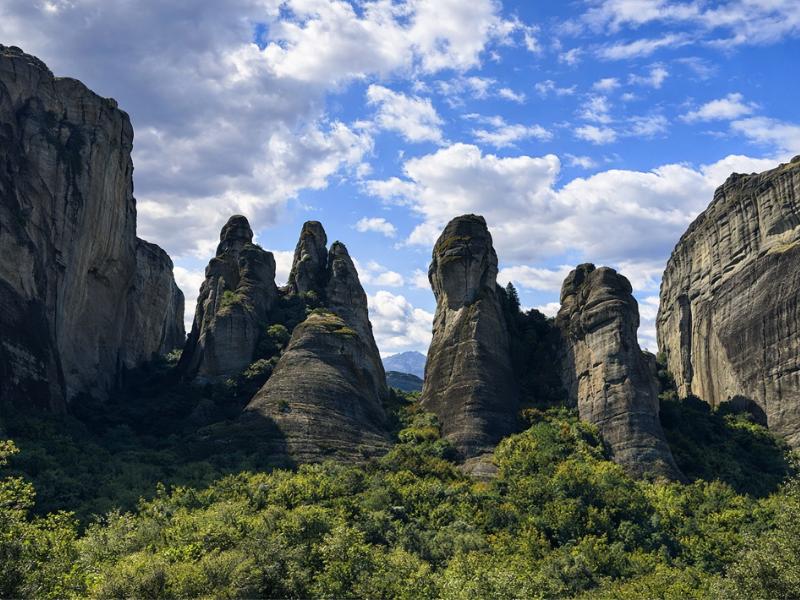
Meteora Day Trip from Athens
A Meteora day trip from Athens is possible, but it’s a long journey. Here’s the fastest way to visit, what you’ll see, and why an overnight stay is the better choice.
If Meteora must fit into one day, the Athens coach format preserves more of your limited sightseeing window by handling the long return journey; staying overnight is the stronger choice for sunset and a second visit. Choose A Tour For This Itinerary
Last updated: June 28, 2026
Quick Facts: Meteora Day Trip from Athens
| Distance Athens to Kalambaka | ~350 km (217 miles) |
| Travel time each way | 4 to 4.5 hours (car or guided coach) |
| Total day trip duration | 13 to 14 hours |
| Guided bus tour price | From €60 to €74 per person (transport + guide; Prices verified June 2026) |
| KTEL public bus (one way) | ~€32-€35 to Trikala, then local transfer |
| Train service status | Suspended; Athens-Kalambaka segment closed until at least mid-2027 |
| Monasteries visited on a day trip | Realistically 2 to 3 (entered); all 6 viewed from road |
| Monastery entry fee | €5 per adult per monastery, cash only (Prices verified June 2026) |
| Departure point (guided tours) | Deligianni Street, opposite Larissa (Larissis) Train Station, Athens |
| Typical guided tour departure | 08:00 AM; arrive Kalambaka ~12:00-12:30 PM |
| Typical return to Athens | 21:30 to 22:30 |
Explore a return coach trip with local guiding, panoramic stops and time inside three Meteora monasteries. The intercity journey and local sightseeing sit in one itinerary.
Is a Meteora Day Trip from Athens Actually Worth It?
Check the two-day option before committing to a same-evening return. It adds a sunset tour and another guided morning to your journey from Athens.
 Yes, a Meteora day trip from Athens is worth it, with one honest caveat: you spend more time getting there and back than you spend at the monasteries. The round trip is 13 to 14 hours, and your window at Meteora itself is roughly 4 to 5 hours. That is enough time to see the landscape, enter 2 to 3 monasteries, and understand why people return. It is not enough to absorb the place. If your Greece itinerary allows even one overnight stay, take it.
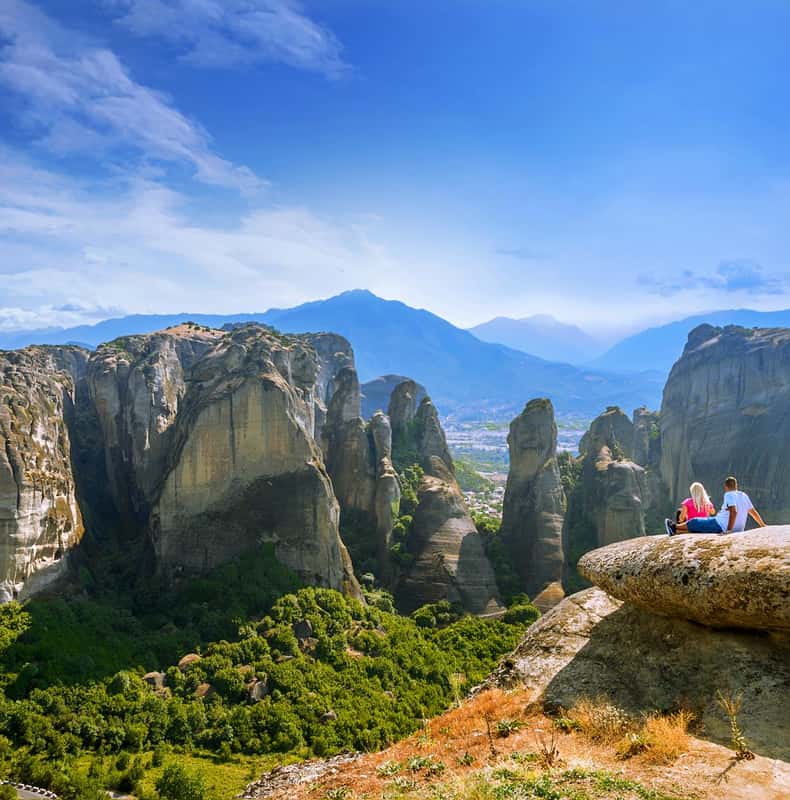
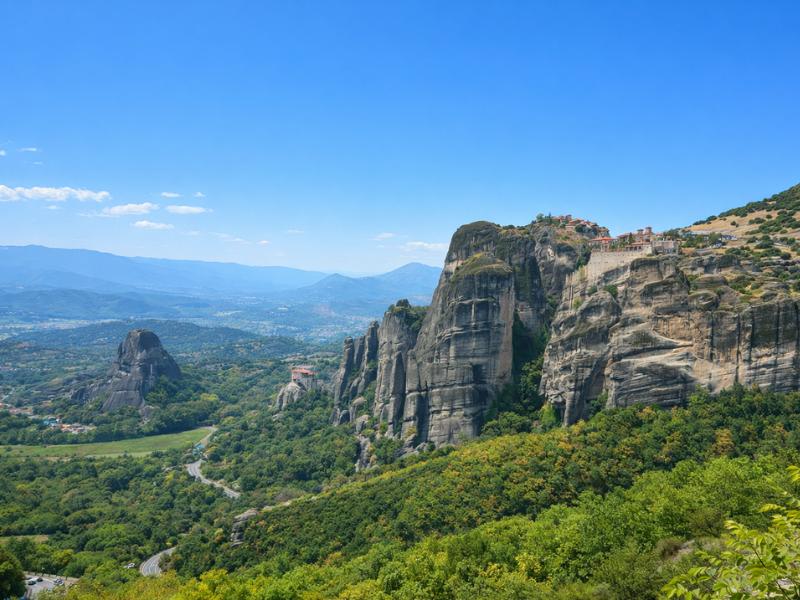
The question of “worth it” depends heavily on context. For a traveler with five days in Greece and Athens as the base, a Meteora day trip competes directly with an island day trip or a Delphi excursion. Against those alternatives, Meteora wins on sheer visual impact. There is nothing else in Greece that looks like this. The rock pillars rising from the Thessalian plain, monasteries sitting on top of them like something a child placed there, the whole composition defying the logic of how buildings get built. You register the scale within thirty seconds of arriving and the feeling doesn’t entirely leave.
Two of Greece’s most iconic sites but very different experiences. Here’s a honest comparison of Meteora vs Delphi so you can decide which one deserves a spot on your itinerary.
What the day trip does not give you: the sunset. The mist between the rocks on a cool morning. The quiet that settles over the site after the tour buses leave in the early evening. Those things require staying. But the day trip version of Meteora, even compressed into four hours, still delivers something most people put in their top five travel experiences in Greece. The travelers we’ve guided who only had one day consistently describe it as the right decision. The ones who stayed longer just wish they’d known earlier how different the experience becomes once the clock stops ticking.
If you want help working out whether a day trip or overnight stay fits your specific itinerary, compare the full-day tour from Athens with the 2-day stay that includes sunset and sunrise.
Trying to decide between Meteora and another stop in Greece? This guide on whether Meteora is worth visiting lays out exactly what makes it different.
How Do You Get from Athens to Meteora (and Back)?
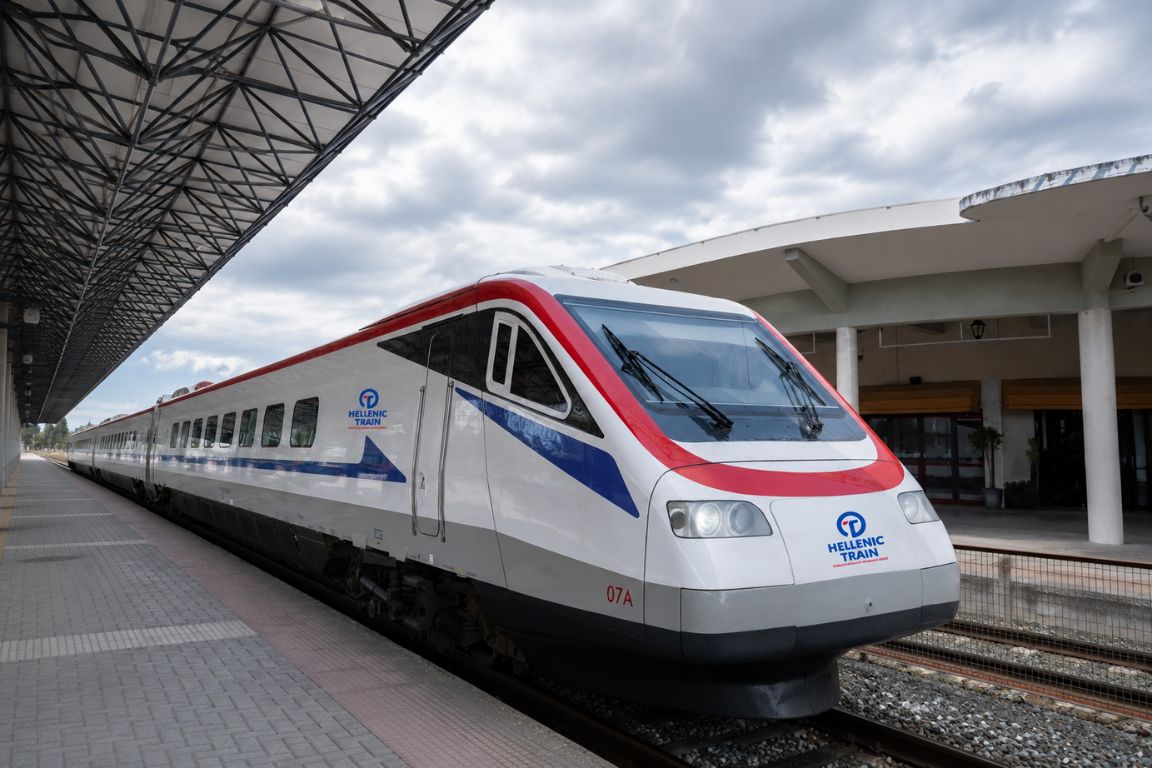 As of 2026, there are three real options: a guided coach tour from Athens (simplest, most popular), the KTEL public bus to Trikala with a transfer to Kalambaka (cheapest, requires more planning), or a rental car (most flexible, longest driving day). The direct Athens-Kalambaka train line remains suspended following severe flood damage in September 2023 and is not expected to reopen before mid-2027.
The train suspension is the single most important practical update for 2026 travelers. Many guides online still describe a scenic train journey to Kalambaka because until two years ago it was genuinely the most pleasant way to travel this route. That option is gone for now. Hellenic Train does run a partial substitute involving a bus connection at Palaiofarsalos, but the combined journey adds two hours and requires two transfers. For a day trip, that math doesn’t work.
The KTEL public bus is worth understanding properly. KTEL Trikala runs a direct service from the Liosion terminal in Athens to Trikala, and from Trikala you take a local connection to Kalambaka. The first bus from Athens leaves around 07:00-07:30 and the journey to Kalambaka takes roughly five to six hours total including the transfer. For a day trip this means arriving at Kalambaka around 13:00, giving you three to four hours at the site before needing to head back. Tight, but possible. Book ahead at ktel-trikala.gr, especially in summer.
Note also that the Athens KTEL Liosion terminal may move to a new central bus terminal in the Eleonas district during 2026. Check the current departure point before your trip, as this changeover was in progress at the time of writing.
The rental car is most cost-effective for groups of three or more. Solo or couple travelers do better on a guided coach. Driving itself is fine: the motorway from Athens north through Lamia and into Thessaly is in excellent condition and the last stretch toward Kalambaka through the Thessalian plain is genuinely beautiful. Tolls run approximately €2 per booth, with several along the E75.
Getting there is half the battle. Here’s a full breakdown on how to get to Meteora by bus, train, or guided tour so you can pick the option that fits your trip.
| Guided coach tour | ~4 hrs | €60-€74 per person (all-in) | First-timers, solo travelers, anyone who wants zero logistics |
| KTEL public bus (+ transfer) | ~5-6 hrs | ~€65-€70 return | Budget travelers; requires advance planning |
| Rental car | ~4 hrs | €60-€100+ (car + fuel + tolls) | Groups of 3+, travelers staying overnight |
| Train + bus (Hellenic Train substitute) | ~6-7 hrs | Varies | Not recommended for day trips |
| Private transfer | ~4 hrs | €250-€400+ (whole car) | Families, luxury travelers, tight schedules |
Explore an Athens departure that joins return coach travel with local guiding at Meteora, removing the need to arrange each transport leg separately.
What Time Should You Leave Athens for a Day Trip?
Check your date and meeting time before arranging the rest of the day. This Athens trip coordinates the outbound coach, monastery visits and evening return.
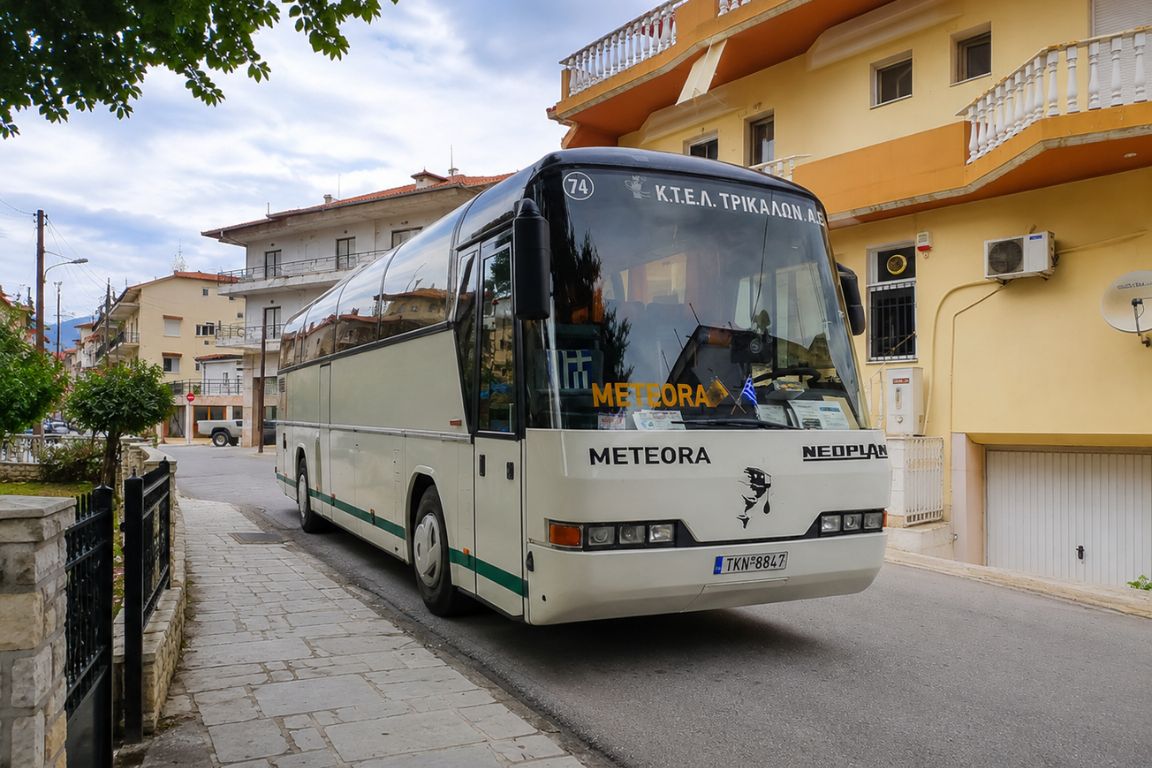 Leave Athens by 08:00 at the absolute latest. Guided tours depart at 08:00 from Larissa Station and arrive at Meteora around 12:00-12:30, which gives you the afternoon. If you’re driving independently, leave by 06:30 to reach Kalambaka before the coach buses and have the monasteries to yourself for the first hour. The monasteries open at 09:00; being at the first one before the tour groups arrive from Athens is a meaningful difference.
Here is the timing logic that most travelers don’t grasp until they’re there. The big coach tours from Athens, both the large operators and the smaller ones, all converge on Grand Meteoron and Varlaam between 10:00 and 14:00. That four-hour window is when the sites are most crowded, the parking is a problem, and the small chapels fill up with groups waiting to get inside. If you’re on a guided day tour, your arrival time is set by the operator and you don’t control it. If you’re driving, you can beat that window entirely.
A driver leaving Athens at 06:30 reaches Kalambaka by 10:30 or so. Start at St. Nicholas Anapafsas and Holy Trinity, the two monasteries that coach groups tend to skip because of the stairs. Both are quiet until at least 11:00. Then loop back to Grand Meteoron and Varlaam after 13:30 once the midday group rush has thinned. You see the same sites in a completely different atmosphere. That sequencing is the practical answer to what the guides call “beating the crowds.” You can’t beat them entirely, but you can visit their favorite monasteries at the times they’re not there.
The logistics here can catch people off guard. This breakdown on how to visit Meteora tours covers transport, timing, and which sites are worth the climb.
Which Monasteries Can You Realistically Visit in One Day?
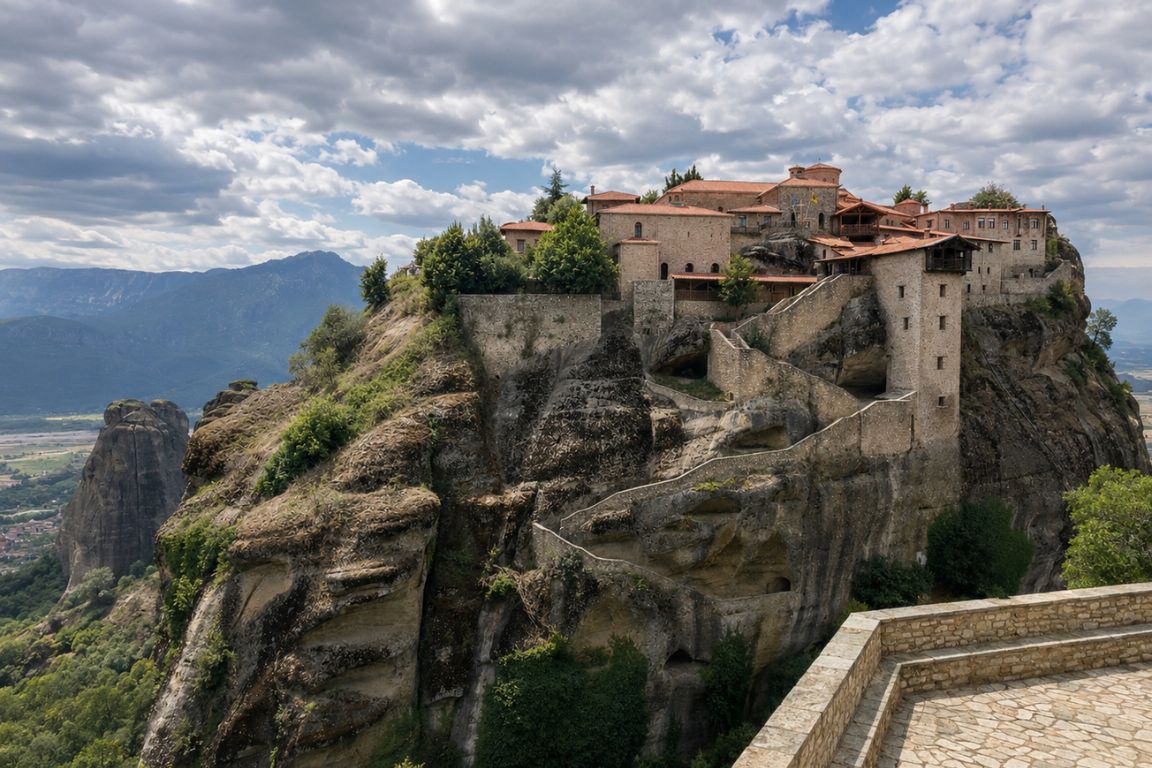 On a day trip from Athens, two entered monasteries plus viewpoints of all six is the realistic target. Three is achievable with good timing and no delays. A well-organized guided tour visits two to three, with panoramic stops at the others. Don’t try to enter all six in one day: the monasteries are spread across a loop road, each requires stairs, and the time pressure of getting back to Athens adds to the fatigue faster than expected.
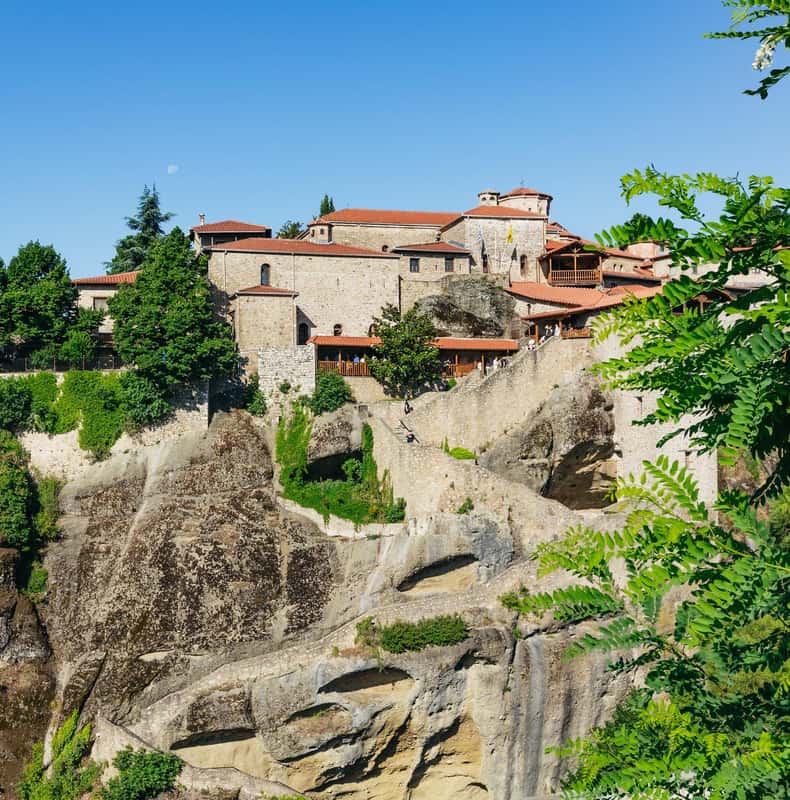
The two non-negotiable entries are Grand Meteoron and Varlaam. Grand Meteoron is the oldest and largest, with the best museum collection and the most complete sense of what monastic life looked like across six centuries. Varlaam has the finest frescoes that visitors can access and a preserved winch tower that makes the mechanics of how monks actually got up here concrete rather than abstract. These two alone justify the trip.
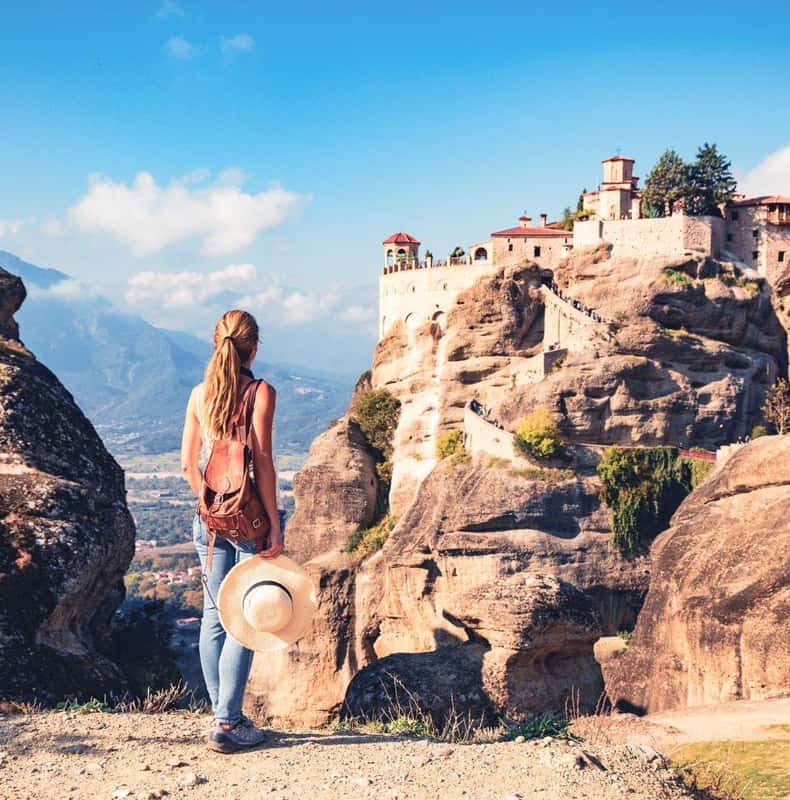
For a third monastery, Roussanou is the best choice on a day trip. It sits lower than the others, approached via a small footbridge, and provides the photograph most people associate with Meteora: the building appearing to grow directly from the rock face with the valley behind it. The climb is more manageable than Holy Trinity, and the nunnery has a quality of stillness that the bigger monasteries lose when the groups arrive.
| Grand Meteoron | Must-enter | 45-60 min | Tuesday |
| Varlaam | Must-enter | 40-50 min | Friday |
| Roussanou | Third choice | 25-35 min | Wednesday |
| St. Stephen’s | Third choice (easier access) | 30-40 min | Monday |
| Holy Trinity | If time allows | 30-40 min + steep climb | Thursday |
| St. Nicholas Anapafsas | If time allows | 20-25 min | Open daily |
One thing the table above can’t show: which monastery is closed on your specific day. Always check the closure schedule for the day of your trip before you leave Athens. Grand Meteoron on a Tuesday means your top priority is locked. Varlaam on a Friday means your second monastery isn’t available. The closure pattern is the variable that most ruins day trips for travelers who didn’t plan around it.
Trying to fit more than two monasteries into a single day? Here’s which Meteora monasteries are best to visit and how to sequence them without backtracking.
Discover a day trip that pairs monastery interiors with viewpoints across the rock formations. A local guide connects the stops while transport is arranged throughout.
Should You Book a Tour or Go Independently?
Check the Athens day trip for your date before arranging a rental car or separate connections. It combines return coach travel with local guiding at Meteora.
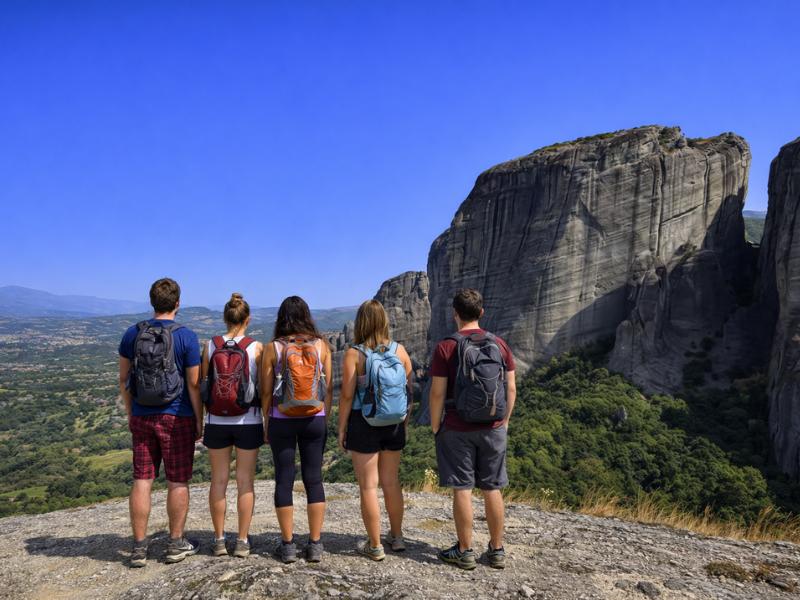
For a day trip from Athens, a guided coach tour is the right choice for most people. It handles the transport (which is now more complicated with no direct train), provides a local guide at the site, and keeps the logistics from eating into your already limited time at Meteora. Independent travel makes more sense if you’re renting a car, staying overnight, or arriving at Kalambaka independently and joining a local half-day tour there.
The guided tour versus independent question changed significantly when the train stopped running. Previously, the train gave independent travelers an easy, cheap, pleasant way to get there without dealing with buses or driving. Now the logistics take real effort, the transfer at Trikala adds time, and if something goes wrong you have no support. On a 13-hour day where your actual time at the monasteries is five hours, spending energy troubleshooting bus connections is a poor use of the day.
What the guided tour actually buys you beyond transport: a local guide at the monasteries who knows the frescoes by name, knows which corner of Varlaam to stand in when the light is right, and knows that the hermit caves below the monastery road exist and what they meant to the monks who carved them. Those are not things you find on a sign. And a guide who has done this route hundreds of times has also pre-ordered your lunch on the app before the bus stops, which sounds minor until you’re at a coastal restaurant with forty other tired day-trippers and your food is already ready.
The hybrid approach works well too. Take the KTEL bus to Kalambaka independently, then join a small-group sunset tour from Kalambaka on arrival. You pay less than the all-in Athens tour, you travel at your own pace, and you still get the guide at the site where it actually matters. The Kalambaka pickup for local tours is at the train station, every day around noon.
Not sure whether to base yourself in Kalambaka or Kastraki? Here’s a full guide on where to stay in Meteora tours for every budget and travel style.
How Much Does a Meteora Day Trip from Athens Cost?
Enter the totals for your preferred guided and independent options, then include party size to compare the resulting per-person costs.
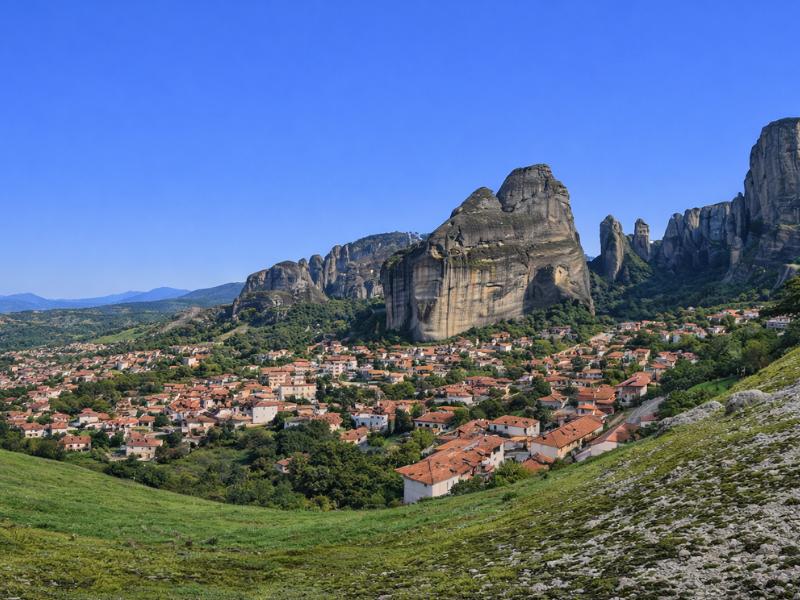
A guided coach tour from Athens costs €60 to €74 per person, typically including transport and a local guide but not monastery entry fees. Those run €5 per monastery in cash, so budget an extra €10 to €15. A self-organized day trip on public buses costs roughly €65 to €70 return including the Trikala transfer, plus entry fees. Driving costs vary by car size but expect €60 to €100 total in fuel and tolls for the return journey.
Prices verified June 2026. Rental car total assumes solo traveler; costs split across 3+ passengers significantly reduce per-person cost.
The cost comparison above surprises most people: the independent bus option ends up costing more than the guided tour once you add the local guide at the site, which you need because the context makes the monasteries worth the trip. The guided tour from Athens is not the budget option in name only; for a solo traveler or couple, it is genuinely the most cost-efficient way to do this day trip.
The rental car starts looking attractive at three or more people. Split three ways, fuel and tolls cost roughly €20 to €25 per person for the return drive. Add a local guide at Kalambaka if you want one, and you’re well under the coach tour price with more flexibility over your own schedule.
| Transport (return) | Included in tour price | ~€65-€70 | ~€50-€80 fuel + tolls |
| Local guide at Meteora | Included | ~€25 (local half-day tour) | ~€25 (optional) |
| Monastery entry (3 monasteries) | ~€15 cash (usually not included) | ~€15 cash | ~€15 cash |
| Lunch | ~€15-€20 (or upgrade included) | ~€15-€20 | ~€15-€20 |
| Approx. Total per person | €90-€110 | €120-€135 | €50-€70 (splits 3+ ways) |
What Are the Biggest Day Trip Mistakes (and How to Avoid Them)?
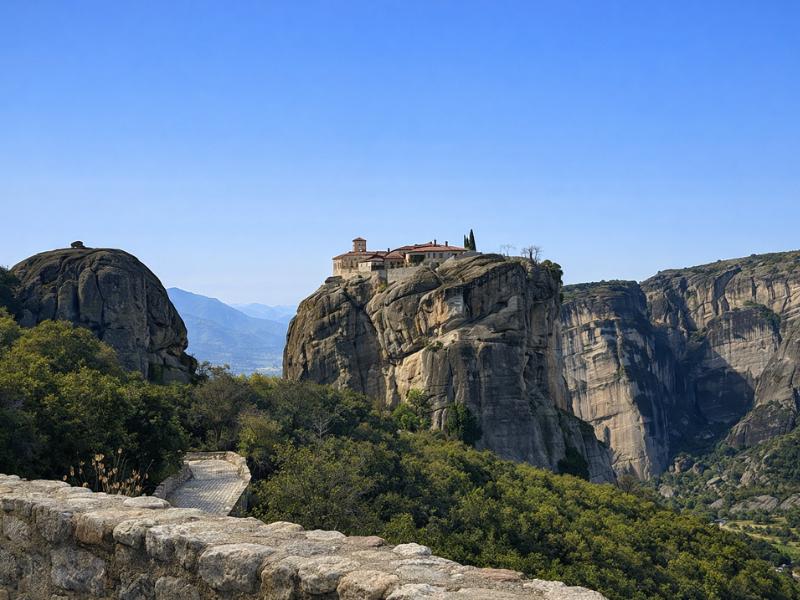
The five mistakes that most consistently ruin Meteora day trips from Athens: booking a tour that doesn’t check monastery closure days, arriving without cash for entry fees, underestimating the physical demands of the staircases, planning to visit all six monasteries and burning out by the fourth, and treating the four hours at Meteora as time to rush rather than time to absorb. The day is long enough without adding bad decisions at the destination.
The closure day problem on day trips is worse than on overnight visits, because you have no recovery options. If you arrive on a Tuesday and Grand Meteoron is closed, you lose your anchor visit and restructure the whole afternoon. Tours from established operators check this automatically; self-organized day trips don’t. Before you book any transport, verify which monasteries are open on your specific day of travel.
Physical preparation is genuinely underestimated. The monasteries are connected by a road, but the roads are steep and the stairs into each monastery are carved into the rock face and come with no handrails in places. Grand Meteoron involves several hundred steps in each direction. On a 13-hour day that already includes 8 hours of travel, your legs are doing more work than most travelers anticipate. Wear proper shoes. Not sandals. Not clean white trainers you’re trying to keep clean. Walking shoes or trail runners with grip.
The food stops on long coach tours are a specific source of frustration in TripAdvisor reviews: rushed breaks, unclear ordering, waiting for a group of 40 to be served. The operators who pre-order meals on an app before the bus stops solve this entirely. Check whether your specific tour does this before booking. The difference between a 20-minute unhurried lunch with your food waiting and a 20-minute scramble to order and eat is meaningful when you’re already short on time.
Finally, the most common regret from day-trippers we’ve talked to over the years: not staying longer. If you’re going to make a 13-hour trip to see one of the most remarkable places in Europe, sleeping one night in Kastraki so you can watch the light change across the pillars at sunset adds almost nothing to your total cost and changes the experience entirely. You don’t need to decide this before you arrive. But if you get there and feel what the place does, remember that there are hotels in both Kalambaka and Kastraki with beds available most nights outside peak summer. The bus back to Athens runs the next morning.
Use the seasonal packing guide to choose practical footwear and layers for the monastery roads and stairs before departure.
What Does a Typical Meteora Day Trip Itinerary Look Like?
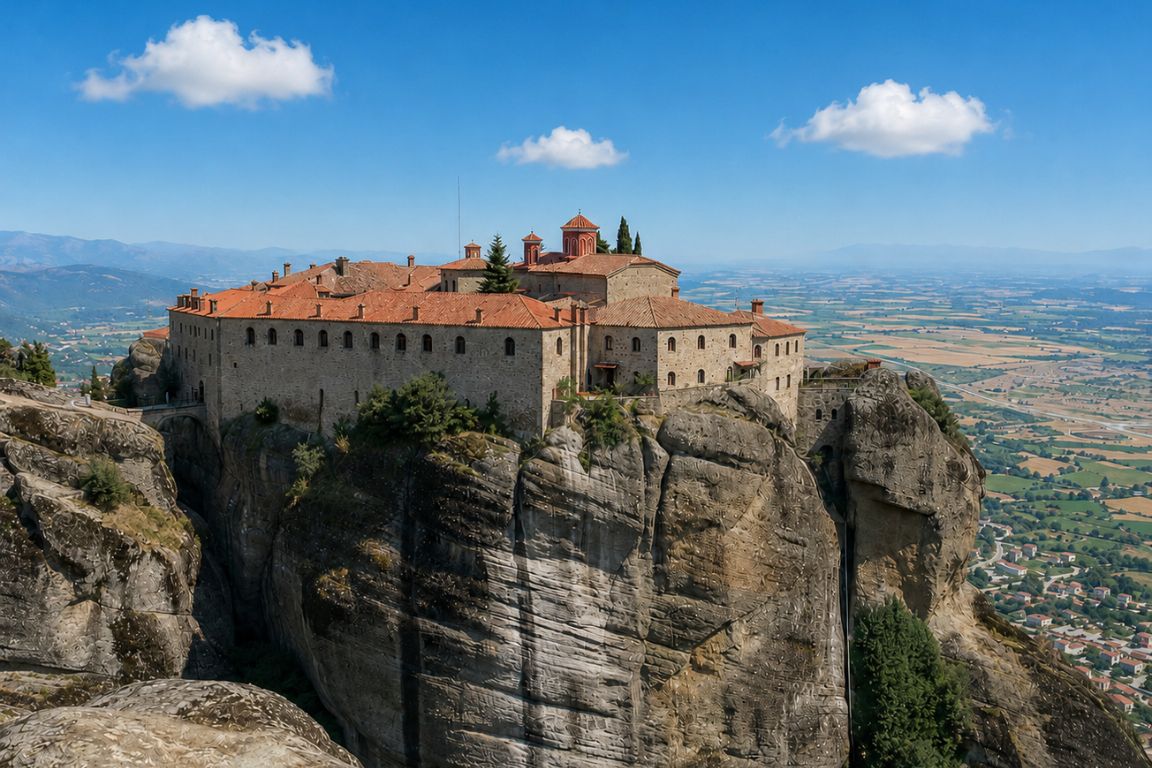 A typical guided day trip from Athens departs at 08:00 from Larissa Station, stops at a coastal restaurant around 10:00 for a rest break, arrives in Kalambaka at 12:00-12:30, tours two to three monasteries and the hermit caves over four hours with a local guide, has free time in Kalambaka around 16:30 to 17:00, then departs for Athens and arrives back around 21:30 to 22:30. It’s a full day with no spare time.
A note on the self-drive itinerary: the sequence above, starting at the less-visited monasteries and arriving at Grand Meteoron and Varlaam after 13:30, is deliberate. Most of the coach tours from Athens are done with Grand Meteoron and Varlaam by 14:00 and have left the site. Arriving there at 14:30 means entering buildings that were crowded two hours ago in a noticeably quieter state. The frescoes look the same. The silence is different.
| 07:45 | Meet at Deligianni St, Larissa Station | Leave Athens |
| 08:00 | Coach departs Athens | On road (E75 north) |
| 10:00 | Rest stop, coastal village of Kamena Vourla | Passing Lamia area |
| 12:00-12:30 | Arrive Kalambaka, meet local guide | Arrive Kalambaka |
| 12:30-13:30 | Lunch in Kastraki or Kalambaka | Lunch, then drive up |
| 13:30-17:00 | Tour: 2-3 monasteries + hermit caves + viewpoints | St. Nicholas, Holy Trinity, then Grand Meteoron, Varlaam |
| 17:00-17:30 | Free time in Kalambaka, depart | Depart for Athens |
| 21:30-22:30 | Return Athens, Larissa Station | Return Athens |
Questions about the right tour or self-drive approach for your specific dates? The full-day coach from Athens and the private day tour both list current dates and meeting details.
Discover how the Athens journey fits together with viewpoint stops and three monastery visits. A lunch option is available if you want that included in the plan.
Should You Stay Overnight Instead?
Check the two-day departure and hotel options before reserving accommodation separately. The trip combines Athens transport, a sunset outing and a second guided activity.
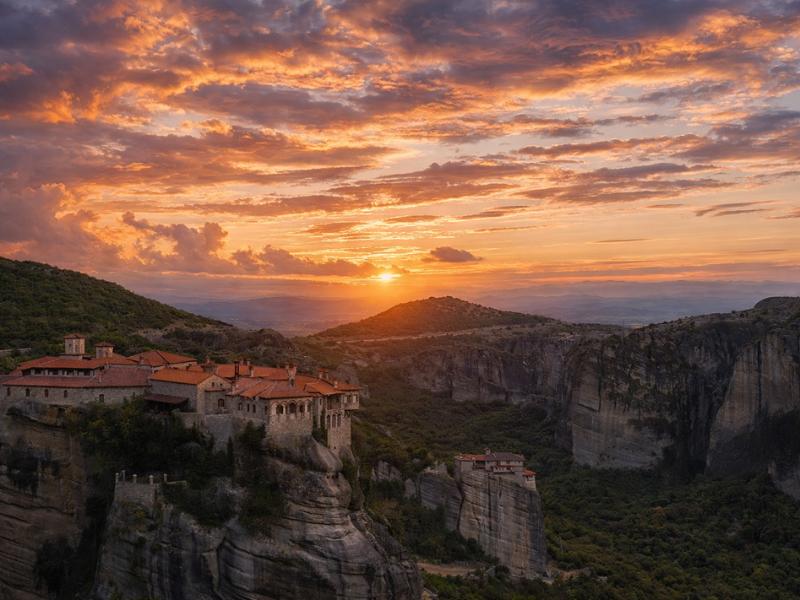
If there is any flexibility in your Greece itinerary, staying one night in Kastraki or Kalambaka transforms Meteora from a long day trip into one of the most memorable stops in Greece. The sunset from the rock viewpoints, the early morning mist between the pillars, and the experience of wandering the monastery road after the day-trippers have gone are things you simply cannot access on a day trip from Athens. One night adds very little cost and changes everything about the experience.
The practical case: a basic room in Kastraki starts around €60 to €80 per night. If you’re already spending €90 to €110 on the day trip, one night’s accommodation plus a KTEL bus back to Athens the next day might add €50 to €70 to your total trip cost. That’s the delta between seeing Meteora once for four hours and seeing it twice, at opposite ends of the day, in different light, with the crowds gone.
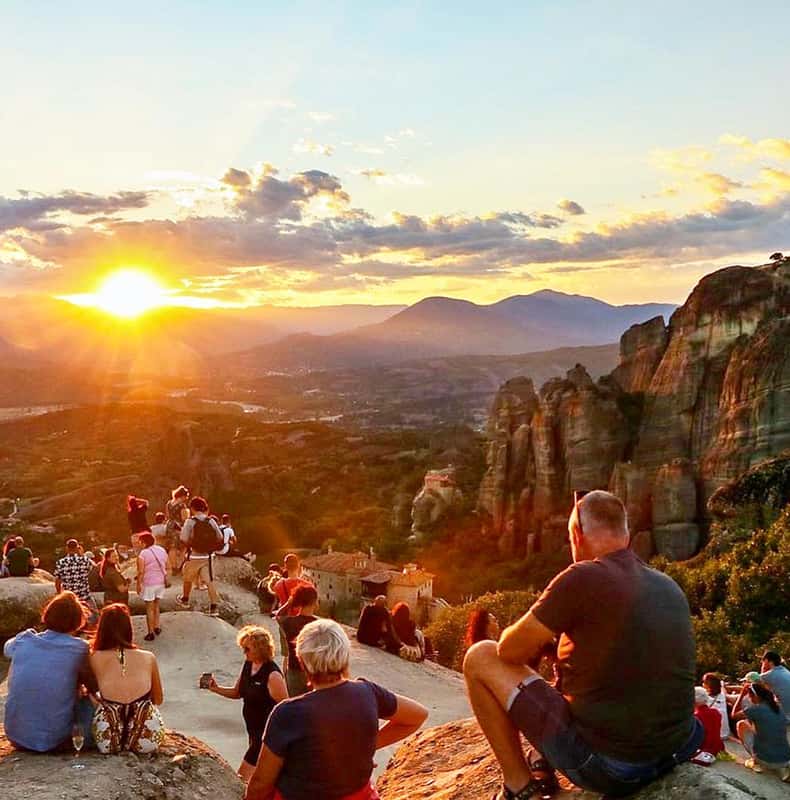
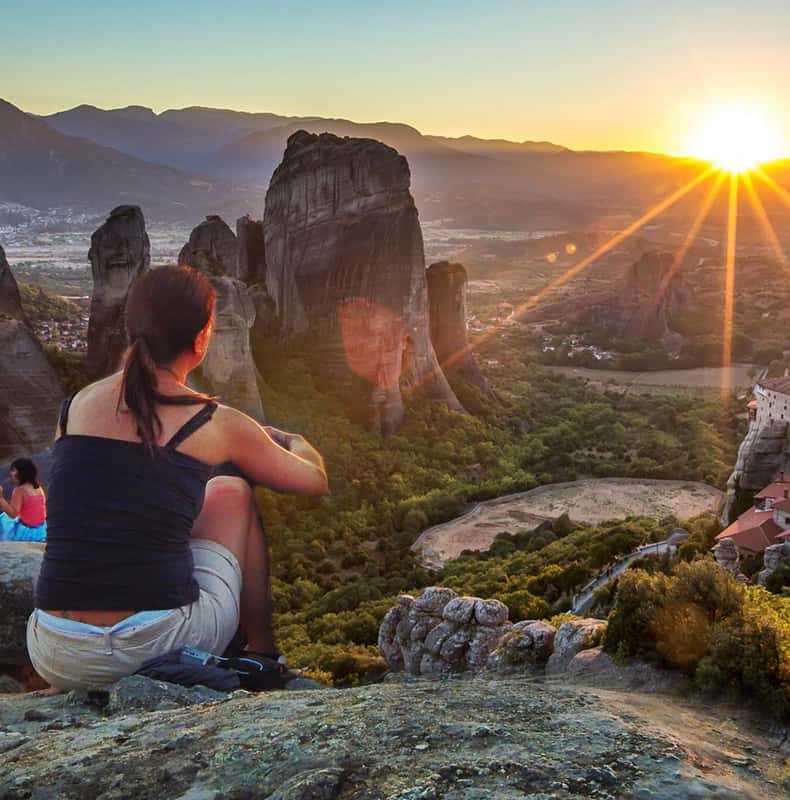
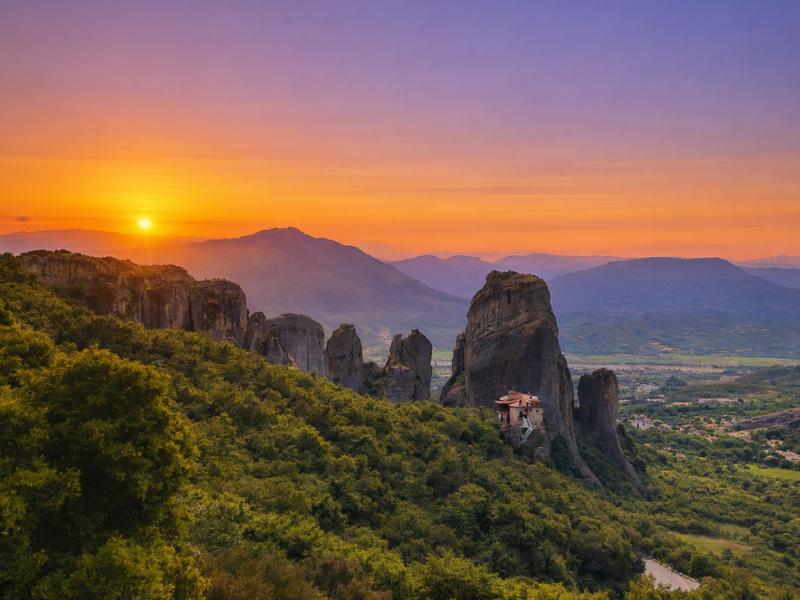
The experiential case: the rocks turn amber at sunset. Then copper. Then something between orange and red, and the monasteries on top of them go from historical monuments to objects that float against the sky in a way the photographs never fully capture. That happens every clear evening. You can watch it from a free viewpoint on the upper road. The only ticket required is one extra night in a Greek village.
Not sure whether one day is enough or if you’re better off staying longer? Here’s how many days you need in Meteora tours depending on your travel pace.
What Our Travelers Report: Day Trip vs. Overnight, 14,400+ Guided Visits Since 2009
| Day trip from Athens (guided) | “Worth it, but wish we had more time” | ~67% |
| Day trip from Athens (guided) | “Would stay overnight next time” | ~58% |
| Overnight stay (1 night) | “Sunset was the highlight of the whole Greece trip” | ~74% |
| Overnight stay (2+ nights) | “Would not have done it any other way” | ~88% |
| Day trip (all groups) | “Still one of the best days in Greece” | ~81% |
Explore an overnight Athens itinerary that gives sunset its own outing and leaves another morning for a minibus tour or a hike option.
Frequently Asked Questions
Compare same-day, overnight and local-tour formats according to where you start, when you must return and how much route control you want.
Is there still a direct train from Athens to Meteora?
No. The Athens-Kalambaka rail segment has been closed since September 2023 due to flood damage caused by storms Daniel and Elias. Hellenic Train operates a substitute service involving a bus connection at Palaiofarsalos, which adds significant time and is not recommended for day trips. Direct service is not expected to resume before mid-2027. The practical alternatives are a guided coach tour, the KTEL bus to Trikala with transfer, or a rental car.
Check the Athens coach departure before arranging a separate rail journey. The return trip includes local guiding and monastery sightseeing at Meteora.
How many monasteries can I see on a day trip from Athens?
Realistically, you will enter two to three monasteries and view all six from the road and viewpoints. Attempting to enter all six in one day is physically exhausting and logistically difficult given the travel time involved. Most guided tours enter two to three monasteries plus the hermit caves and scenic viewpoints.
Explore a Meteora day that includes time inside three monasteries and panoramic stops, with the coach journey from Athens organized around the visit.
Where do guided day tours from Athens depart from?
Most operators depart from Deligianni Street, directly opposite Larissa (Larissis) Train Station in Athens. Departure is typically at 08:00 AM and you should arrive by 07:45. Most tours do not include hotel pickup in Athens, though some private or premium options do. Larissa Metro Station is on the red line and provides easy access.
Check your date and meeting details before arranging travel across Athens. The tour starts near Larissa Station and combines return coach travel with local sightseeing.
Are monastery entrance fees included in tour prices?
Usually not. Most guided tours from Athens include transport and the local guide but list monastery entry fees (€5 per adult per monastery, cash only) as a separate expense. Check your specific tour’s inclusions before booking and bring at least €15 in cash for three monasteries.
Explore the coach journey, local guiding and viewpoint stops included in this Athens trip. Monastery admission is a separate expense, so you can compare the complete day cost.
Is a day trip better than two days?
Two days is significantly better if your schedule allows. The sunset and early morning light at Meteora are experiences that require staying overnight. On a day trip, you see the site in its midday tourist mode. With two days, you see it in at least two completely different states. The cost difference is modest: one night’s accommodation plus a bus home the next day.
Check the overnight option before fixing your return to Athens. A sunset tour and second morning activity give you two different ways to experience the rocks.
Can children do the Meteora day trip from Athens?
Yes, with realistic expectations. Children under 12 enter all monasteries free. The staircases at Grand Meteoron and Holy Trinity are steep and require care with young children. St. Stephen’s is the most accessible monastery with no significant stairway. The coach journey is 4 hours each way, so bring entertainment and expect a tired day. Most operators accommodate families and will advise on the best monastery sequence for children.
For family planning, review the stair demands and age considerations before choosing monasteries or a trip format.
Planning your Athens to Meteora trip?
We’ve been running day trips and overnight tours from Athens since 2009. We know the departure timing that works, the monastery sequence that makes sense on a compressed schedule, and the viewpoints most day-trippers never find. Compare the full-day tour from Athens with the 2-day trip that includes a hotel stay.
Written by Michael Angelos
Greek tour guide since 2009 · Founder, Meteora Tours
Michael has guided over 14,400 travelers through the monasteries and rock formations of Meteora since founding the agency.