Visiting Meteora with Kids
Meteora is a great family destination, especially for kids aged 6+, with easy-access monasteries, dramatic scenery, and fun attractions beyond the famous cliff-top sites.
For groups able to manage the walking and stairs, listed tours can simplify transport or add sunset and trail context, but none has verified child eligibility, so confirm suitability before booking. Choose A Tour For This Itinerary
Last updated: June 28, 2026
Is Meteora Good for Kids?
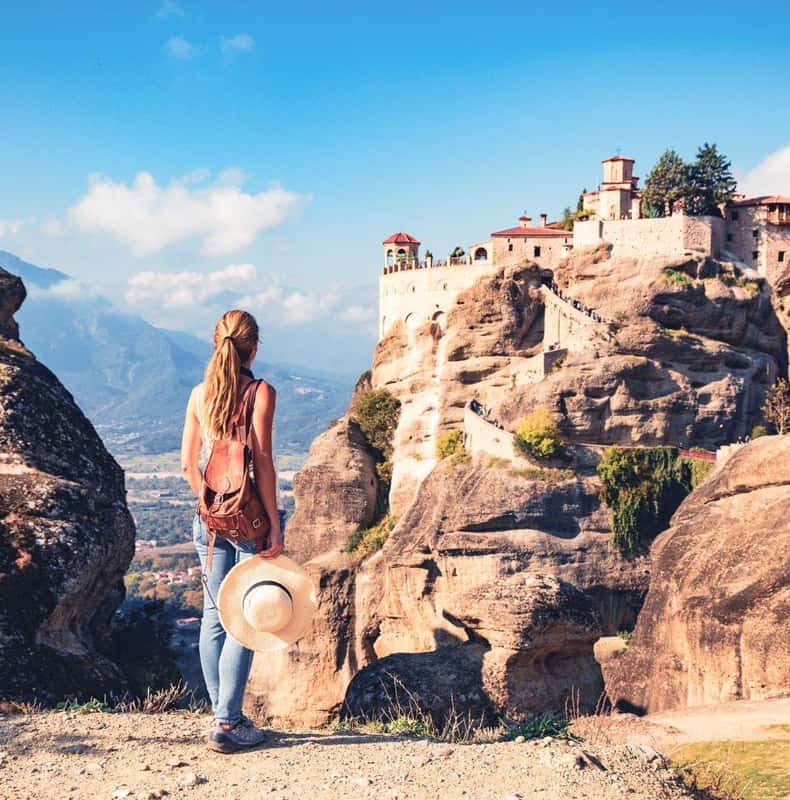
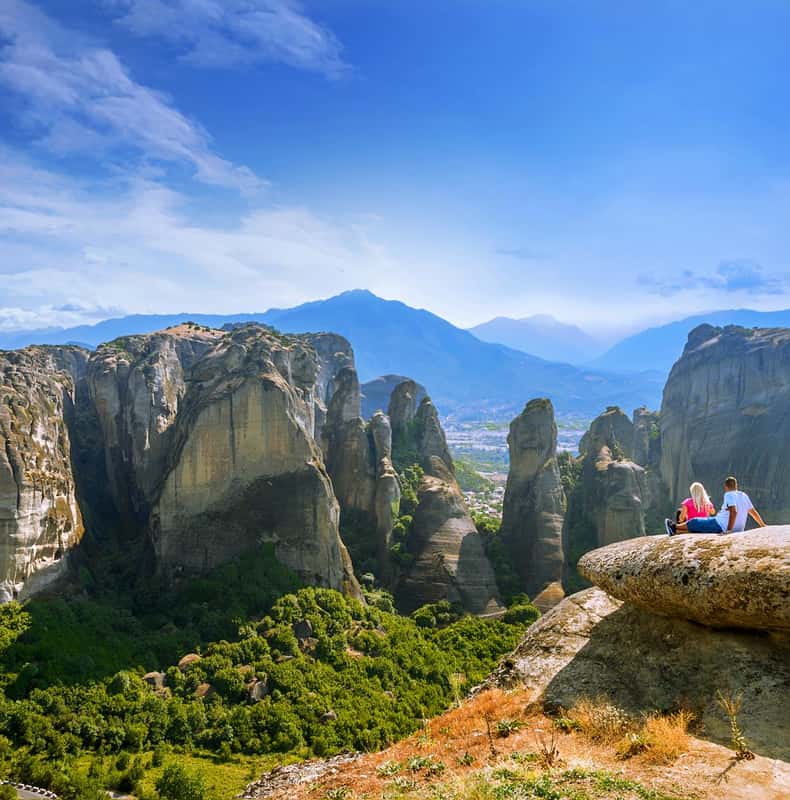
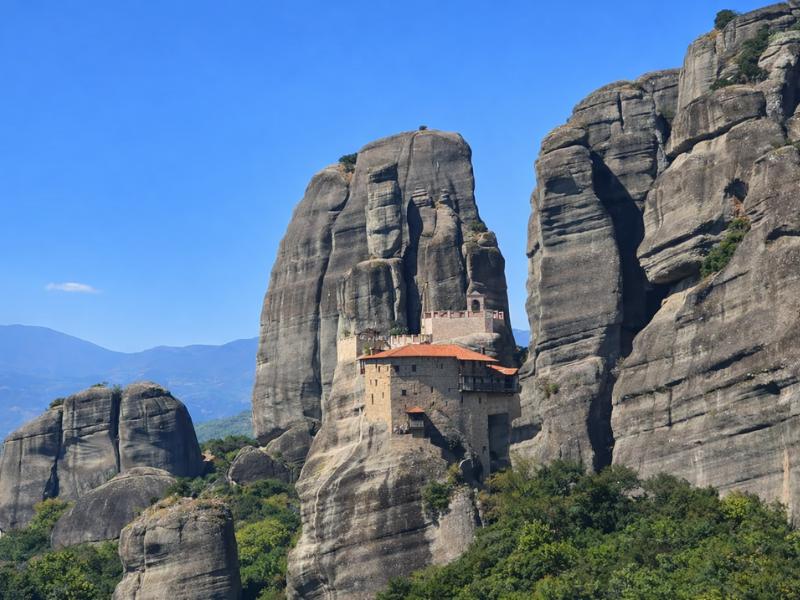
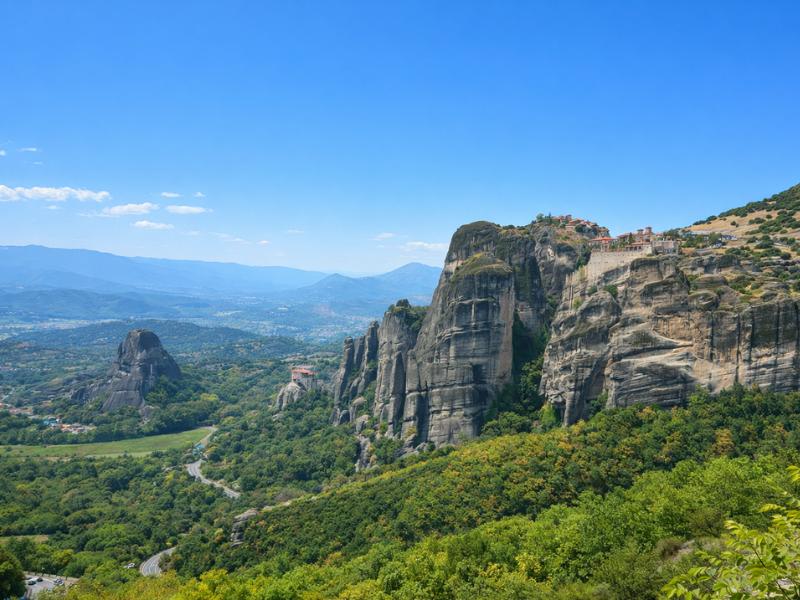
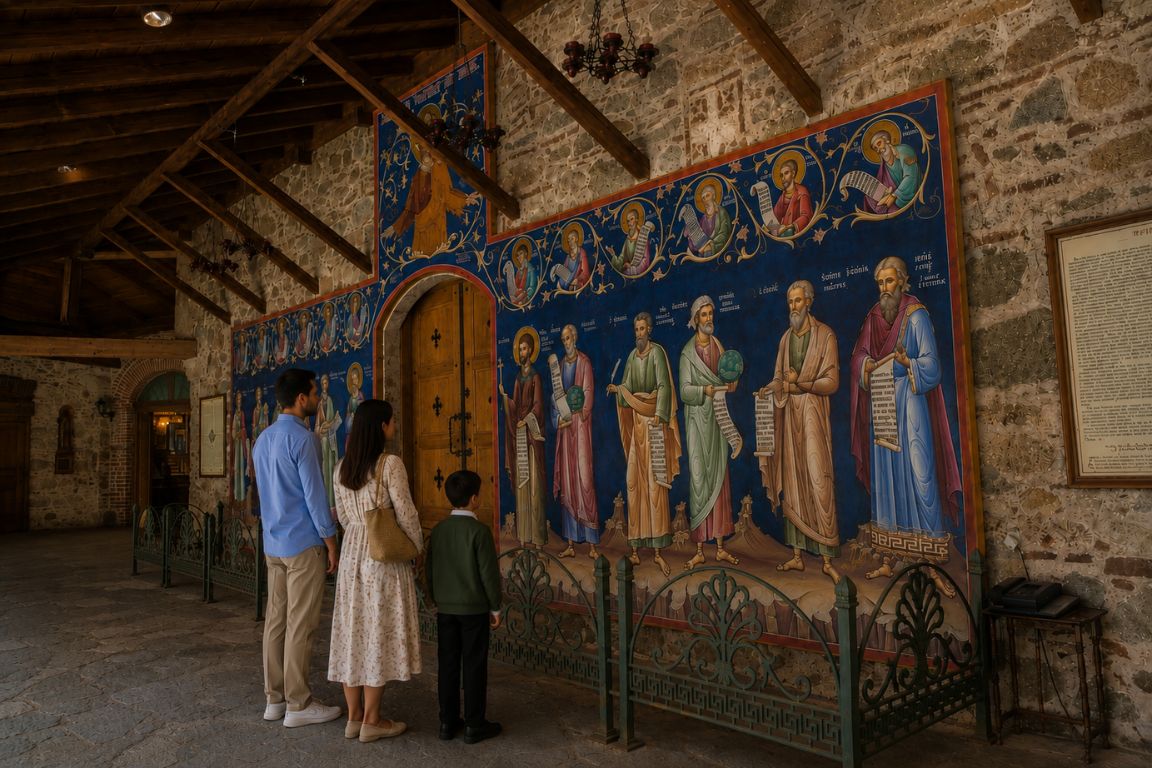 Yes, with appropriate expectations by age. The landscape itself is the main thing and it requires no explanation to produce an immediate response from children. Rock formations that rise 400 meters from the plain with medieval monasteries balanced on top of them look like something out of a story book, and most children register that before adults finish explaining what they are looking at. The physical demands are real but manageable: one monastery has no stairs at all, several are moderate climbs, and the harshest staircases can be skipped without missing the experience. Children under 12 enter every monastery free of charge.
The honest caveat: Meteora is not a theme park and it does not run on a child’s schedule. The monasteries are working religious sites with dress code requirements, no noise rules, and staircase climbs in summer heat. A family that arrives in July at noon without water, without appropriate clothing for the children, and without a plan for when the first child announces they are done walking will have a harder day than a family that plans these variables in advance.
With planning, Meteora is one of the most memorable family destinations in Greece. The sheer scale of the rock complex, the story of monks hauling everything up by rope and basket, the cats that lounge on monastery terraces, the views from the top of staircases that make the Thessalian plain look like a map rather than a landscape: children remember these things. Several families we have guided over seventeen years have returned with their children a decade later, now adults, specifically because the first visit made such an impression.
If you want family-specific guidance on which monasteries to prioritize and how to pace the day, a private Meteora tour can be shaped around the ages and energy levels of your group.
We get this question a lot. Here’s our take on whether Meteora is worth visiting – including who should skip it and who absolutely shouldn’t.
Discover a four-hour monastery route with pickup and transport between stops. Review it as a family option only after the operator confirms your children’s eligibility and needs.
Which Monasteries Are Best for Kids?
Check your date and children’s eligibility before arranging the monastery day. The morning tour combines three interior visits with local minibus transport.
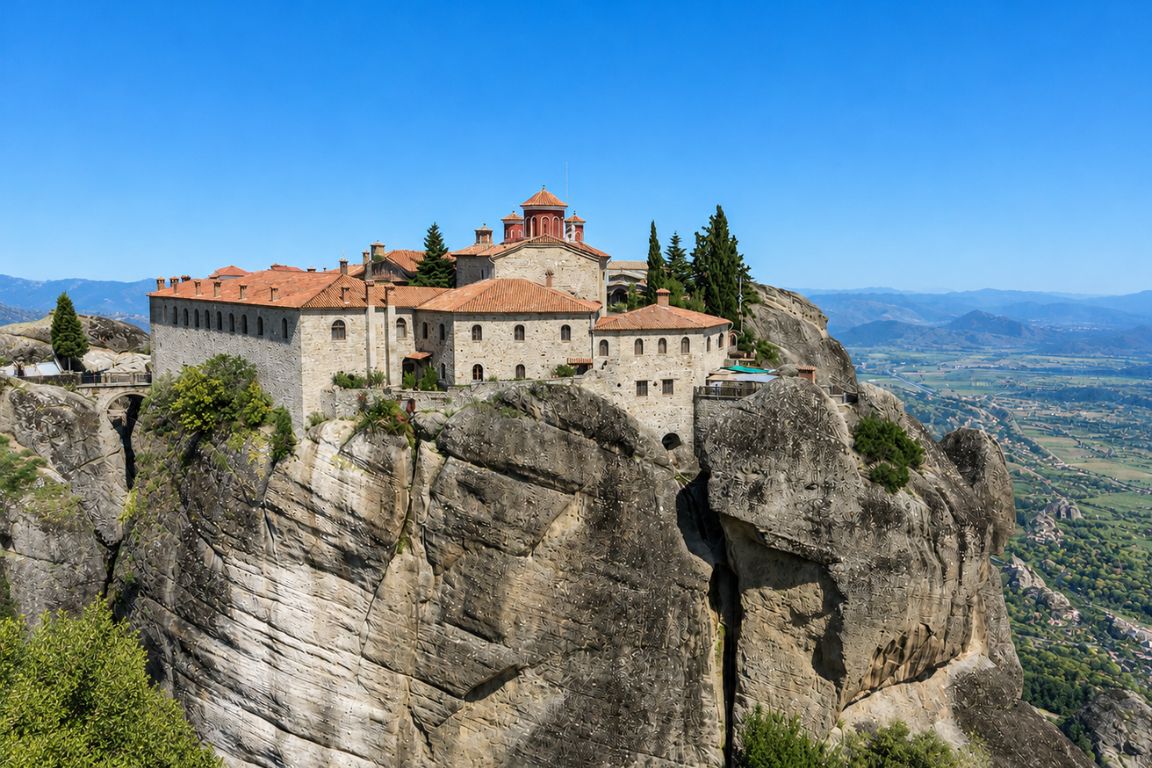
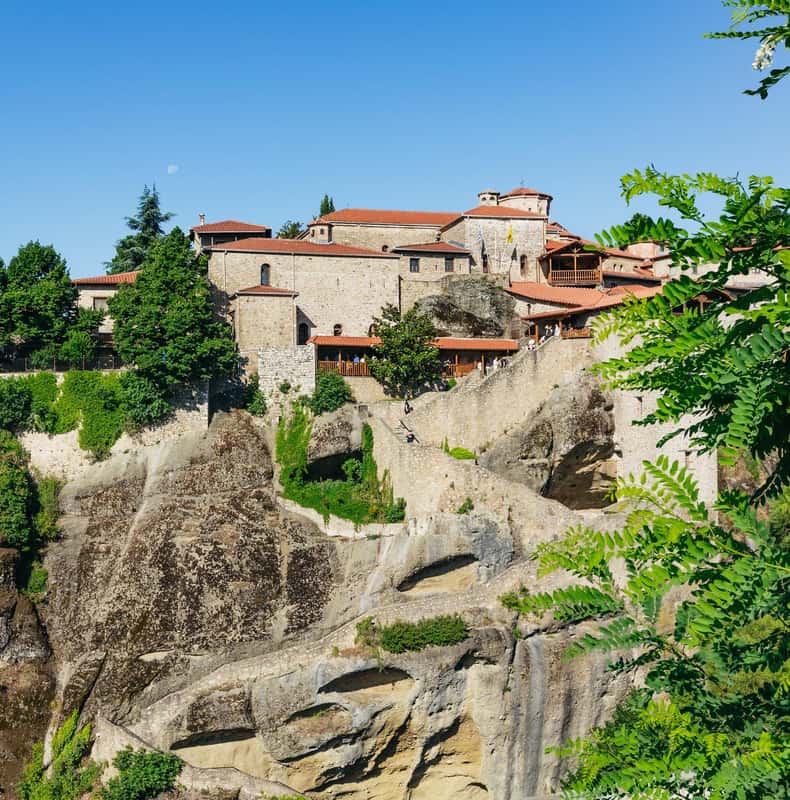
St. Stephen’s is the clear first choice for families with young children: no stairs, just a flat bridge from the car park to the entrance. Roussanou is second: a moderate climb with handrails and shade, manageable for most children aged 5 and up. Varlaam is good for children aged 8 and up who can handle 195 steps. Grand Meteoron and Holy Trinity, both with 300-plus steps, are best left for families with older children or teenagers. St. Nicholas Anapafsas is the most underrated choice: open daily in summer, 100 steps, and the quietest of the six.
The Varlaam winch tower is worth a specific mention for families with children aged 8 and up. The museum inside Varlaam contains archive film footage from the early 20th century showing monks being lifted up the cliff face in rope nets. This is exactly the kind of detail that sticks in a child’s memory for years. The story of “how did the monks build this if there were no stairs?” is the thread that runs through every monastery visit at Meteora, and Varlaam gives that story its most tangible physical evidence. When you can point to the actual rope basket and the actual winch mechanism and say “people used to go up and down in that,” children understand the place differently.
Strollers cannot be used on the monastery staircases and cannot be brought inside any monastery building. They can be left secured outside the entrance. A baby carrier or front-pack is the right solution for infants. Most families with children under 3 find St. Stephen’s and the roadside viewpoints sufficient for a satisfying visit without attempting any staircase monasteries.
There are six open to visitors but you won’t have time for all of them. Here’s a breakdown on which Meteora monasteries are best to visit based on views, crowds, and what’s inside.
| St. Stephen’s | 0 (flat bridge) | All ages | No stairs; best views over Kalambaka; accessible with strollers outside |
| Roussanou | ~130 | 5+ | Bridge approach; feels like arriving at a castle; nuns’ honey shop |
| St. Nicholas Anapafsas | ~100 | 6+ | Shortest staircase climb; open daily in summer; quiet interior |
| Varlaam | ~195 | 8+ | Winch tower and rope basket; archive footage of monks in nets; 12,000-litre barrel |
| Grand Meteoron | ~300 | 10+ | Ancient kitchen, ossuary, museum; oldest and largest; most impressive |
| Holy Trinity | ~140 + rock paths | 10+ (fit) | James Bond filming location; 360-degree views; most dramatic position |
How Many Steps Are There and What Ages Can Manage Them?
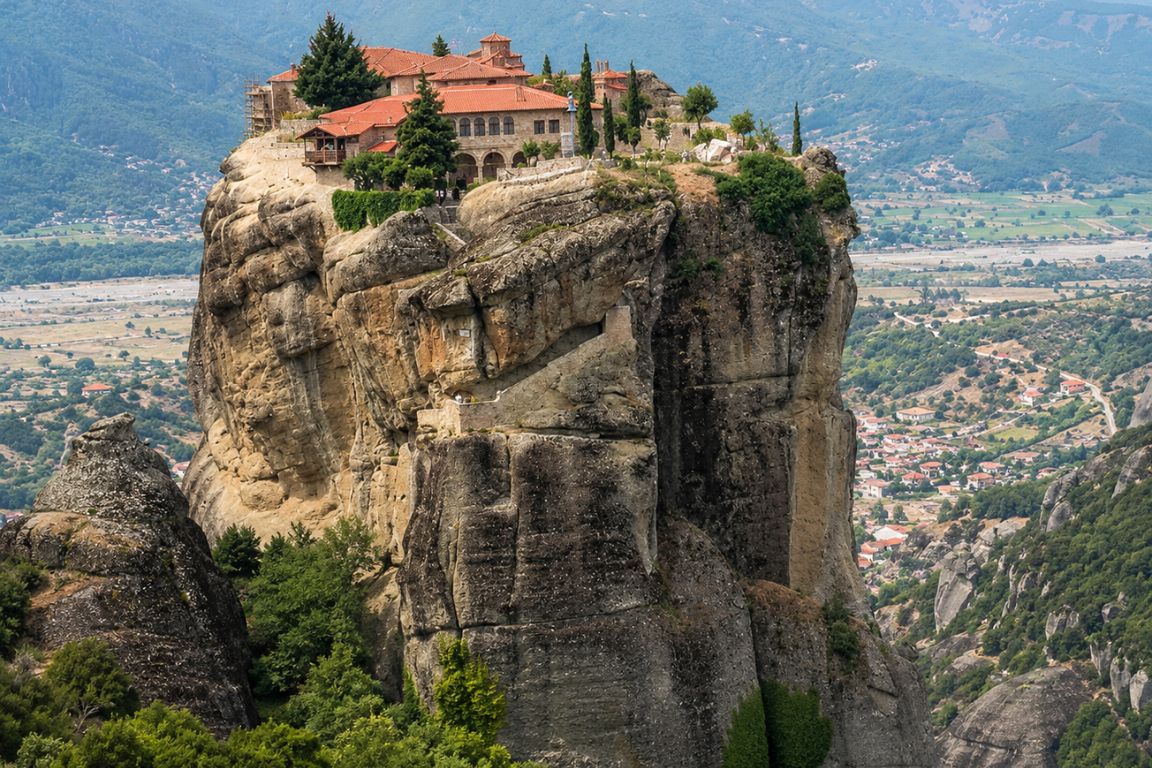 The six monasteries range from zero steps (St. Stephen’s) to roughly 300 steps (Grand Meteoron and Holy Trinity). The steps are carved stone, uneven, worn smooth in places, and often without continuous handrails. In summer heat they are significantly harder than the step count alone suggests. A good benchmark: children who can comfortably climb four or five flights of stairs in normal conditions will manage Roussanou and St. Nicholas Anapafsas without difficulty. Varlaam is a harder ask in summer and should be timed to the early morning. Grand Meteoron and Holy Trinity are genuinely demanding and most children under 8 will find them tiring or upsetting.
The steps are not uniform. At Grand Meteoron, the 300-step count includes long open stretches exposed to direct sun, narrow tunnel sections, and several landings where rest is possible. In June or July midday this climb affects adults as well as children. The same climb at 09:30 in April is a different experience entirely. Timing and season matter as much as step count when planning with children.
Handrails exist on most staircases but coverage is inconsistent. Some sections of the Varlaam staircase have good metal railings on both sides. Other sections have railings on one side only or none at all. Keep younger children within arm’s reach at all times, particularly on the descent, where loose footing on worn stone is more likely than on the way up.
A practical age guide based on step count and terrain: under 5, stick to St. Stephen’s and the viewpoints; 5 to 7, Roussanou and St. Nicholas are manageable if the child is a confident walker; 8 to 10, Varlaam is achievable with early timing and rest stops; 10 and up, all six monasteries are physically possible with appropriate pacing and water; teenagers and active pre-teens can manage the full circuit comfortably.
Use the six-monastery comparison to choose a shorter approach, then confirm the actual access needs of each family member before visiting.
What Kids Actually Love About Meteora
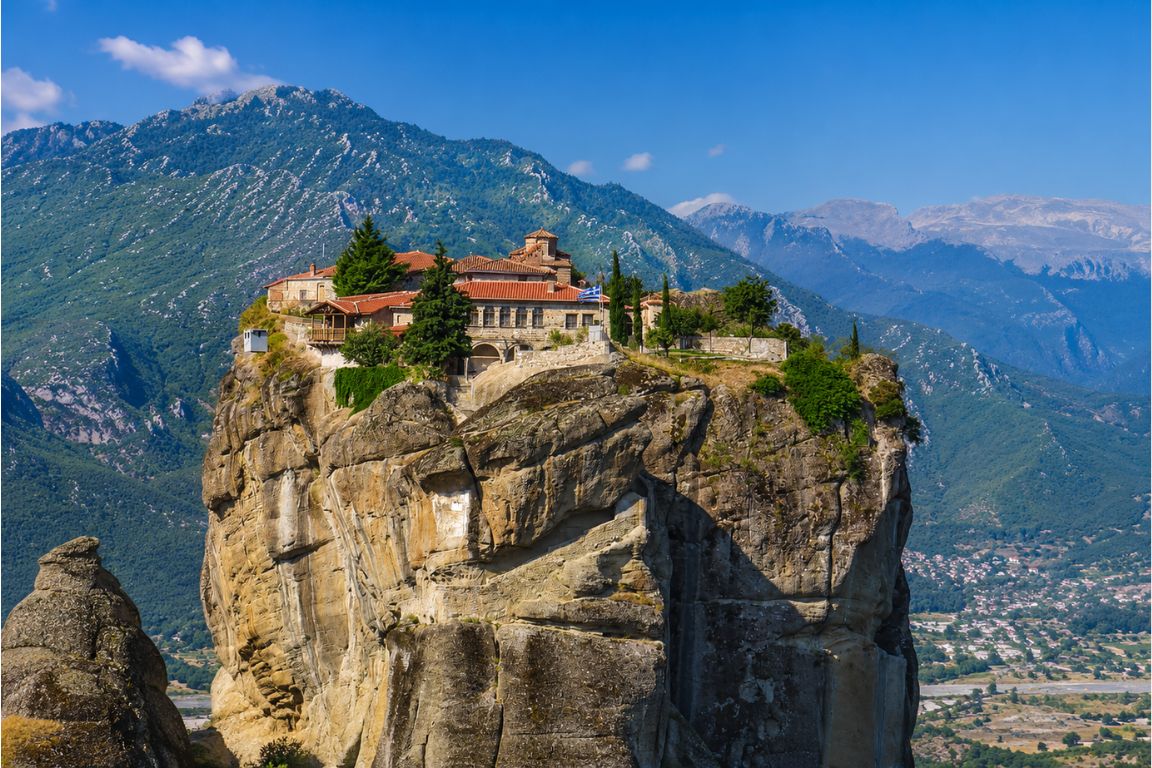 The honest answer is: the rocks. The physical scale of the formations, the impossibility of the buildings on top, and the story of monks hauling everything up by rope and basket are naturally compelling to children in a way that most ancient sites are not. Older children often respond to the James Bond connection at Holy Trinity. Younger children respond to the Varlaam rope net, the cats on monastery terraces, and the sheer height of the viewpoints. The hermit cave shelters near Kastraki, where monks lived in carved rock hollows centuries before the monasteries were built, produce genuine wonder in children who imagine living in a cliff-face cave.
The “monks in the nets” story is a reliable entry point for any age from about 5 upward. The original access to every monastery before stairs were cut was by rope, ladder, or a net basket winched up the cliff face by hand. Building materials, food, water, livestock, and people all arrived this way. When a 19th-century abbot at Varlaam was asked how often the rope was replaced, he reportedly replied: “Only when it breaks.” Guides use this story because it produces the right reaction from children: a combination of horror and delight that opens them to everything else the site has to say.
Older children and teenagers respond to Meteora for different reasons. The James Bond connection at Holy Trinity (“For Your Eyes Only,” 1981) is worth mentioning specifically if you have a Bond fan in the family. The rock climbing community around Kastraki appeals to teenagers who have any interest in outdoor sports. The hermit caves behind Kastraki, where the guided hiking tours go, are the right mix of physical challenge and historical weirdness that teenagers tend to enjoy more than formal monastery visits.
The logistics here can catch people off guard. This breakdown on how to visit Meteora tours covers transport, timing, and which sites are worth the climb.
Recommended tours by season
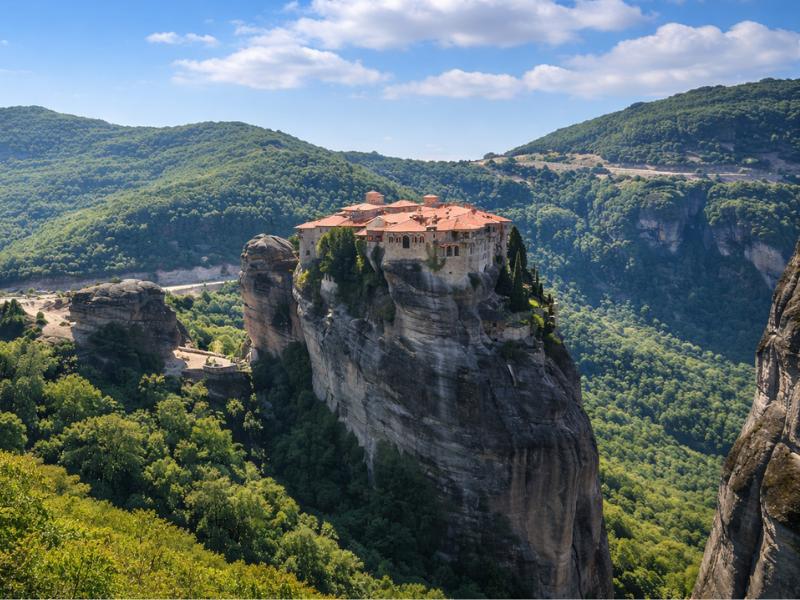
Early Morning Meteora Tour – Small Group with Local Guide
Summer pick: a four-hour small-group circuit from Kalambaka, timed to the morning before midday heat on the staircases.
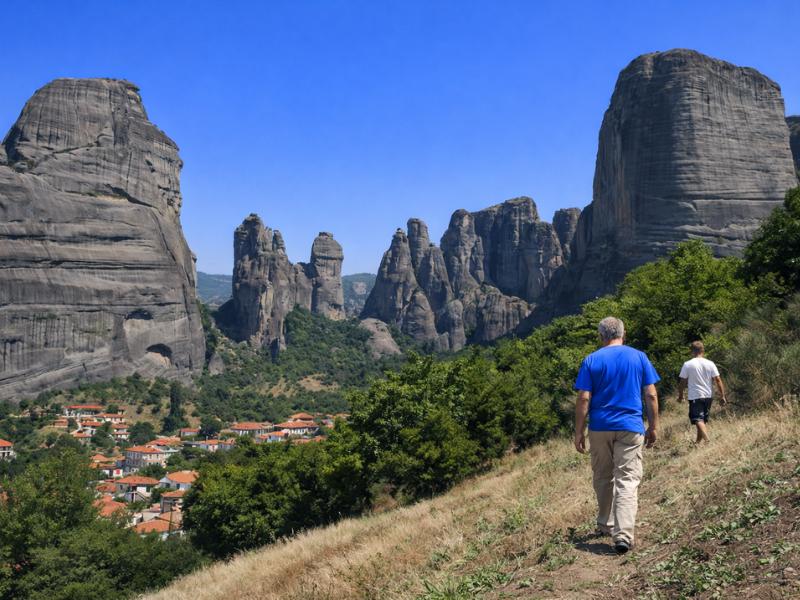
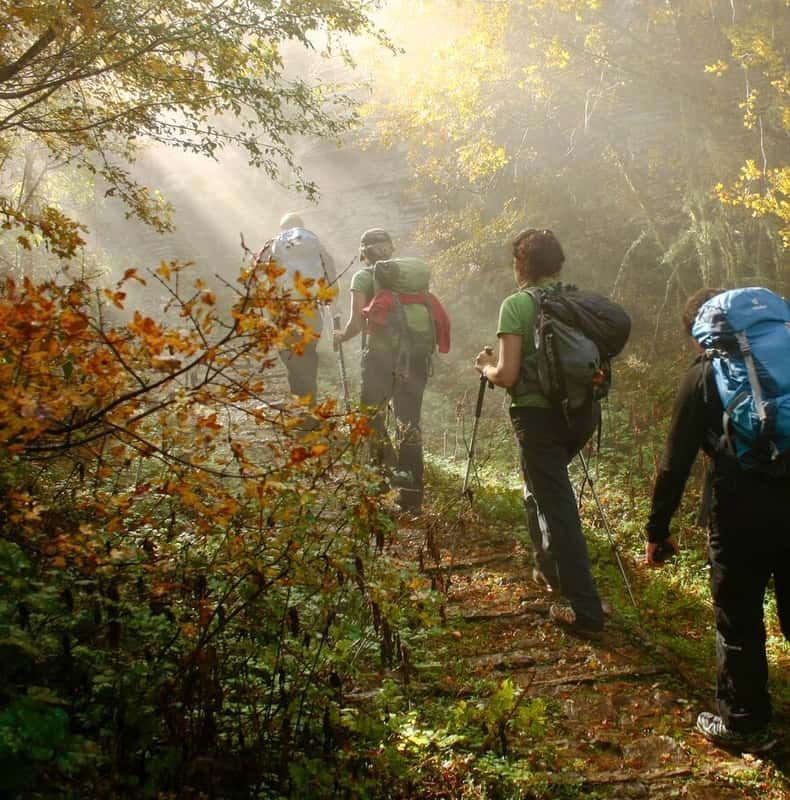
Easy Meteora Hiking Adventure – Light Trails & Iconic Views
Spring and autumn pick: light trails and viewpoints rather than a full staircase circuit. About four hours.
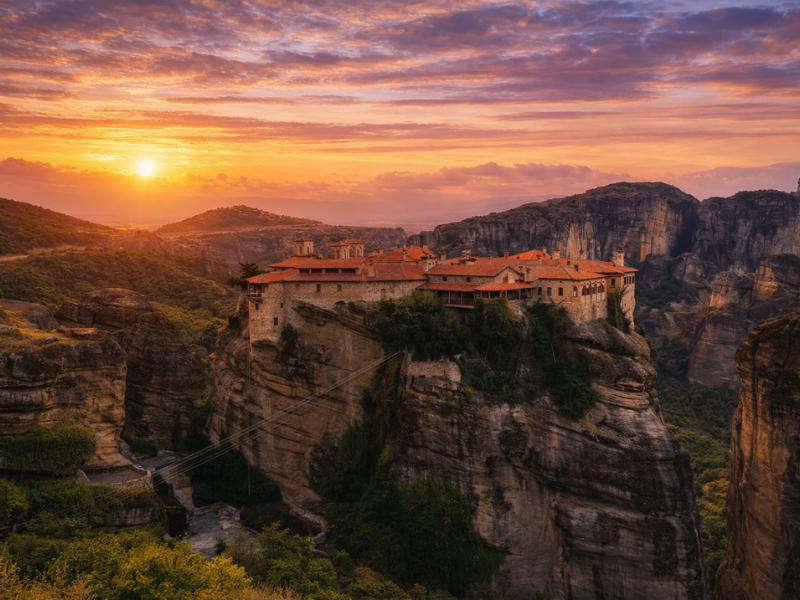
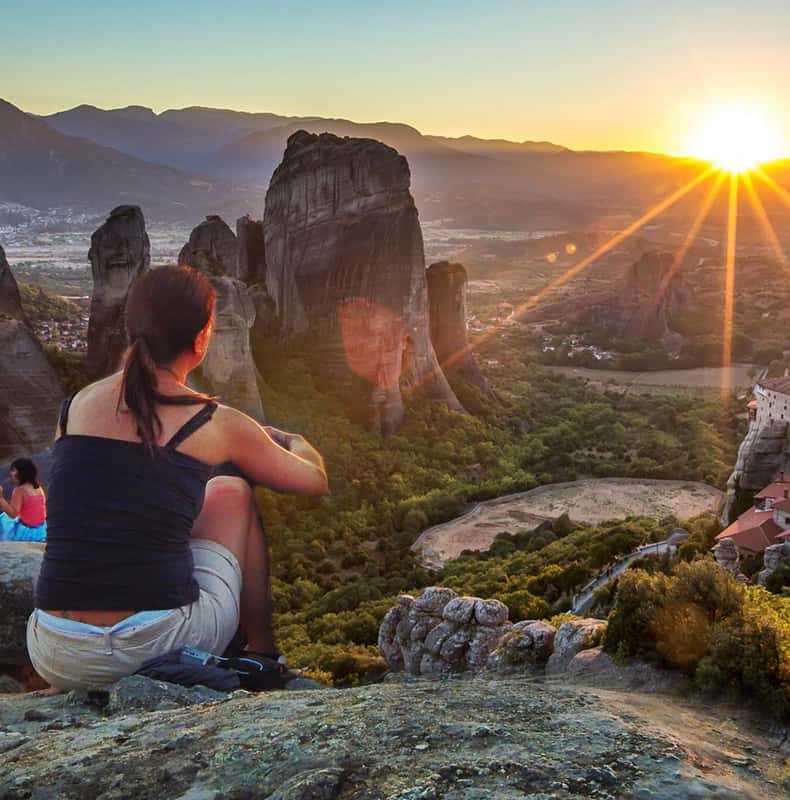
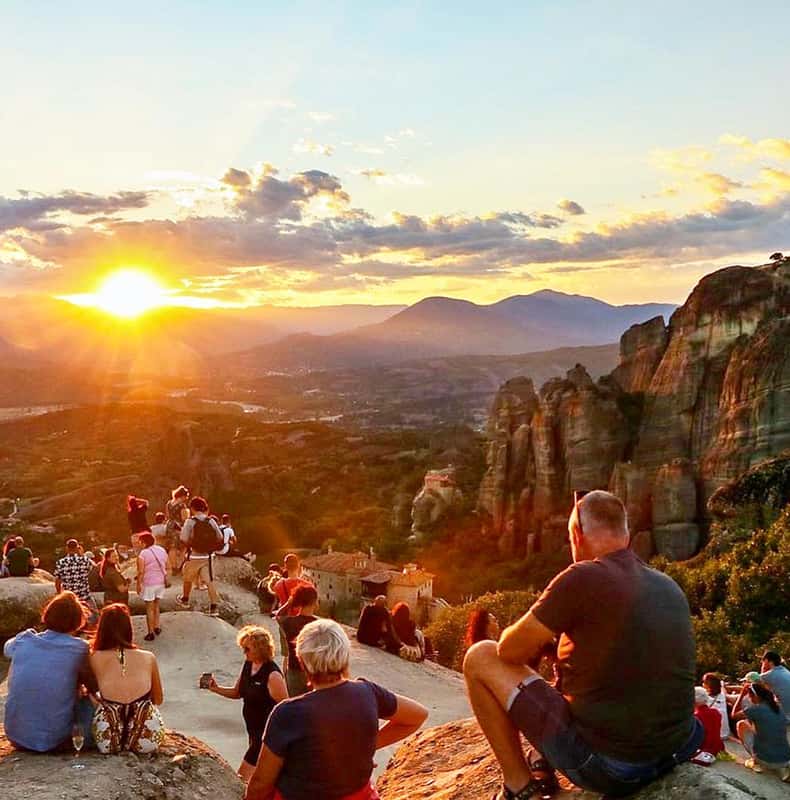
Small-Group Meteora Sunset Tour – Monasteries Glow & Hermit Caves
Shoulder-season pick: a four-hour late-afternoon route to the monasteries and the hermit caves.
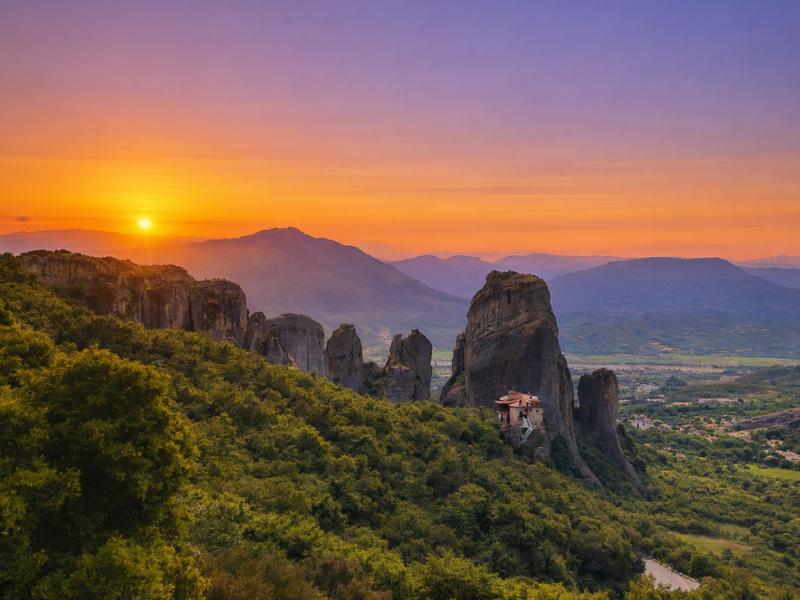
2-Day Meteora Experience from Athens – Sunset, Sunrise & Hotel Stay
Shorter-daylight pick: two days from Athens with a hotel night, plus sunset and sunrise at the rocks.
Explore an evening of hermit-cave history and panoramic viewpoints with local guiding. Confirm children’s eligibility and the evening schedule before choosing it for your family.
Practical Tips for Visiting Meteora with Young Children
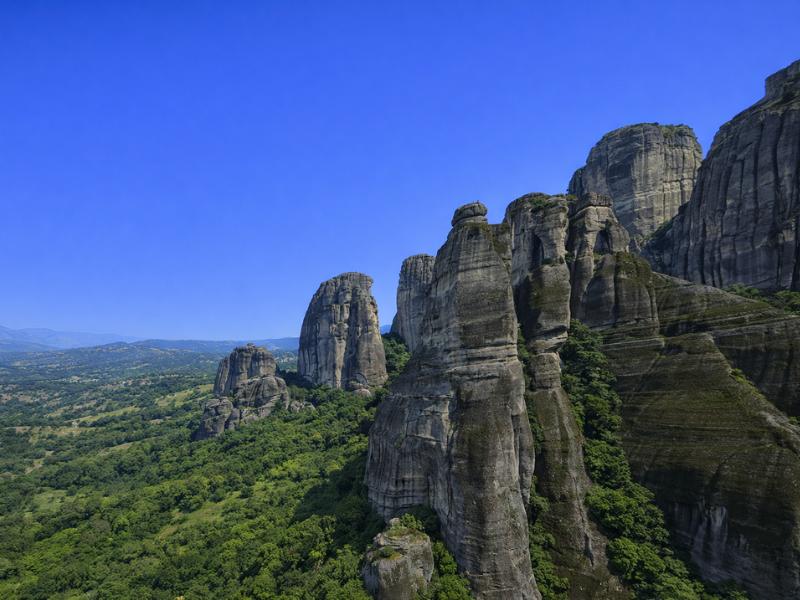
Start early. Be at the first monastery by 09:30 at the latest. In summer this is not optional: by 11:00 the sun on the open staircases is genuinely harsh, the crowds have arrived, and children who have already been walking for an hour begin to fade. An early start produces a completely different experience from a 10:30 arrival. Pack more water than you think you need: 500ml per person per hour in summer is a reasonable minimum on the staircase climbs.
Dress code prep for children: the same rules apply as for adults. Boys need long trousers or equivalent below the knee and a top covering the shoulders. Girls need a skirt below the knee and a top covering the shoulders. Children under about 6 tend to get discretion from the monks if they are clearly with a family, but a 13-year-old in shorts will be turned away exactly as an adult would be. Pack appropriate clothing for all children before leaving the hotel, not as an afterthought at the monastery gate.
The monastery road has no food or drink options beyond a couple of small canteen stalls near the main parking areas. Pack snacks and water before leaving Kalambaka or Kastraki. Greek supermarkets in both towns stock everything you need. Fruit, crackers, and water go in the bag every morning. The midday break from monastery visits is not optional in summer and should be spent in the shade in Kalambaka or Kastraki with a proper meal and a rest period. Resuming at 15:00 when the temperature has dropped and the main crowds are thinning is the right rhythm for a family.
A rental car makes the family visit significantly easier. The KTEL monastery bus runs only four times per day in season and follows a fixed circuit that does not pause long enough at each stop for families to explore at their own pace. A car lets you leave when a child signals they are done, skip a monastery that is not worth the climb that day, and return to the hotel for a midday break without logistical difficulty.
Still comparing your transport options? This breakdown on how to get to Meteora tours cuts through the confusion and tells you what most travelers end up choosing.
Check your date and children’s eligibility before arranging separate rides. The morning minibus includes local pickup and return for a four-hour route.
Kid-Friendly Activities Beyond the Monasteries
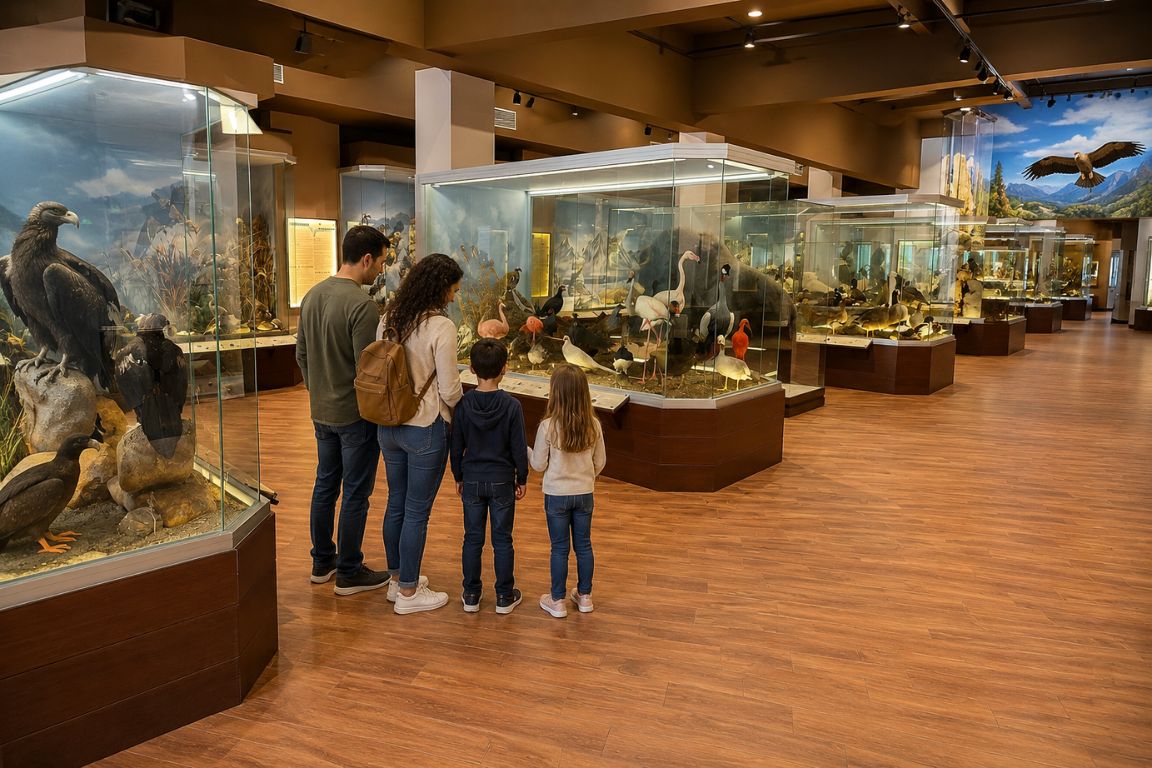 The Natural History Museum of Meteora and Mushroom Museum in Kalambaka is the best non-monastery activity for children. It covers 350 species of birds and mammals displayed in habitat settings, plus an extensive mushroom collection with more than 250 species. The museum organizes educational workshops for children and the exhibits are presented at a level that works for ages 5 and up. Admission is modest and it makes an excellent midday activity during the hot pause between morning and afternoon monastery visits.
The Theopetra Cave, 5 km from Kalambaka, reopened in 2025 after an eight-year closure and is now one of the best family stops near Meteora. The cave contains evidence of continuous human habitation going back 130,000 years, including what is currently identified as the oldest known man-made structure: a stone wall across the cave entrance dated to approximately 23,000 years ago. The cave museum is small and well explained, and the cave itself is cool, which makes it a welcome stop in summer heat. Entry is €5 per person with reduced rates for children and students. Open daily except Tuesdays, 08:30 to 15:30.
Terra Immersia, a 360-degree immersive projection experience in Kalambaka, provides an indoor introduction to Meteora’s history and landscape through light, sound, and projection. The experience lasts about 45 minutes and is explicitly family-friendly: no stairs, no walking, fully climate-controlled. It works particularly well on rainy days, at midday when heat makes outdoor activities miserable, or as an orientation before the first monastery visit. Children who see the immersive version of Meteora before climbing up to Grand Meteoron arrive with more context and stay engaged longer inside.
The family hiking tour through the rock formations, starting from the Doupiani rock at the edge of Kastraki, is suitable for children aged 7 and up who are comfortable walking on uneven terrain. The guided 8 km route takes about 4.5 hours and passes the ruins of the abandoned Pantokrator monastery, the hidden Ypapanti monastery, and Grand Meteoron. Guides on this tour tell the stories of the hermit monks in a way specifically designed to hold children’s attention. Maximum group size is 12, which makes it suitable for families. E-bikes are also available for rent in Kalambaka for older children and teenagers who want to cover the monastery circuit under their own power without the full physical effort.
The area has a lot more going on than the photos suggest. Here’s what to do in Meteora tours so you leave feeling like you actually experienced the place.
Keep an independent indoor or low-effort activity available when monastery climbs no longer suit the day. The local activities guide covers museums, villages, viewpoints, caves, and other alternatives.
Where to Stay in Meteora with Kids
 Kalambaka is the better base for families. It has the wider range of accommodation, the main restaurants and supermarkets, the Natural History Museum, and the bus and train connections. Kastraki is quieter and closer to the rock formations with better views, but has fewer amenities and is less practical for families who need flexibility around mealtimes and rest stops. For families with a car, Kastraki’s proximity to the trail network and the monasteries makes it worthwhile for at least one night.
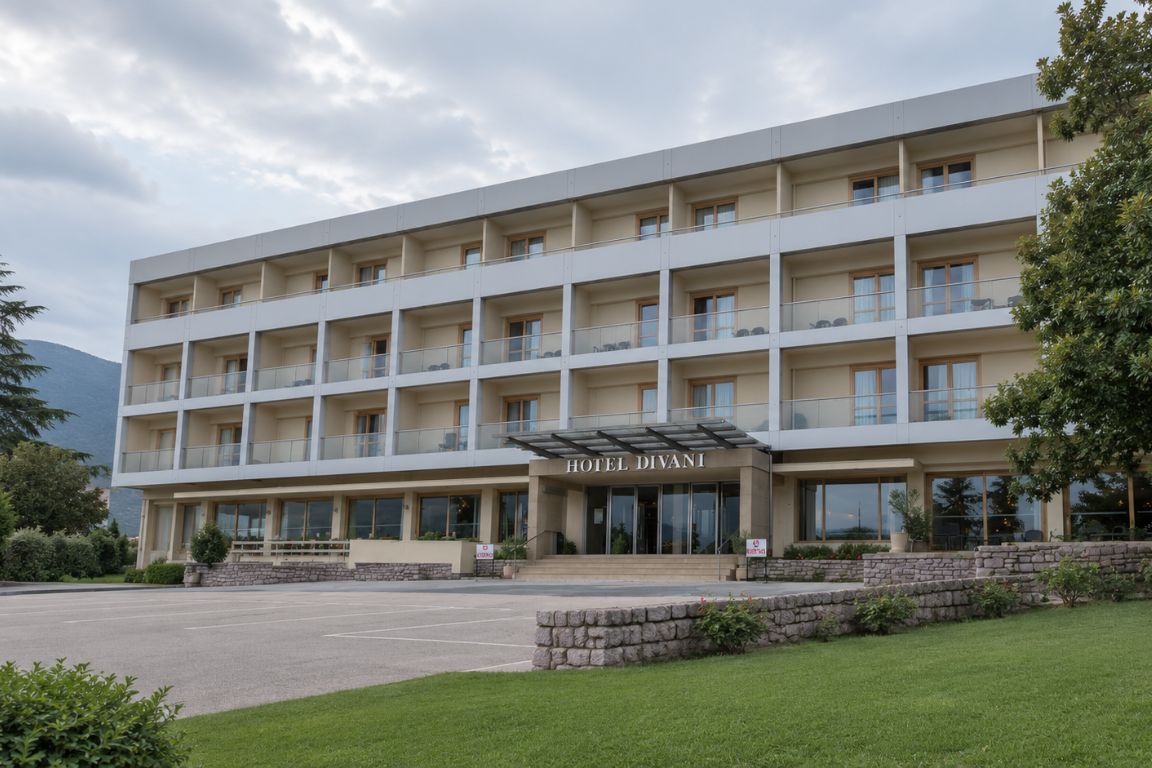
The Divani Meteora Hotel in Kalambaka is the standout family option: it has a swimming pool, which becomes the single most important feature on a hot July afternoon after a morning of staircase climbing. The pool is visible from many rooms and creates a natural rhythm for family days: monasteries in the morning, pool in the midday heat, viewpoints in the late afternoon. The hotel is also centrally located within walking distance of the Natural History Museum and the main restaurant strip.
For families wanting to stay closer to the rocks, Doupiani House in Kastraki is a well-regarded guesthouse with views directly at the rock formations from the terrace. It is smaller and more personal than the Divani but does not have a pool. The views at breakfast from the terrace are one of the best versions of the Meteora morning experience available anywhere.
Two nights minimum is the right allocation for a family visit. The first day covers the accessible monasteries and the Natural History Museum. The second day covers the more ambitious monastery climbs, the hermit caves, and the sunset viewpoints. Families with children under 8 may find two days is plenty. Families with teenagers who want to hike or try the e-bikes benefit from three nights to do everything without feeling rushed on any day.
Still comparing your accommodation options? This guide on where to stay in Meteora tours cuts through the noise and tells you what actually matters.
Explore an itinerary with a sunset tour, a second guided morning and hotel options. Confirm child eligibility and room occupancy before choosing it for your family.
What to Pack When Visiting Meteora with Children
Check the monastery clothing rules while preparing the family day bag. Bring suitable items rather than assuming clothing will be available at an entrance.
The four non-negotiable items for any family day at Meteora: water (at least 500ml per person per hour in summer), cash in small denominations for monastery entrance fees (€5 per adult, children under 12 free, cash only), appropriate clothing for the dress code for every child in the group, and sturdy shoes with grip for the stone staircases. Everything else is secondary but the packing list below covers what experienced family visitors consistently wish they had brought.
One item families consistently underestimate: the children’s clothing for the dress code. The monks and nuns at the entrance enforce this for all ages, not just adults. A 13-year-old in shorts will be turned away. A 9-year-old girl in a sundress without shoulder coverage will be asked to cover up. Packing the right items takes 30 seconds and prevents a frustrating gate conversation after a 200-step climb in the heat. The simple habit: before leaving the hotel in the morning, check every child’s bag for long trousers or a skirt and a sleeved top.
Trying to pack light but still meet the requirements? Here’s the Meteora monastery dress code broken down so you know what you actually need versus what they’ll lend you.
| Water (per person) | 500ml per hour in summer; fill at the hotel before leaving |
| Cash (euros, small notes) | €5 per adult per monastery; no card machines; €10 notes or coins work best |
| Long trousers for boys/men | Required at all monasteries; pack in the day bag even if the child starts in shorts |
| Skirt or wrap for girls/women | Required; a sarong in the bag solves the problem at every monastery |
| Sleeved tops for all | Shoulders must be covered; a light cardigan in the bag covers sleeveless tops |
| Sturdy shoes with grip | Worn stone steps are slippery; flip-flops are a bad choice; trainers or hiking sandals with straps |
| Sun hat per child | The staircases are exposed; hats go off inside chapels, back on outside |
| Sunscreen (high SPF) | Apply before leaving the hotel; reapply at the midday break |
| Light snacks | No food on monastery road; pack crackers, fruit, or similar for between monasteries |
| Small daypack | Carries everything above; large rucksacks are awkward on narrow staircases and inside monasteries |
| Baby carrier (for infants) | Strollers cannot be used on monastery steps; a front-pack keeps hands free for the climb |
Family Visit Patterns from Our Guides: Trends from 14,400+ Visits
| Most popular monastery for families with young children | St. Stephen’s (no stairs, all ages) |
| Most cited dress code issue for families | Children in shorts turned away at Grand Meteoron (~38% of family dress code issues) |
| Average monasteries visited per family day | 2.4 (vs 3.1 for non-family groups) |
| Most popular non-monastery family activity | Natural History Museum and Mushroom Museum (~67% of families with children under 10) |
| % of family groups who rated the visit “exceeded expectations” | ~81% |
Set the family’s pace from current walking tolerance rather than historical visit patterns. The practical section covers breaks, transport flexibility, clothing, food, and water planning.
Frequently Asked Questions
Turn the family answers into a day bag and clothing plan before setting out for the rocks.
Is Meteora suitable for young children?
Yes, with planning. St. Stephen’s monastery has no stairs and works for all ages including toddlers. The rock formations themselves hold children’s attention before any historical explanation. Families with children under 5 should focus on St. Stephen’s, the roadside viewpoints, and the Natural History Museum in Kalambaka rather than attempting the staircase monasteries.
For a low-climb family plan, review the editorial overview of St. Stephen’s and its approach before choosing it for your route.
Do children pay to enter Meteora monasteries?
Children under 12 enter all six monasteries free. Adults pay €5 per monastery, cash only. No combined ticket exists; each monastery is paid separately at the gate.
Enter your family’s transport, accommodation, admission, and activity estimates to compare the total cost of different visit plans.
Which monastery is best for families with young children?
St. Stephen’s is the best choice: no stairs, just a flat bridge from the car park. Roussanou is the next best option with about 130 moderate steps and handrails. Both are suitable for children aged 5 and up. Strollers cannot be used on monastery steps but can be left secured outside any entrance.
Check the morning departure and children’s eligibility before building the day around it. Local pickup and minibus travel connect three monastery visits.
Does the dress code apply to children?
Yes. Children of all ages are expected to follow the same modesty requirements as adults: long trousers or a skirt below the knee, and shoulders covered. Children under about 6 sometimes receive discretion from the monks, but older children will be turned away for non-compliance the same as adults. Pack appropriate clothing for every child before the monastery visit.
Review the clothing requirements for children before packing, including the guidance for lower-body and shoulder coverage. Do not rely on garments being available at the gate.
What is there to do in Meteora with kids besides the monasteries?
The Natural History Museum and Mushroom Museum in Kalambaka is excellent for children aged 5 to 12. The Theopetra Cave (5 km from Kalambaka, reopened 2025) is a good family archaeological site. Terra Immersia in Kalambaka is a 45-minute immersive experience that works well for any age. Family hiking tours from Kastraki suit children aged 7 and up. E-bikes are available for older children and teenagers.
Explore an eight-kilometre walk with a mountain guide and local transfers. Confirm children’s eligibility and trail readiness directly before treating it as a family option.
Traveling to Meteora with children of different ages?
A private Meteora tour matches the route and pace to the ages in your group.
Written by Michael Angelos
Greek tour guide since 2009 · Founder, Meteora Tours
Michael has guided over 14,400 travelers through the monasteries and rock formations of Meteora since founding the agency.