Best Time to Visit Meteora
April, May, and October are the best months to visit Meteora, offering ideal weather, fewer crowds, beautiful scenery, and full monastery opening hours.
April, May and late October offer the strongest balance; once you have a likely month, compare the visit format that best uses its daylight and monastery timetable. Choose A Tour For This Itinerary
Last updated: June 28, 2026
Meteora by Season: Quick Reference
| Spring (Apr-May) | 15-23°C | Moderate | Summer hours (from Apr 1) | Best overall |
| Summer (Jun-Aug) | 27-34°C | Very high midday | Summer hours (longest) | Manageable with early starts |
| Autumn (Sep-Oct) | 14-25°C | Moderate to high (Sep); dropping (post-Oct 28) | Summer into winter transition | Excellent after late October |
| Winter (Nov-Mar) | 0-12°C | Very low | Winter hours (shorter) | Dramatic, quiet, requires planning |
Once you have ruled out unsuitable seasons, compare local, Athens day-trip and overnight formats against the time available.
What Is the Best Time to Visit Meteora?
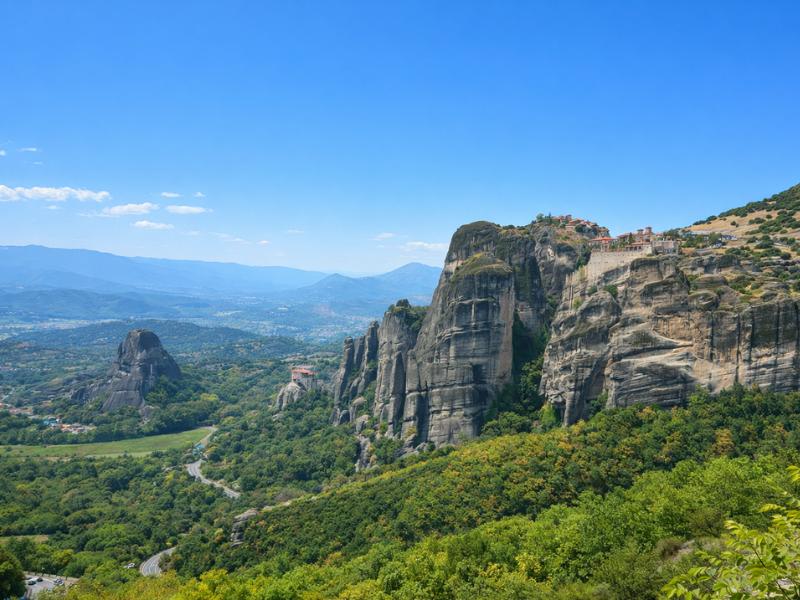
April and May are the best months for most travelers: full summer monastery hours from April 1, temperatures between 15°C and 23°C ideal for walking and hiking, wildflowers across the rock forest, and crowds that are significant but manageable. October rivals April for quality: golden foliage, similar temperatures, and a sharp crowd drop after Greek National Day on October 28. Avoid July and August midday heat, and avoid Greek Orthodox Easter week regardless of the month it falls.
The short version: spring and autumn are better than summer. That’s true at most popular European destinations and it’s true here. But Meteora has a few specific factors that make the timing question more interesting than the usual hot-and-crowded argument.
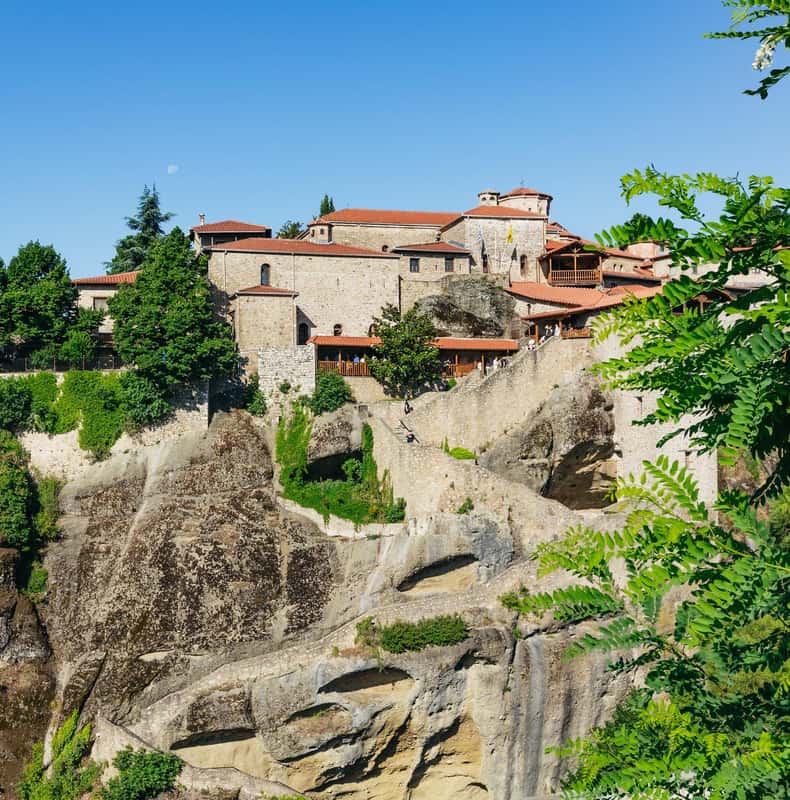
First, the monastery hours change on April 1 and November 1. Summer hours (roughly 09:00-17:00) give you eight visiting hours per day. Winter hours (09:00-15:00) give you six. That difference is meaningful if you’re trying to see multiple monasteries. Arriving in late March means winter hours. Arriving in April means summer hours with the same shoulder-season crowd levels. This makes late March to early April a particularly good window that most guides overlook.
Second, October needs a specific note. September stays busier than people expect: the school holiday season for much of Europe and the domestic Greek summer holiday both extend well into the month. The real autumn crowd drop happens around October 28, which is Greek National Day (Ohi Day). After that date, the tour buses from Athens become noticeably less frequent and the sites feel genuinely quieter through mid-November. October after the 28th is underrated.
Third, Easter deserves its own paragraph. Greek Orthodox Easter moves every year and can fall anywhere from late March to late April. During Holy Week, monasteries restrict tourist access and open only to worshippers for some services. The week of and immediately after Easter brings high accommodation demand in Kalambaka as Greek domestic travelers make the pilgrimage. Whatever month Easter falls in, avoid the ten days around it unless you’re coming specifically for the religious experience, which is extraordinary in its own right.
If you'd rather someone else worry about the seasonal timing and monastery schedules, start with the Athens to Meteora full-day tour, which includes a local guide and a Greek meal.
If the monastery cliffs are on your bucket list, this guide on how to visit Meteora tours breaks down exactly what to book and when to show up.
Explore a full-day route that brings coach travel, local guiding and three monastery visits into one Athens return trip.
What Is Meteora Like in Spring (March to May)?
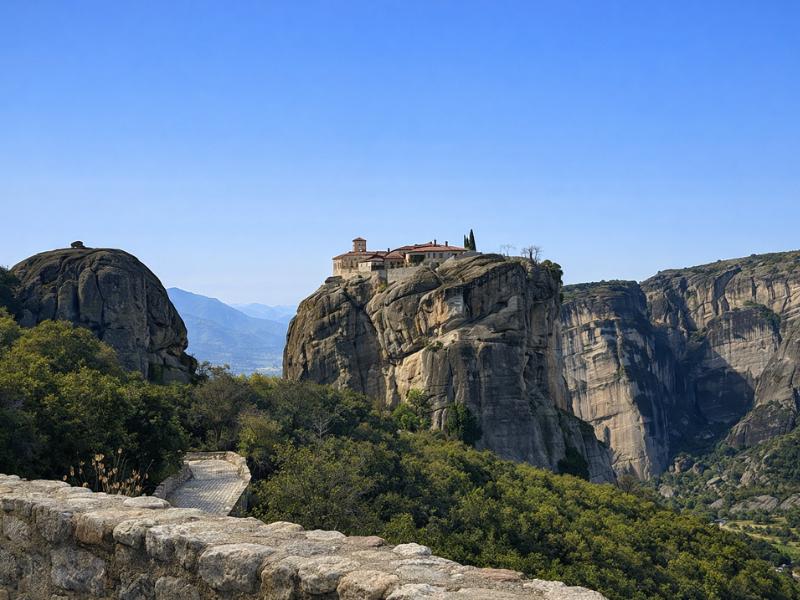
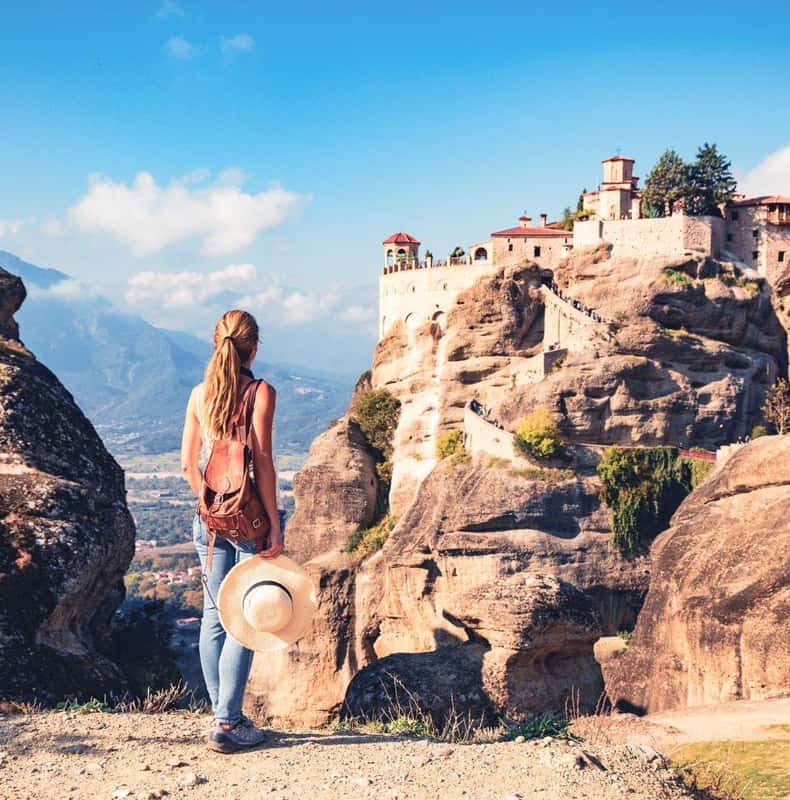
Spring is when Meteora looks most alive. The Thessalian plain below the rocks goes from winter brown to vivid green as wheat fields emerge, wildflowers cover the slopes and forest floor, and the Judas trees along the monastery road bloom pink. Temperatures between 15°C and 23°C are close to ideal for hiking. Rain showers are possible, especially in March, but they tend to produce dramatic skies rather than ruined days. This is the season most experienced visitors choose when they can.
March opens the door but stays unpredictable. Days can reach 18°C and feel genuinely warm; nights regularly drop below 5°C. The winter monastery timetable runs until April 1, which shortens the visiting window. That said, March offers something rare: the rock formations after rain, when the sandstone is dark and saturated, the forest is intensely green, and you might have entire viewpoints to yourself. Late March is when the Judas trees begin their brief spectacular bloom, lining the monastery road in pink before the leaves appear. Photographers who know about the Judas tree season come specifically for this.
April is the sweet spot. Summer hours activate on April 1. Temperatures are comfortable all day. The wildflowers are at their peak. Crowds are present but not yet crushing, and they arrive later in the morning than they do in summer because the Athens day-tour buses can’t leave any earlier. Being at a monastery at 09:00 in April feels different from being there at 09:00 in July.
May warms toward summer. Temperatures can reach 25°C by late in the month, which is still comfortable but starting to suggest early starts for hiking. Crowds are heavier than April, lighter than June. The landscape is still green in early May; by late May it begins to dry toward summer gold. May is reliable, comfortable, and still feels like a choice rather than a compromise.
One exception to avoid across the entire spring window: Greek Orthodox Easter week. The date shifts by year, but the effect on Meteora is consistent. Plan around it, not into it.
The route you pick affects your whole first day. Here’s how to get to Meteora by bus, train, or tour so you arrive with time to actually explore.
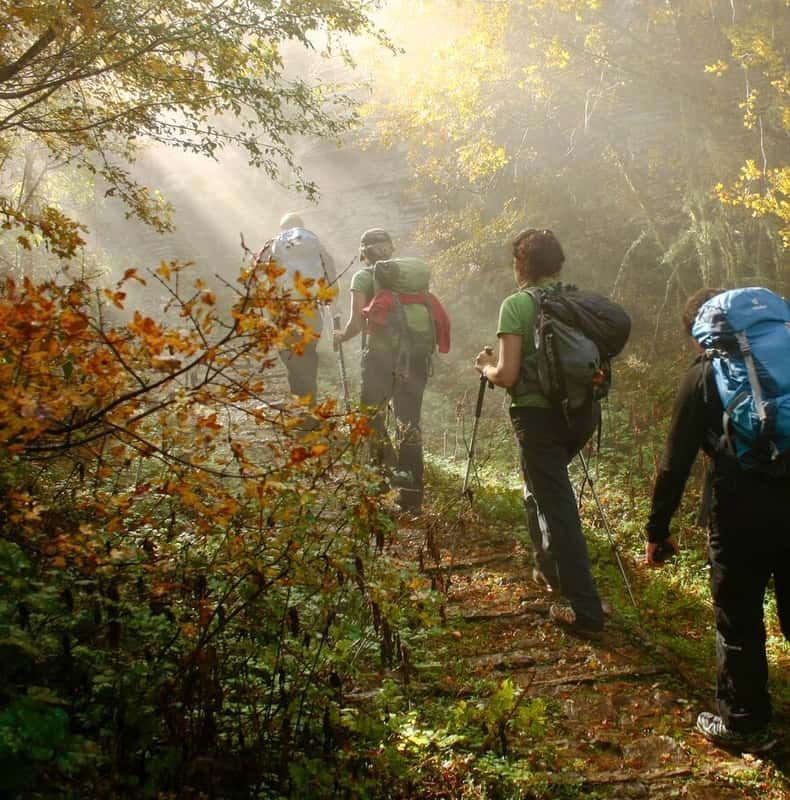
Check your date before filling the itinerary with monastery visits. The guided hike reserves four hours for roughly eight kilometres of forest and rock formations.
What Is Meteora Like in Summer (June to August)?
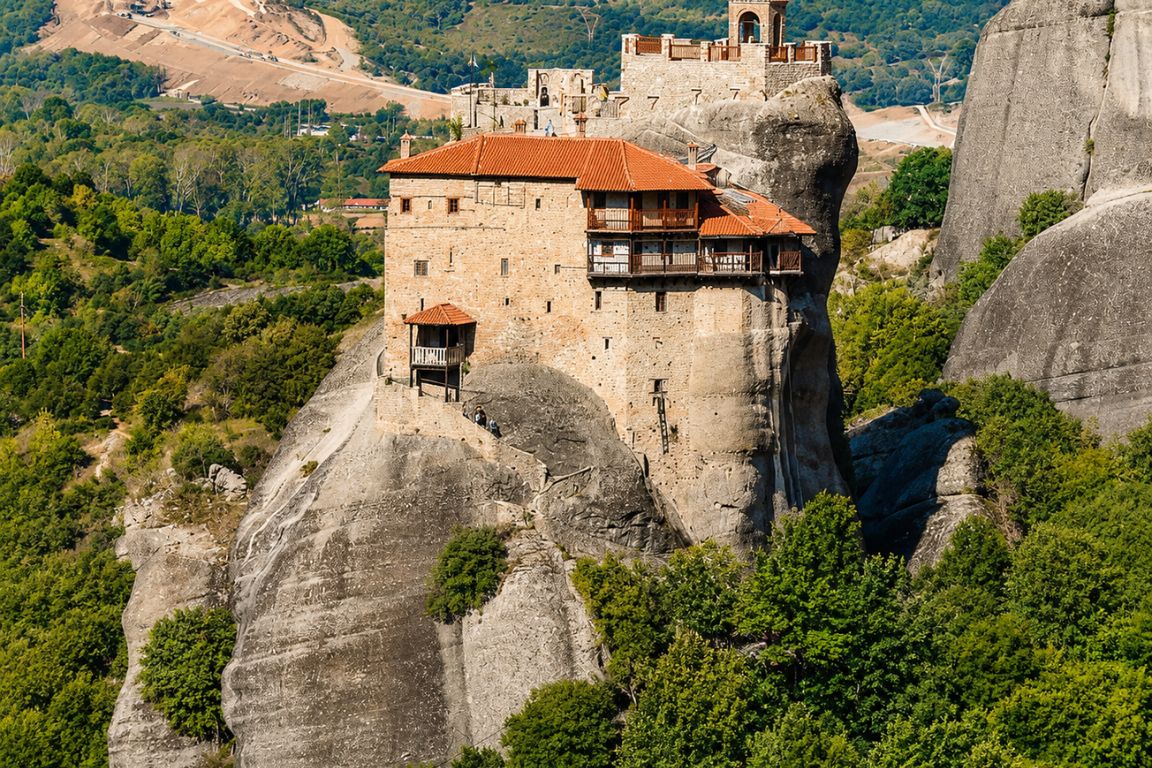 Summer is the most popular time to visit and the hardest to manage well. July and August push average daytime temperatures to 30-34°C, and the monastery staircases and exposed viewpoints amplify the heat significantly. The coach groups from Athens peak between June and August, filling Grand Meteoron and Varlaam between 10:00 and 14:00. The long summer days (14+ hours of daylight) and full summer monastery hours mean you have real options to visit early or late and miss the midday crush, but it requires discipline.
The summer case for Meteora rests on logistics. The transport infrastructure is at its best: the most bus departures from Athens, the most guided tour options, the most hotel availability (though prices are highest). If your Greece trip is locked in for July because of work schedules and school holidays, Meteora in summer is absolutely worth doing. You just need to understand what the day looks like.
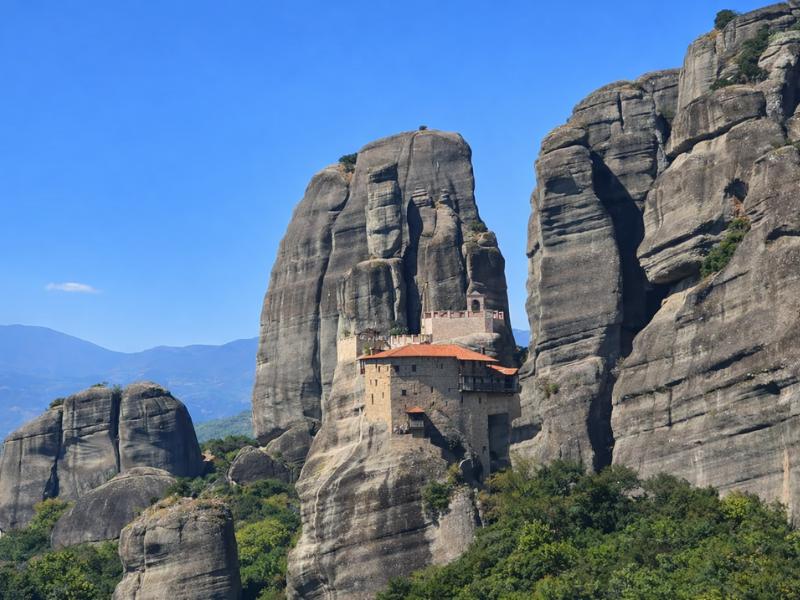
The functional summer strategy: arrive at the first monastery before 09:30, visit St. Nicholas Anapafsas and Holy Trinity in the morning (they get fewer coach groups), then retreat to Kalambaka or Kastraki for lunch and shade between 12:00 and 15:00, then return to the monastery road in the late afternoon when the light is improving and the crowd is thinning. Grand Meteoron and Varlaam are more pleasant at 15:30 than they are at 11:00.
June is summer without quite being peak summer. Temperatures are building toward their maximum but not there yet. School holidays haven’t started across most of Europe. The monastery road has groups but not the constant queue that characterizes August. If summer is your window, early June is a meaningfully better sub-choice than late August.
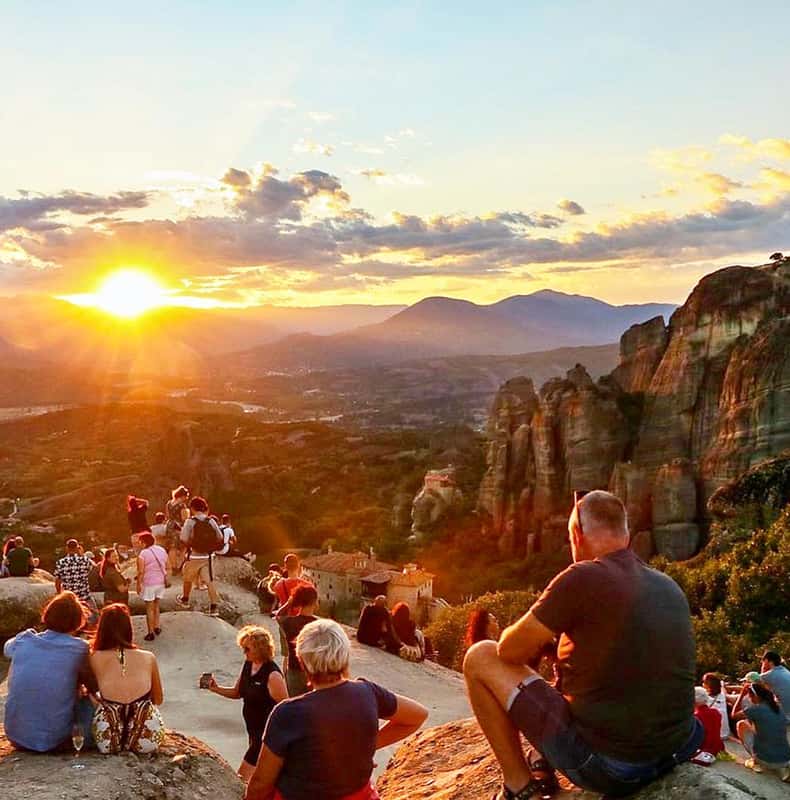
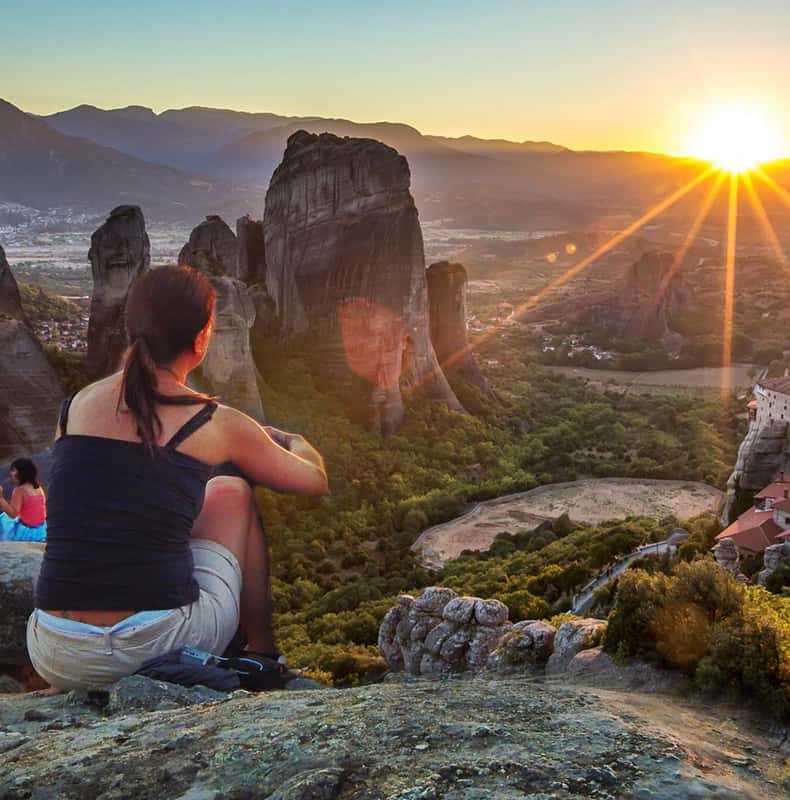
August specifically: the landscape is baked dry, the rocks shimmer in the heat by midday, and every tour operator’s peak season pricing applies. The sunset from the observation deck is spectacular regardless. It’s just harder to earn.
Trying to plan your last afternoon around the light? Here’s a look at the best Meteora sunset spots so you don’t end up at a mediocre viewpoint while the good ones empty out.
Explore monastery scenery, hermit caves and sunset viewpoints on a four-hour local route. It gives the evening a different focus from a midday monastery circuit.
What Is Meteora Like in Autumn (September to November)?
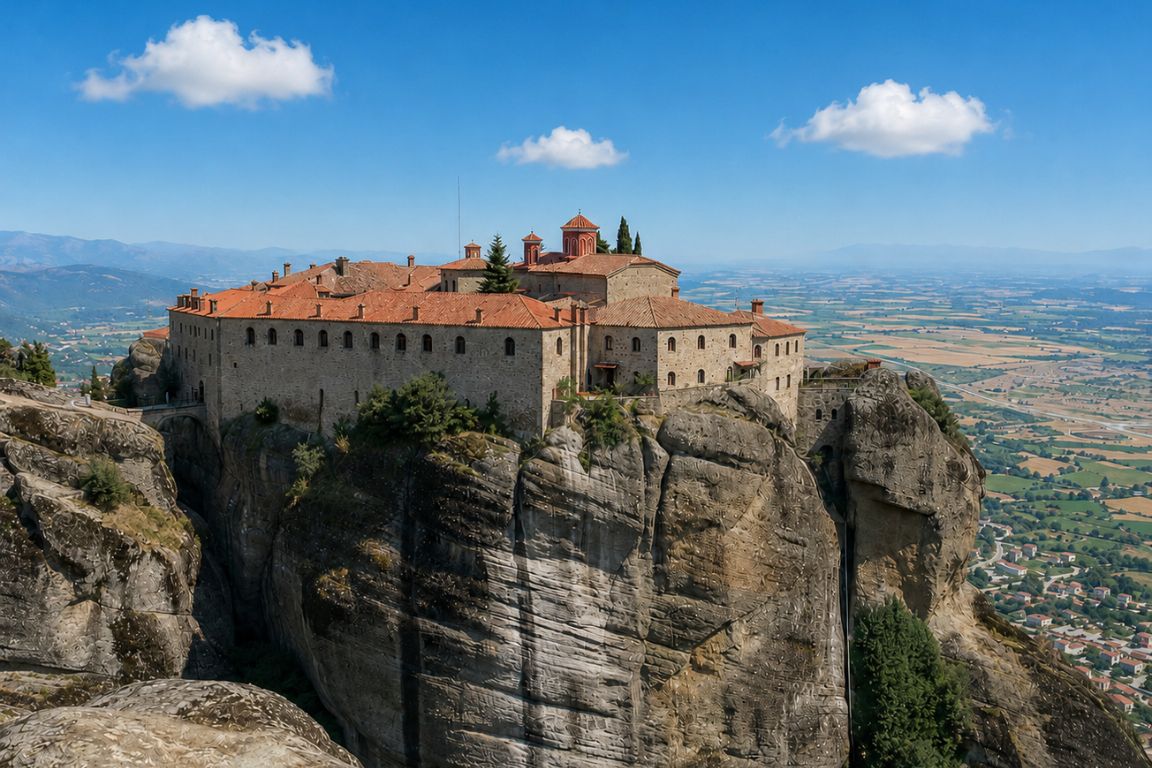 Autumn at Meteora is a tale of two periods. September through late October looks like shoulder season on paper but behaves more like summer in practice: European and Greek domestic travel remains high, the same coach buses run, and the monasteries are busy through midday. After Greek National Day on October 28, the shift is rapid and real. November through early December gives you October’s foliage colors, a fraction of the people, and temperatures that are still comfortable enough for serious hiking.
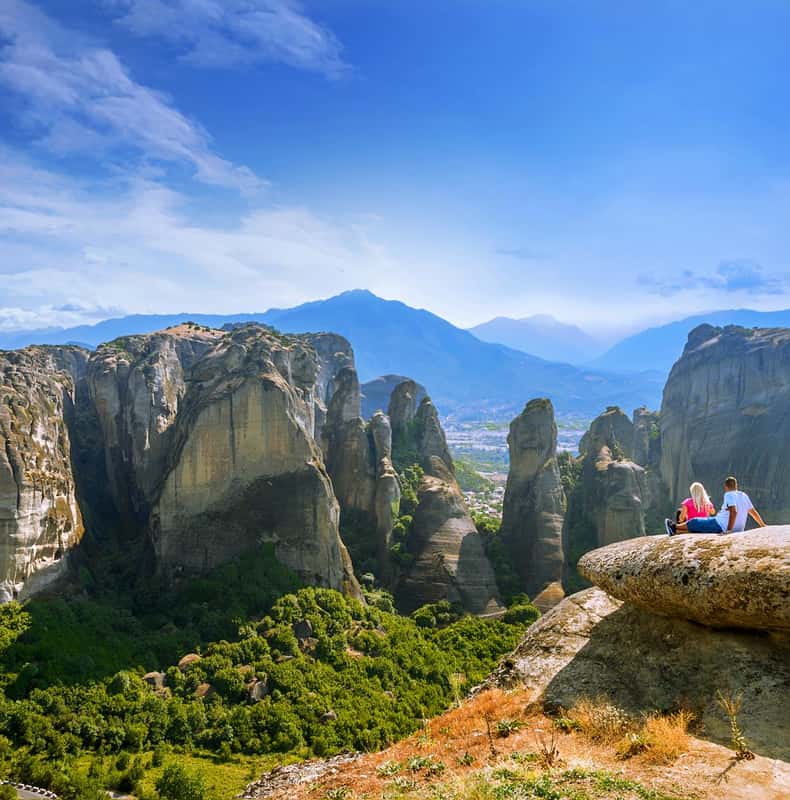
The October foliage is real and specific. The oak forest that covers the lower slopes of the rock formations turns the kind of amber and copper that makes the landscape look like a different place from the summer version. Against the pale grey conglomerate of the pillars, the warm tree colors create the most photogenic version of Meteora that exists. October is consistently cited by photographers as the best month, specifically the second half of October when the light is lower and the colors are at their deepest.
September is comfortable but crowded. Average temperatures drop from August’s 34°C to a still-warm 25°C, making hiking more pleasant. But the tour volume stays high because September is when many northern European travelers finally take their delayed summer holiday. The monasteries are no less busy than August at the peak hours. September is better than August for comfort and worse than October for crowds. It sits in the middle.
November is the hidden month. After the October 28 holiday crowd clears, Meteora becomes genuinely quiet. Temperatures drop into the 10-15°C range by day, cool enough to need a layer but not enough to restrict activity. The monastery switch to winter hours (November 1) shortens the visiting window, but with so few people competing for it, the shorter hours feel like less of a constraint. A November weekday morning at Varlaam, with nobody else in the courtyard, is one of the most peaceful versions of Meteora available to a tourist.
Not sure where to spend your limited time up on the rocks? This guide on which Meteora monasteries are best to visit helps you prioritize without missing the highlights.
Check your date before arranging separate transport between the rocks. The morning tour combines local pickup, photo stops and time inside three monasteries.
What Is Meteora Like in Winter (December to February)?
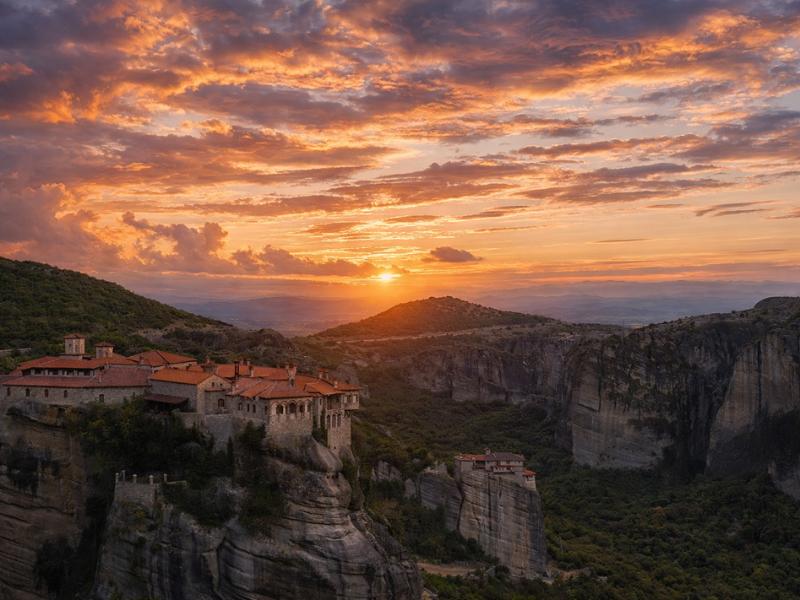
Winter at Meteora is either magical or frustrating depending on the weather you get. On a clear winter morning with snow on the rock pillars and mist threading between them, it’s the most photographically striking version of the site that exists. On a rainy grey day with low cloud obscuring everything above 300 meters, you’re climbing stone steps in the cold to see nothing. The gamble is real. But the crowd situation, the hotel prices, and the raw atmosphere when conditions cooperate make winter compelling for the right traveler.
Temperatures between December and February average 0°C to 8°C during the day, with nights regularly below freezing at monastery elevation. Snow is not guaranteed but not rare, particularly in January and February. When it comes, it can dust the rock surfaces or blanket the entire site, and the photographs from those days are unlike anything produced in other seasons. The monastery road stays passable in most snowfalls, though outdoor activities like hiking and climbing cancel in heavy snow.
Winter monastery hours run from November 1 to March 31, opening at 09:00 and closing between 15:00 and 16:00 depending on the site. Some monasteries add extra closure days in winter beyond their standard weekly close, and the winter Orthodox calendar brings feast days that close individual monasteries to tourists without advance notice. Always check the notice board at the entrance on the day. A private guided tour in winter solves this problem because the operator tracks which monasteries are actually open.
What winter does exceptionally: hotel prices drop 30-40% from summer. The Kastraki village tavernas become firelit, local-feeling places where you might be the only foreigner at the table. The viewpoints have no queue. The monasteries you do enter are quiet enough that you can hear the building itself. For atmospheric photographers, pilgrims, and travelers who actively prefer the off-season version of places, winter at Meteora is a serious option rather than a fallback.
Explore the morning minibus itinerary for monastery interiors, local stories and panoramic stops, with pickup and return at your Meteora base.
What Is the Best Month to Visit Meteora Specifically?
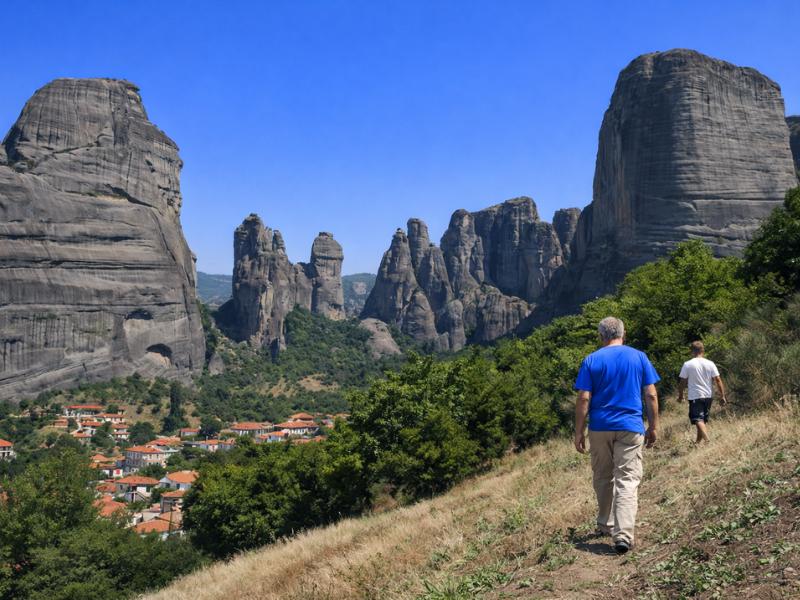
October is the single best month for most travelers, specifically the period after October 28 (Greek National Day). You get full summer monastery hours until October 31, the most visually striking foliage of the year, comfortable temperatures for hiking, and crowds that drop sharply after the holiday. April is the best spring equivalent: full summer hours from April 1, wildflowers in peak bloom, and the Judas tree blossom that photographers come specifically to photograph. May is the most reliable choice if April’s variability concerns you.
The honest ranking of all twelve months for a first-time visitor: October (late) > April > May > November > March > June > September > February > December > January > July > August. July and August sit at the bottom not because they’re bad, but because they require the most effort to manage well. A traveler who goes in July and follows the early/late strategy still has a remarkable experience. It just takes more planning than April.
Recommended tours by season
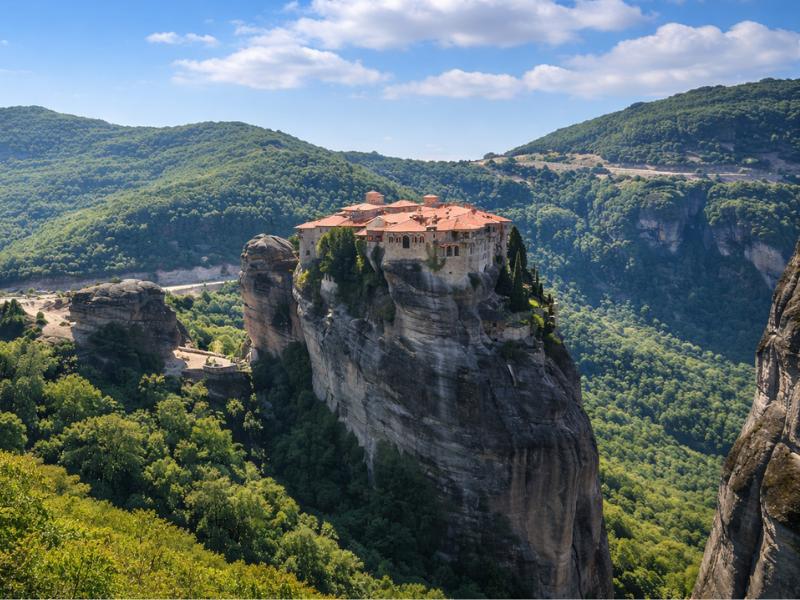
Early Morning Meteora Tour – Small Group with Local Guide
Four hours with a local guide. Best in spring and summer, when starting early is the simplest way to walk the staircases in cooler air.
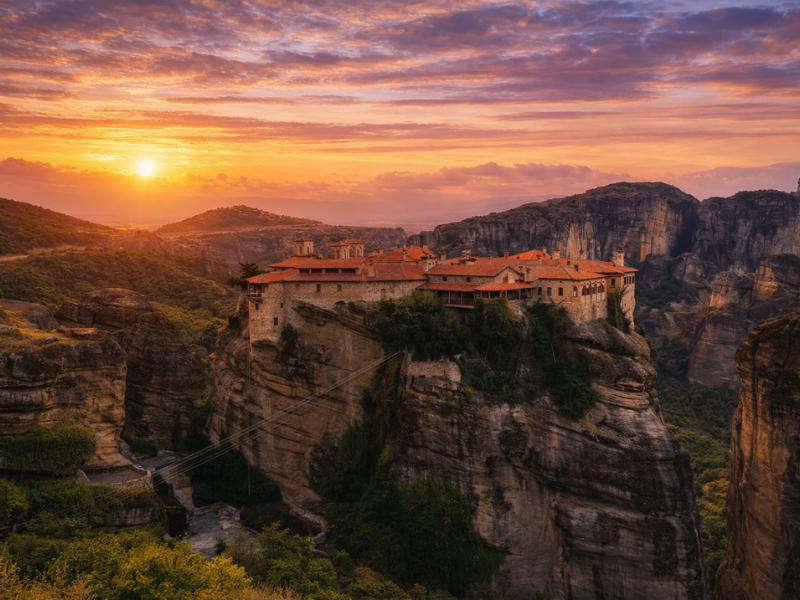
Small-Group Meteora Sunset Tour – Monasteries Glow & Hermit Caves
A four-hour late-afternoon loop of monasteries and hermit caves. Suits June through September, when the useful hours are early and late, not midday.
Small-Group Meteora Hiking Tour from Kalambaka – Transfer & Monasteries
A four-hour walk from Kalambaka with a transfer and monastery time. Matches the months this guide flags for hikers: April, May, October, and November.
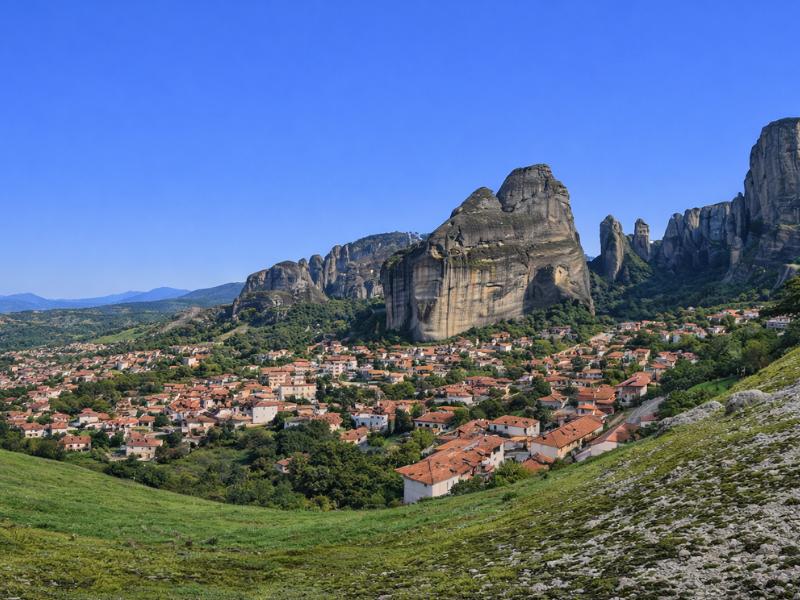
Personalized Private Tour: Meteora’s Monasteries & Monastic Legacy
A six-hour private day focused on the monasteries. The format suits winter, when hours are shorter and individual sites can close without notice.
| First-time visitor | April, May, October | Full hours, mild temps, manageable crowds |
| Hiker / active traveler | April, May, October, November | Cool temps, green or golden trails, no midday heat |
| Photographer | Late October, late March, January (if snow) | Foliage, Judas blossom, or winter drama |
| Budget traveler | November, February, March | Lowest hotel prices, empty sites |
| Crowd-avoider | November-March, or early June weekdays | Fewest tour groups; winter near-empty |
| Family with school-age children | Early June, late September | School holidays limit other options; these are the better summer-adjacent windows |
After choosing the strongest available month for your priorities, compare the trip formats that fit your starting point and available time.
Meteora Month by Month: What to Expect January Through December
Season can change transport, accommodation and activity choices. Enter your own totals to compare complete visit costs rather than relying on isolated prices.
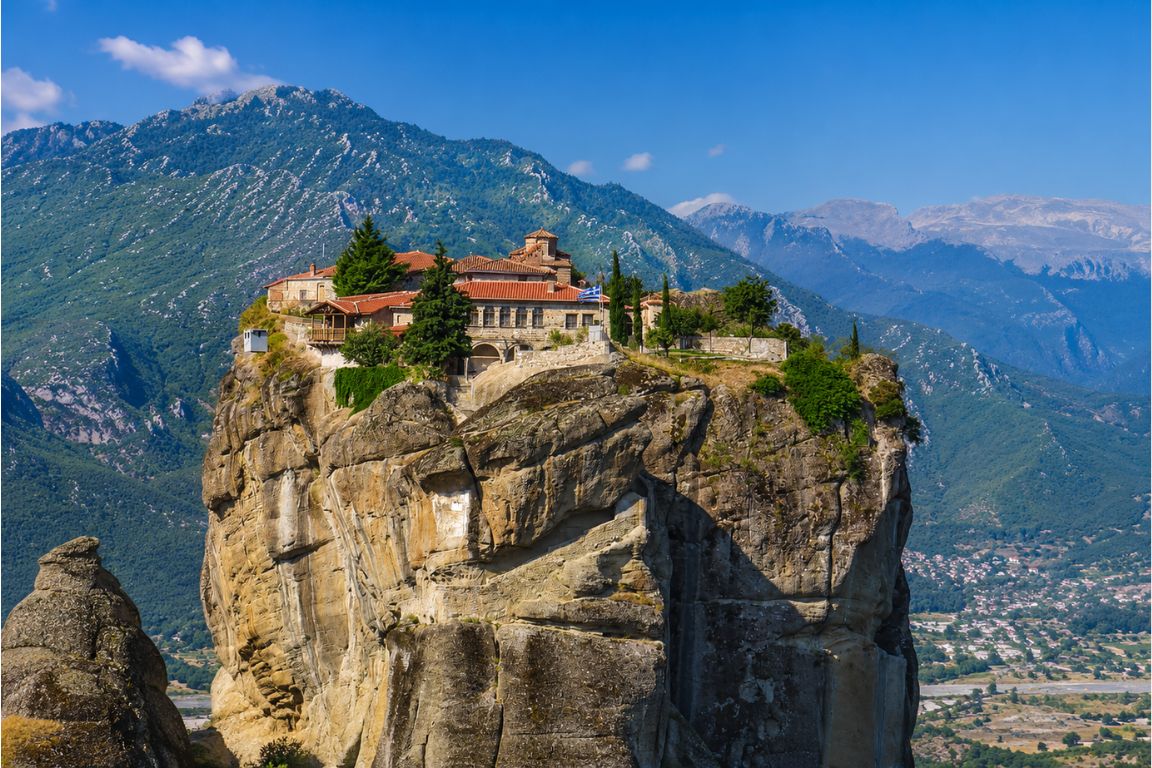 Every month offers a distinct version of Meteora. The table below captures the key variables for each: temperature, crowd level, monastery hours, and what’s specific to that month. Use it to match your travel window to what the site actually delivers.
January: The coldest month, with genuine overnight frosts and the highest chance of snow on the pillars. Snow-dusted Meteora is a photographer’s dream, but outdoor hiking and climbing may be limited or cancelled. Monastery hours are shortest and some add extra winter closures. Hotel prices are at their annual low. Best for: atmospheric photography, budget travelers, pilgrims who don’t mind cold.
February: Similar to January but with slightly longer days. Snow remains possible. The Judas trees are still bare. The monasteries are almost entirely empty on weekdays. Late February starts to feel like the beginning of spring some years. Best for: crowd-avoiders, budget travelers, anyone who enjoys a quiet, slow version of a place.
March: The transition month. Early March is still winter: cold mornings, shorter monastery hours until April 1, and the landscape still bare. Late March shifts: temperatures rise, the first wildflowers appear, the Judas trees begin to blossom pink, and the light starts to feel different. Winter monastery hours until April 1 are the main constraint. One of the best months for photographers. Avoid Greek Orthodox Easter week if it falls in late March.
April: Summer monastery hours activate on April 1. The wildflowers peak. The Judas tree blossom typically falls in this window. Temperatures are comfortable all day (15-20°C). The first significant coach groups arrive but haven’t yet reached summer intensity. Greek Orthodox Easter week is the one variable: check when it falls each year and plan around it. Outside Easter, April is the best month of the year.
May: Warm, green, busy but manageable. Temperatures build toward summer. Wildflowers are fading by late May but the landscape is still lush. May is the most reliable spring month because the weather is more predictable than April without yet reaching summer heat and crowds. Good choice for travelers who want the shoulder season experience with lower weather risk.
June: Early June is the last window before peak summer. Temperatures are building (25-30°C), crowds are rising, but school holidays haven’t started across much of Europe. Monastery hours are at their longest. Hiking is still manageable with early starts. The best June strategy is weekday visits with a 08:30 departure from your hotel.
July: Peak summer. The hottest month, the most crowded month, the longest monastery hours. Average highs of 34°C with very little rain. The exposed stone steps and paths radiate heat by midday. Visiting is entirely viable but requires discipline: be at the first monastery before 09:30 and plan a midday break. The golden hour light at sunset is worth every hot moment that preceded it.
August: Very similar to July. Slightly fewer rain days, equally hot, equally crowded. The driest month of the year. If August is your only option, the early morning and late afternoon strategy applies with even more force. August mornings before 09:30 at the lesser-visited monasteries (St. Nicholas, Holy Trinity) can still feel quiet and worthwhile.
September: Temperatures drop from August’s peak but crowds remain higher than most guides suggest. European late-summer travel keeps the coach buses running at near-peak frequency. The landscape begins to dry and brown by mid-September. Comfortable for hiking but not the quiet shoulder season many travelers expect. Better than July and August; not as good as October.
October: The best autumn month. Temperatures are ideal for hiking (14-22°C). The oak and plane forest turns amber, gold, and copper. The monasteries run on summer hours until October 31. October 28 (Ohi Day, Greek National Day) is a Greek public holiday that briefly brings domestic visitors, then the crowd level drops fast. After October 28, the site feels genuinely quiet and the foliage is at peak color. The best window of the autumn.
November: Winter hours activate November 1, shortening the visiting window. But November brings near-empty monasteries, harvest food at Kastraki tavernas (mushrooms, local wine, warm pies), and the final vivid foliage before winter bare. Temperatures are cool (10-15°C) and comfortable for hiking. One of the most underrated months at Meteora. The rainy days (around 11 per month) are the main downside.
December: Winter atmosphere sets in. December daylight is at its shortest (around 9 hours). Hotel prices are near their annual low except around Christmas and New Year, when Greek domestic travel picks up briefly. The weeks before Christmas and after New Year are very quiet. Fog sits between the pillars on damp mornings in a way that produces extraordinary light. Best for travelers who want authentic winter atmosphere and don’t mind short days and cold temperatures.
We’ve got a full breakdown on whether Meteora is worth visiting if you want a straight answer before you start booking anything.
| January | 9°C | −1°C | ~10 | Very low | Winter (09:00-15:00) |
| February | 10°C | 0°C | ~9 | Very low | Winter (09:00-15:00) |
| March | 14°C | 3°C | ~9 | Low | Winter until Apr 1 |
| April | 20°C | 8°C | ~8 | Moderate | Summer from Apr 1 |
| May | 25°C | 12°C | ~7 | Moderate-High | Summer |
| June | 30°C | 17°C | ~5 | High | Summer |
| July | 34°C | 20°C | ~3 | Very high | Summer (longest days) |
| August | 34°C | 19°C | ~2 | Very high | Summer |
| September | 28°C | 15°C | ~5 | High | Summer |
| October | 21°C | 10°C | ~8 | Moderate (drops sharply after Oct 28) | Summer until Oct 31 |
| November | 15°C | 5°C | ~11 | Low | Winter from Nov 1 |
| December | 10°C | 1°C | ~12 | Very low (except Christmas) | Winter (shortest daylight) |
Temperature averages based on historical climate data for the Meteora / Kalambaka area. Actual conditions vary. Always verify current monastery hours before visiting as they can change with the Orthodox calendar.
How Do Crowds and Monastery Hours Change by Season?
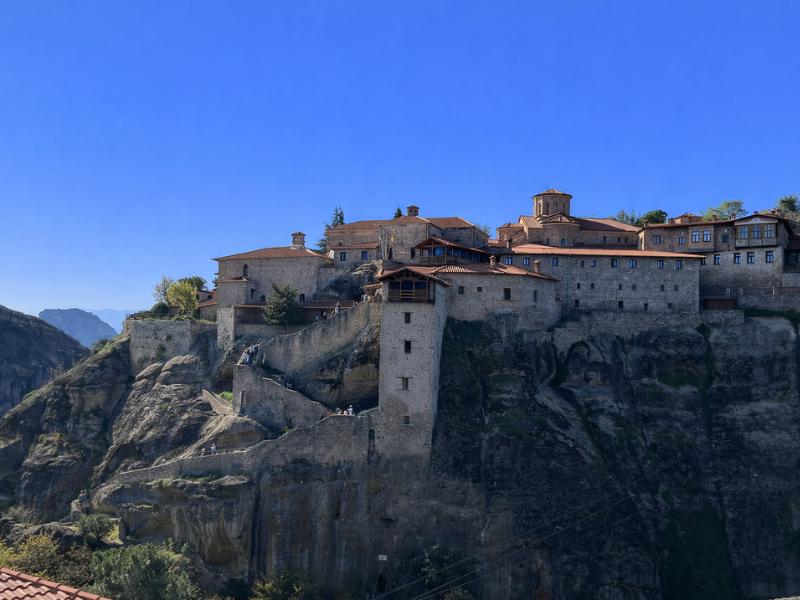
Monastery hours split into two seasons: summer (April 1 to October 31), running roughly 09:00 to 17:00, and winter (November 1 to March 31), running roughly 09:00 to 15:00. Each monastery keeps its own schedule and one weekly closure day year-round. The busiest crowd window is 10:00 to 14:00 from June through September, when Athens day-tour coaches are on site. The quietest visiting conditions exist November through March on weekdays, with January and February producing near-empty monasteries on all but the most popular touring days.
The summer versus winter hours gap is one monastery visit per day in practical terms. With summer hours, you have enough time to visit three or four monasteries across a single day without feeling rushed. With winter hours, you can visit two or three comfortably. For travelers who want to see all six in two days, the summer schedule gives more flexibility. For travelers who just want two or three quality visits without crowds, winter hours are not the constraint they might appear to be.
The Orthodox calendar adds unpredictability beyond the weekly closure pattern. Individual monasteries close for the feast day of their patron saint, for major Orthodox holidays, and occasionally for maintenance without advance public notice. The notice board at the entrance of each monastery is the most reliable source. No online resource, including this one, can guarantee real-time accuracy. When visiting in winter especially, verify at the entrance rather than assuming from a published schedule.
| Summer (Apr 1-Oct 31) | ~09:00-17:00 | 10:00-14:00 (Jul-Sep) | Before 09:30 or after 15:30 |
| Winter (Nov 1-Mar 31) | ~09:00-15:00 | 11:00-13:00 weekends | Weekday mornings Nov-Feb |
| Easter week (any month) | Restricted | All day | Avoid for tourist visits |
| Orthodox feast days | Individual monasteries closed or morning-only | Variable | Check notice board on arrival |
Questions about which monasteries will be open on your specific dates? A private Meteora tour with a local guide can follow that day's openings instead of a fixed public schedule.
Check the morning departure before fixing your monastery circuit. Three interior visits and the transport between them are combined in a four-hour outing.
What Should You Pack for Meteora by Season?
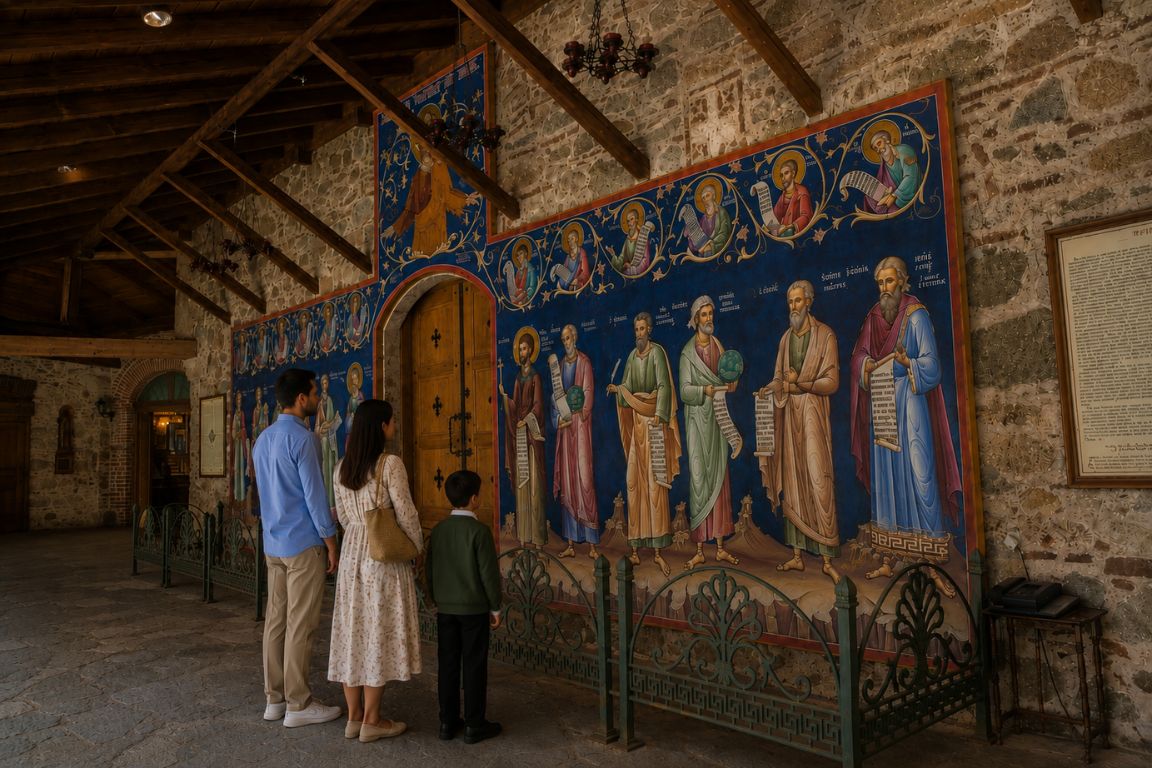 The single item that applies to every season, every month, every weather condition is comfortable walking shoes with grip. The monastery staircases are carved stone, uneven, and can be slippery in rain or frost. Everything else depends on your timing. Spring and autumn need layers because the temperature gap between morning and midday can be 10°C or more. Summer needs sun protection and water above all else. Winter needs genuine warmth: Meteora sits at altitude and the wind chill on exposed viewpoints is significant.
A note on the summer dress code in heat: the requirement to wear long trousers or skirts to enter a monastery is non-negotiable, and in 35°C heat this is genuinely uncomfortable. The practical solution is lightweight linen or cotton trousers that breathe. Men in hiking shorts bring a pair of lightweight linen trousers in a day bag and change at the entrance. Women who arrive in shorts will be offered a wrap skirt at most monasteries. It isn’t ideal but it works. Planning for the dress code before you arrive, rather than improvising at the gate in the heat, makes the day easier.
Trying to pack light but still meet the requirements? Here’s the Meteora monastery dress code broken down so you know what you actually need versus what they’ll lend you.
| Spring (Mar-May) | Lightweight layers, waterproof jacket, walking shoes, sun protection for May | Long trousers (men); long skirt or wrap (women). Wraps available at entrance. |
| Summer (Jun-Aug) | High-SPF sunscreen, hat, sunglasses, 1L+ water from hotel before driving up, lightweight breathable clothing | Pack long trousers or a sarong for men; skirts lent free for women but bring one for comfort. No shorts for men. |
| Autumn (Sep-Nov) | Layers for morning cold, warm mid-layer for November, waterproof jacket, walking shoes | Same as spring. November mornings can be cold enough to need gloves on viewpoints. |
| Winter (Dec-Feb) | Insulated jacket, thermal base layer, gloves, warm hat, waterproof boots with grip for potentially icy steps. Spare battery for camera (cold drains them fast). | Long trousers/skirts as always. Layers under dress code clothing. Steps can be icy: grip matters more than looks. |
Review the monastery clothing rules and what to do if you arrive in unsuitable clothing before finalizing your seasonal packing list.
What Our Travelers Tell Us: Best Month Patterns from 14,400+ Guided Visits
| Peak booking months (most tour departures) | July, August, September (~58% of annual bookings) |
| Highest satisfaction scores by month | April, October, May (in that order) |
| Travelers who cited heat as a problem | ~43% of July-August visitors |
| Travelers who said they’d return in shoulder season | ~67% of summer visitors |
| Travelers who visited in winter and recommended it | ~79% |
| Most cited “wish I’d known” issue by season | Summer: “Started too late, missed the quiet morning” (~51%) |
Set aside aggregate traveler claims and choose according to your own month, starting point and available duration.
Frequently Asked Questions
If the FAQs resolve your timing questions, compare the available local, day-trip and overnight formats next.
What is the best month to visit Meteora?
October (specifically after October 28) and April are the best individual months. October offers peak foliage, comfortable hiking temperatures, and a sharp crowd drop after Greek National Day. April brings wildflowers, the Judas tree blossom, and full summer monastery hours from April 1. May is the most reliable spring choice if April’s variability is a concern.
If April or late October is unavailable, compare the article’s month-by-month guidance before settling on another window.
Should I avoid Meteora in summer?
Not necessarily, but go in knowing what to manage. July and August are hot (30-34°C) and the monasteries are busiest between 10:00 and 14:00. Start before 09:30, take a midday break, and return in the late afternoon. Early June is significantly better than late August for the same summer experience with fewer crowds and lower heat.
Explore three monastery interiors with minibus travel between the formations. The four-hour outing also includes panoramic photo stops and local guiding.
Is Meteora worth visiting in winter?
Yes, for the right traveler. Winter gives you near-empty monasteries, dramatic fog and occasional snow on the rock pillars, much lower hotel prices, and a genuinely local version of Kalambaka and Kastraki. The trade-offs are shorter monastery hours (09:00-15:00), occasional closures for weather or feast days, and the chance that cloud cover obscures the views entirely. Photographers and crowd-avoiders rate winter highly.
Check the two-day departure before booking separate Athens transport and accommodation. The itinerary makes room for a sunset tour and another guided morning.
When should I avoid visiting Meteora?
Avoid Greek Orthodox Easter week, which moves every year but consistently brings restricted monastery access and high hotel demand. July and August midday (10:00-14:00) are the single most crowded windows at the main monasteries. Late September can feel busier than expected for a supposed shoulder season.
Review how crowds, seasonal hours, Easter week and feast days affect timing before committing to difficult dates.
Do monastery hours change by season?
Yes. Summer hours (April 1 to October 31) run roughly 09:00 to 17:00. Winter hours (November 1 to March 31) run roughly 09:00 to 15:00. Each monastery keeps its own weekly closure day and may add extra closures for Orthodox feast days without advance notice. Always check the notice board at each monastery entrance on the day of your visit.
Use the monastery-planning guide to understand weekly opening patterns, then treat entrance notices as the final source on the day.
What is Meteora like in October?
October is one of the best months. Temperatures are comfortable (14-22°C), the oak and plane forest turns amber and gold, summer monastery hours run until October 31, and crowds drop sharply after the October 28 national holiday. The second half of October is the sweet spot: foliage at peak color, near-shoulder-season crowds, and some of the most photogenic light of the year.
Discover the monastery scenery and hermit-cave stories before the sunset viewpoints on a locally guided evening outing.
Not sure which month works for your Greece trip?
We’ve been guiding travelers through every season since 2009. Tell us your travel window and what matters most to you, crowds, weather, budget, photography, or all of the above. The Athens to Meteora full-day tour is the place to check what is running in your travel window.
Written by Michael Angelos
Greek tour guide since 2009 · Founder, Meteora Tours
Michael has guided over 14,400 travelers through the monasteries and rock formations of Meteora since founding the agency.