What to Do in Meteora
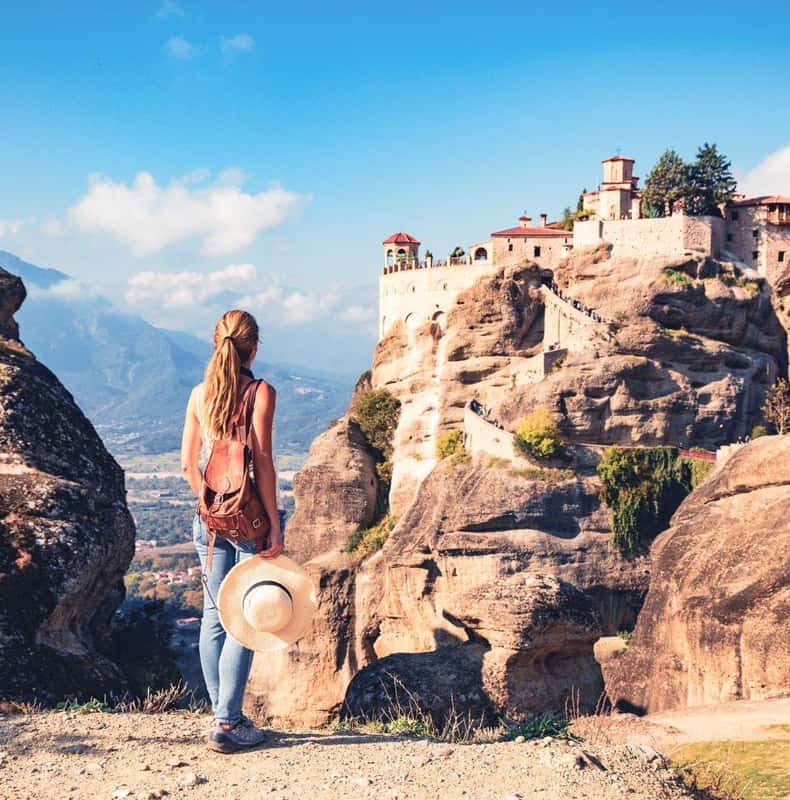
Beyond the monasteries, Meteora offers scenic hikes, epic viewpoints, rock climbing, hidden hermit caves, and charming villages that are worth exploring.
Meteora rewards time beyond the monastery circuit: join an evening route for broad coverage, walk through the formations, or stay longer to combine sunset with a second activity. Choose A Tour For This Itinerary
Last updated: June 28, 2026
What to Do in Meteora: Quick Overview
Enter the options you are considering and compare total costs for your party before choosing between guided activities and independent plans.
| Monastery circuit | Half day to 2 days | €5 per monastery | Apr-Oct best | All levels |
| Hiking trails | 1-5 hours | Free | Spring and autumn | Easy to moderate |
| Rock climbing | Half day (guided) | ~€45-€70 guided | Spring and autumn | Beginners welcome |
| Sunset viewpoints | 1-2 hours | Free | Year-round | All levels |
| Hermit caves tour | 2-3 hours | Free (self-guided) or ~€25-€35 guided | Mar-Oct | Easy |
| Sunset tour (guided) | 4-4.5 hours | ~€35-€45 | Year-round | All levels |
| Trikala day trip | Half day | Low (bus ~€2) | Year-round | All levels |
| Lake Plastira day trip | Full day | Car or tour | Spring and autumn | All levels |
What Can You Do in Meteora Besides the Monasteries?
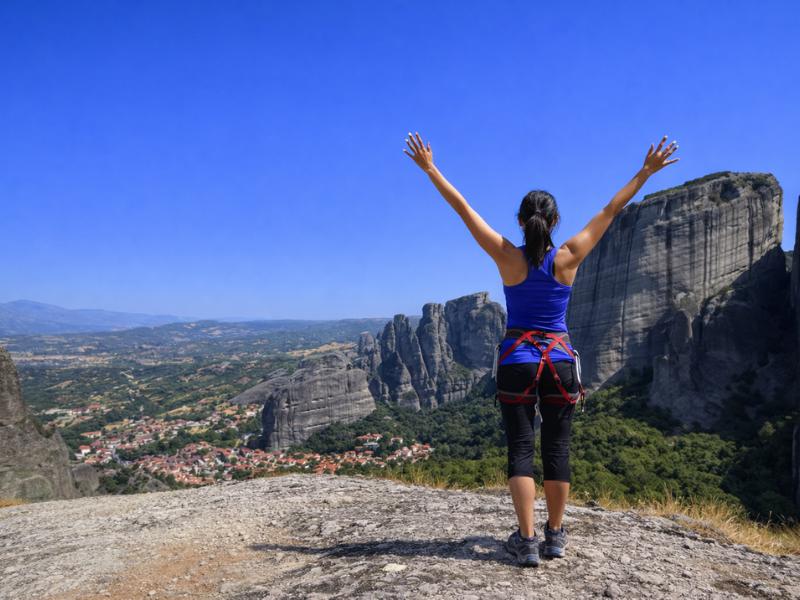
Quite a lot. The monasteries are the reason most people come, but the rock formation itself is a full destination, not just a backdrop. The ancient trail network predates the road by centuries and connects the monasteries through forest and past hermit caves without touching asphalt. The sandstone pillars are one of Europe’s most distinctive climbing destinations, accessible to complete beginners through guided half-day sessions. The viewpoints at sunset produce light that the monasteries themselves cannot match from inside. And the two villages at the base, Kalambaka and Kastraki, have enough to fill any afternoon you’re not on the rocks.
One thing that surprises most visitors: the landscape looks completely different on foot than it does from the monastery road. The circuit road was built to serve the monasteries and gives a motorist’s view of the site, horizontal and from below. The hiking trails go between and above the formations, through the forest, past the crumbled walls of abandoned monasteries, and through narrow passages where the rock closes in on both sides. These are two entirely different versions of the same place, and they’re both worth experiencing if you have two or more days.
The other thing that surprises people: the hermit caves. Most visitors don’t know they exist. The cliff honeycomb behind Kastraki village, where monks lived in carved rock shelters from the 9th century onward, is where Meteora’s monastic story actually begins. The monasteries came much later. The caves are free to visit, 20 minutes on foot from Kastraki, and almost always quiet.
If you want help fitting any of these into your itinerary, start with a small-group sunset tour that combines a monastery visit, the hermit caves, and the main viewpoints.
We get this question a lot. Here’s our take on whether Meteora is worth visiting – including who should skip it and who absolutely shouldn’t.
Explore an evening route that connects hermit-cave history, rock scenery and sunset viewpoints, with pickup and return at your local base.
Hiking in Meteora: Trails, Routes, and What to Expect
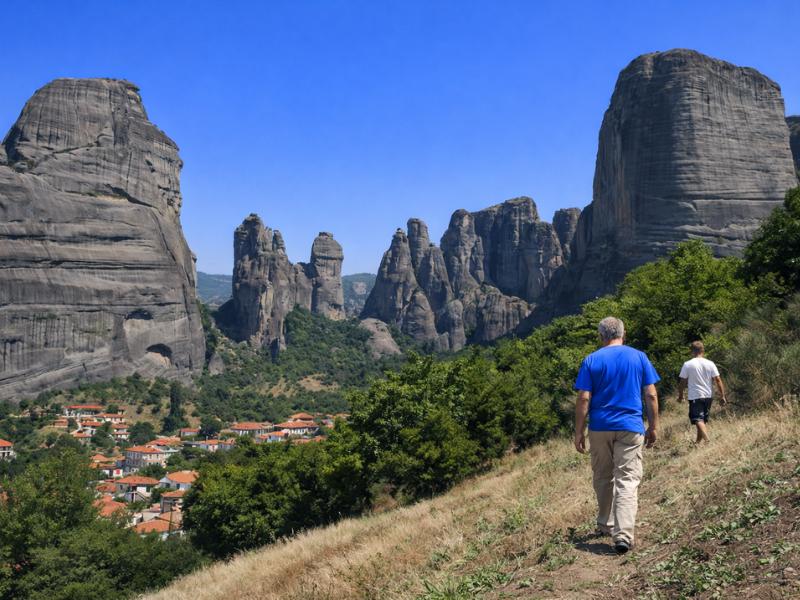
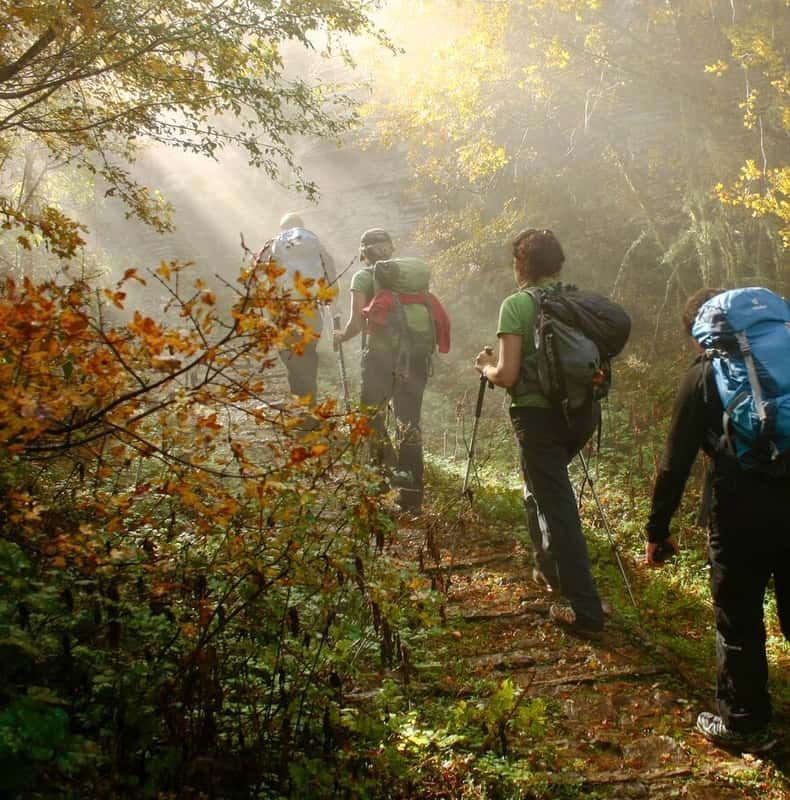
Meteora has a network of ancient footpaths that date to the 11th century, worn smooth by centuries of monks moving between hermitages and monasteries. The trails connect Kastraki and Kalambaka to the monastery circuit through oak and plane forest, past ruined chapels, and through the rock pillars themselves. Most routes are graded easy to moderate. The full circuit on foot takes 5 to 6 hours. Shorter routes of 1 to 2 hours are possible from either village. Signage is minimal so a trail app or guided hike is strongly recommended.
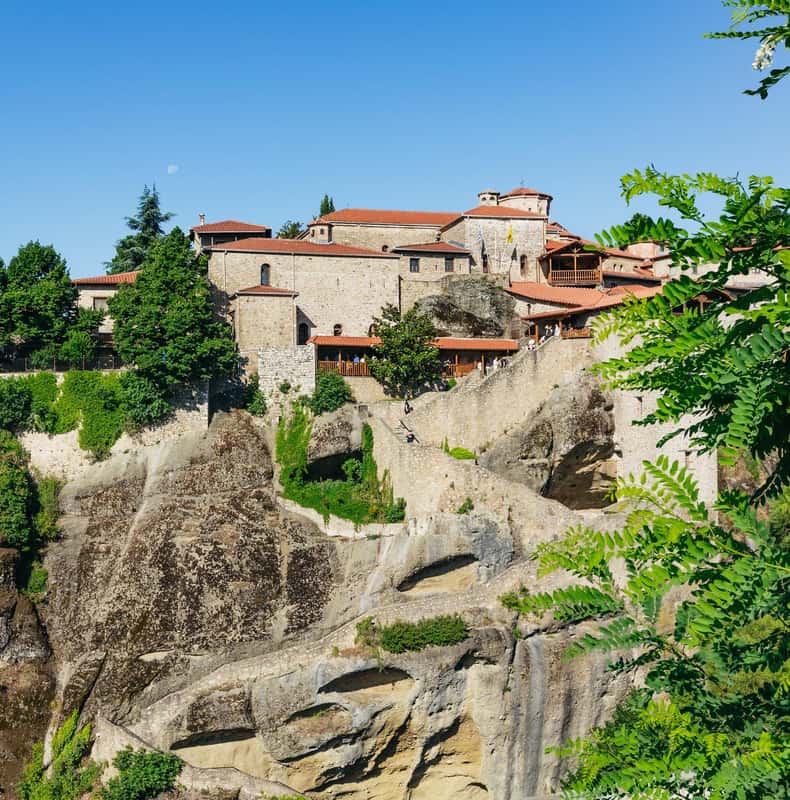
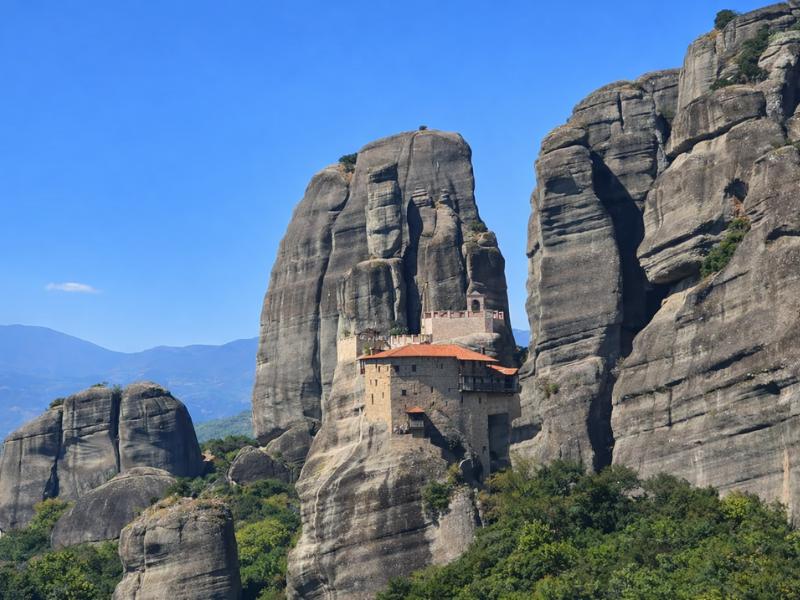
The most popular starting point is Kastraki, which sits directly under the southern cluster of rock formations and connects to the trail network within minutes of the village center. From Kastraki you can reach St. Nicholas Anapafsas in about 45 minutes on foot, passing through oak forest with the rock faces increasingly close on both sides. From St. Nicholas the trail continues north through the main cluster to Roussanou, Varlaam, and Grand Meteoron, taking another 2 to 3 hours depending on stops. Holy Trinity sits separately to the east and requires a descent and re-ascent, adding roughly an hour to a full circuit.
A few specific routes worth knowing about. The trail from the Grand Meteoron parking area northeast into the forest leads past the chapel of Agios Athanasios and eventually to the abandoned monastery of Ypapanti, a partially restored stone building set against a cliff wall rather than on top of one. It is closed to visitors but visible from the trail and accessible to a 4WD from a northern track. This is the “seventh monastery” occasionally mentioned in older guides. The detour adds about 40 minutes to any walk starting from Grand Meteoron.
From Kalambaka, the most-walked route heads north past the town’s upper neighborhood toward Holy Trinity, the most isolated monastery, via a trail that takes about an hour from town. This is a proper footpath through forest, not a road walk. Some signposting exists at the Kalambaka end. The path from Varlaam monastery down to Kastraki village is another favorite: a descent through a forest corridor that takes about 30 to 40 minutes and delivers you into the village rather than back to the parking lot.
Trail signage across Meteora is genuinely poor. The TERRAIN hiking map is the most accurate source for the full network, and apps like Komoot and AllTrails have user-verified routes for the main circuits. The general rule is this: anywhere on the monastery circuit road you can locate the beginning of a trail by looking for the small stone cairns or faded red dot markings on rocks at the road edge. A guided hiking tour from Kalambaka removes all the navigation uncertainty and adds the plant and wildlife identification that transforms a walk through oak forest into something closer to a natural history lesson.
Not every monastery is equal in terms of views or experience. Here’s which Meteora monasteries are best to visit so you don’t spend your best hours at the wrong one.
| Kastraki to St. Nicholas Anapafsas | Kastraki village center | ~45 min one way | Easy | Forest, close rock faces, quiet entry to monastery circuit |
| Full monastery circuit on foot | Kastraki | 5-6 hrs | Moderate | All 6 monasteries, multiple viewpoints, forest sections |
| Grand Meteoron to Ypapanti loop | Grand Meteoron parking | ~2 hrs | Easy to moderate | Oak forest, abandoned monastery ruins, north valley views |
| Kalambaka to Holy Trinity | Upper Kalambaka | ~1 hr one way | Moderate | Classic approach to most dramatic monastery |
| Varlaam to Kastraki descent | Varlaam monastery exit | ~30-40 min | Easy (downhill) | Forest corridor, delivers into village rather than car park |
Best time to hike: spring (April to May) when the forest is fully green and temperatures are comfortable. Late October into November when the oak forest turns amber and the trails are empty. Summer is technically possible but the morning heat on exposed sections and the 35°C midday temperature make anything beyond a short morning walk uncomfortable. Always carry at least 1.5 liters of water per person; there are no water sources on the trails.
Check the guided hike before filling your itinerary with other activities. The four-hour outing covers roughly eight kilometres through forest and rock formations.
Rock Climbing in Meteora
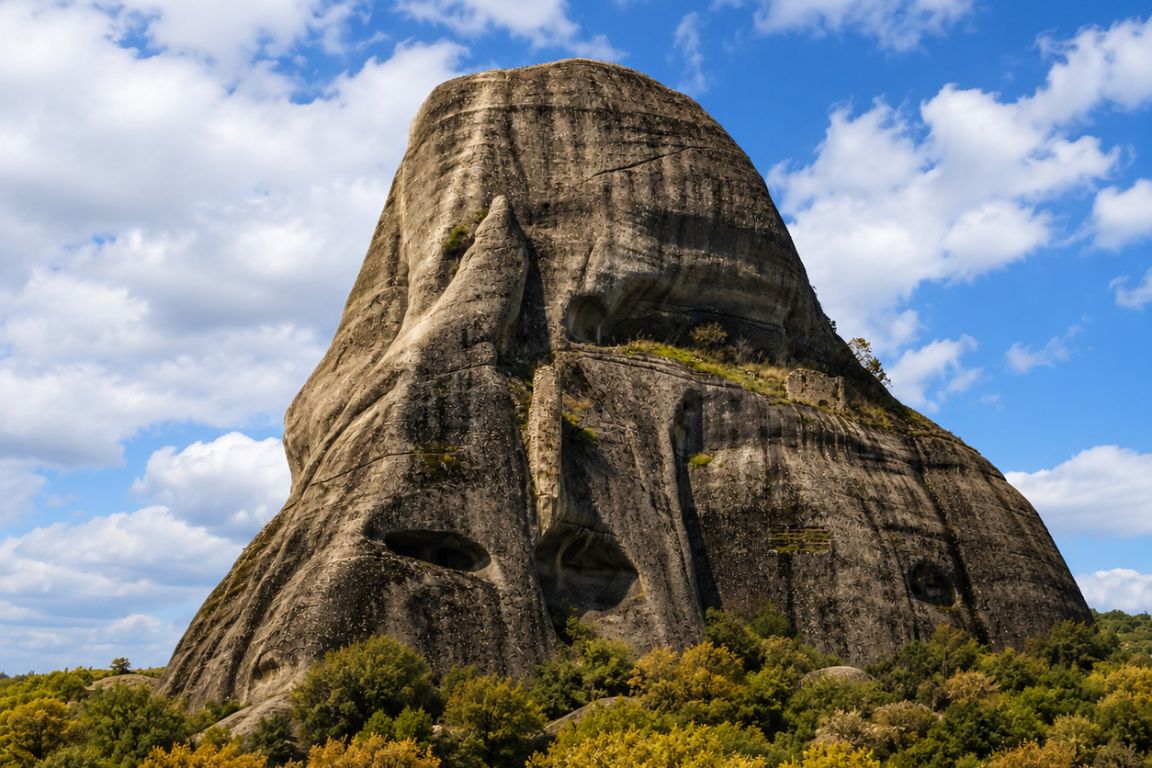 Meteora is one of the most significant rock climbing destinations in Europe. The sandstone and conglomerate pillars have been climbed since 1976, when German climbers Dietrich Hasse and Heinz Lothar Stutte pioneered the first modern routes. Today there are hundreds of established routes on around 100 distinct pinnacles, ranging from beginner top-rope sessions on 20 to 25 meter faces to multi-pitch traditional routes of up to 285 meters. Climbing is prohibited on the six pillars with active monasteries by agreement with the monastic communities, which covers a relatively small fraction of the available rock.
The main climbing area is accessible on foot from Kastraki, with most routes within a 15 to 20 minute walk from the village. The Doupiani rock at the edge of Kastraki is the closest and most visible practice area, often used by local guides for introductory sessions. The main circuit of climbing crags extends north and west through the pillars between Kastraki and the monastery road.
For visitors with no climbing experience, a guided half-day introduction is the right entry point. Most guided sessions use top-rope setups on 20 to 25 meter faces, which means a safety rope runs from an anchor at the top and there is no risk of a serious fall. These sessions run on routes graded 4 to 5+ on the French sport climbing scale, accessible to anyone with a reasonable level of fitness. Equipment including harness, helmet, and ropes is provided. The guides are certified and English-speaking.
The rock itself is worth describing because it behaves differently from typical limestone climbing. The conglomerate consists of river pebbles and stones embedded in a cement-like matrix. Pulling on the protruding pebbles is the basic technique on many routes. The surfaces vary between extremely solid and less so, and dislodging a stone with your foot or hand is a normal occurrence. Belayers should wear helmets at all times for this reason. The style is unique and unlike anything most climbers will have encountered at indoor walls or on limestone crags.
For experienced trad climbers, Meteora offers multi-pitch routes that combine crack climbing, face climbing, and chimney sections on some of the most striking rock formations in the world. The descent from most summits requires double-rope abseils. The Stutte-Hasse guidebook (in two volumes, diagram-based and readable without German) remains the primary reference alongside the Meteora Sport Climbing guidebook for bolted routes. The best climbing seasons are spring (mid-April to mid-June) and early autumn (September to October), when the temperature is comfortable and the rock dries quickly after rain.
A note on etiquette: the climbing community here operates under a longstanding agreement with the monasteries. Routes are avoided on the monastery pillars, noise near the monastery road is kept down, and the rule against free-climbing the monastery staircases is absolute. These are working religious sites, not sport venues.
Not sure whether to go in spring, summer, or fall? This guide on the best time to visit Meteora tours breaks it down by season so you can pick what fits your priorities.
Arrange climbing with a specialist operator and confirm the route level, equipment and supervision separately. Review the conduct expected around Meteora’s working religious sites before you go.
Meteora Viewpoints: Where to Go for Sunrise and Sunset
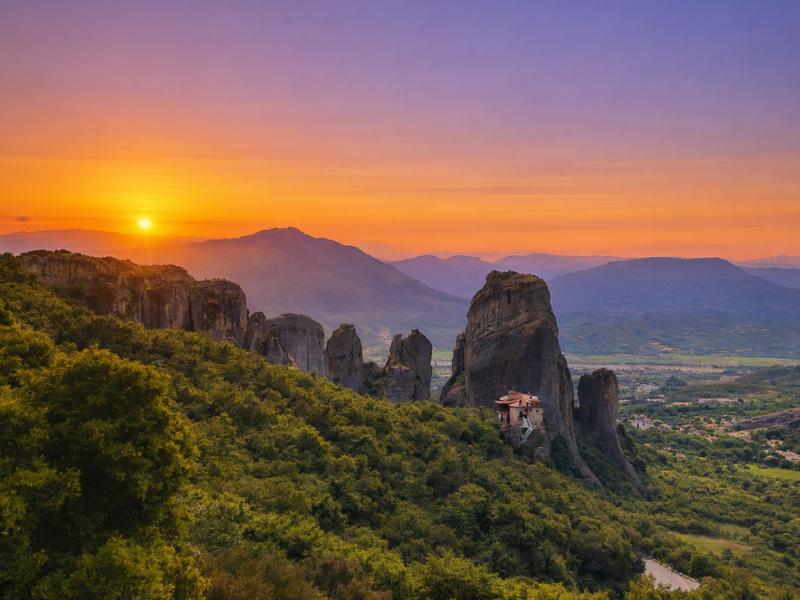
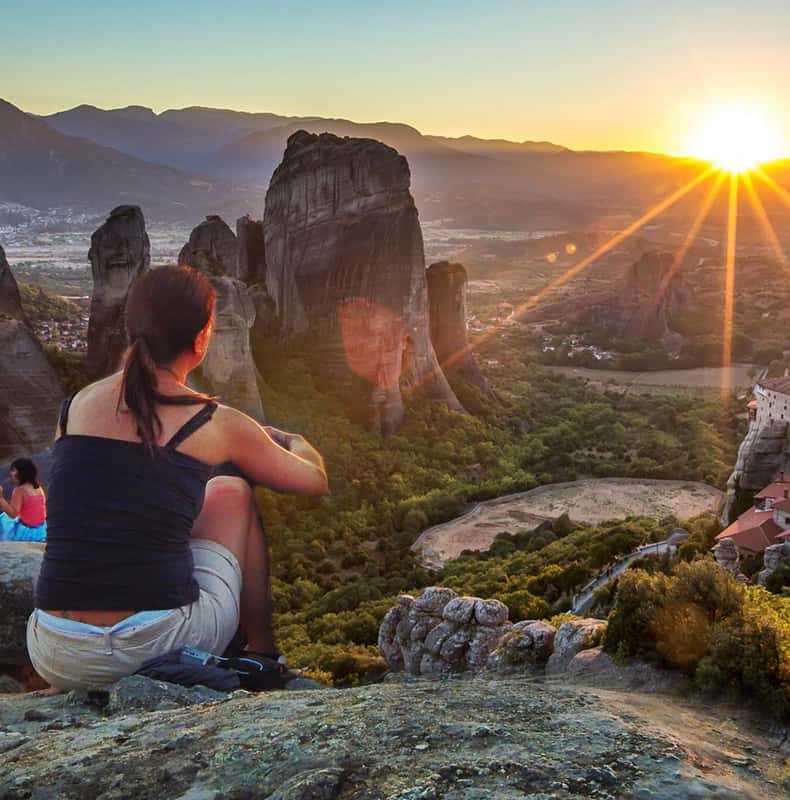
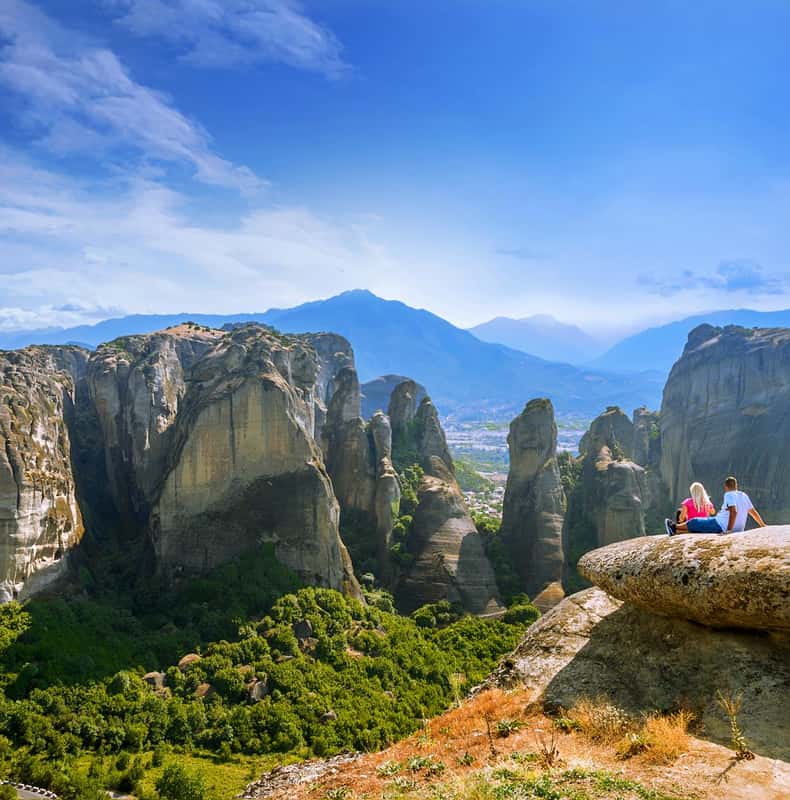
The viewpoints are not a secondary activity. They are one of the primary reasons to stay overnight at Meteora rather than doing a day trip. The golden hour light on the sandstone pillars is unlike anything the monasteries produce from inside during the middle of the day. The best known viewpoint, Sunset Rock (Psaropetra), sits on the monastery circuit road between Roussanou and the Varlaam junction and gives an unobstructed view of four monasteries simultaneously. For sunrise, the Grand Meteoron parking area provides the best access to the elevated paths above the western cluster.
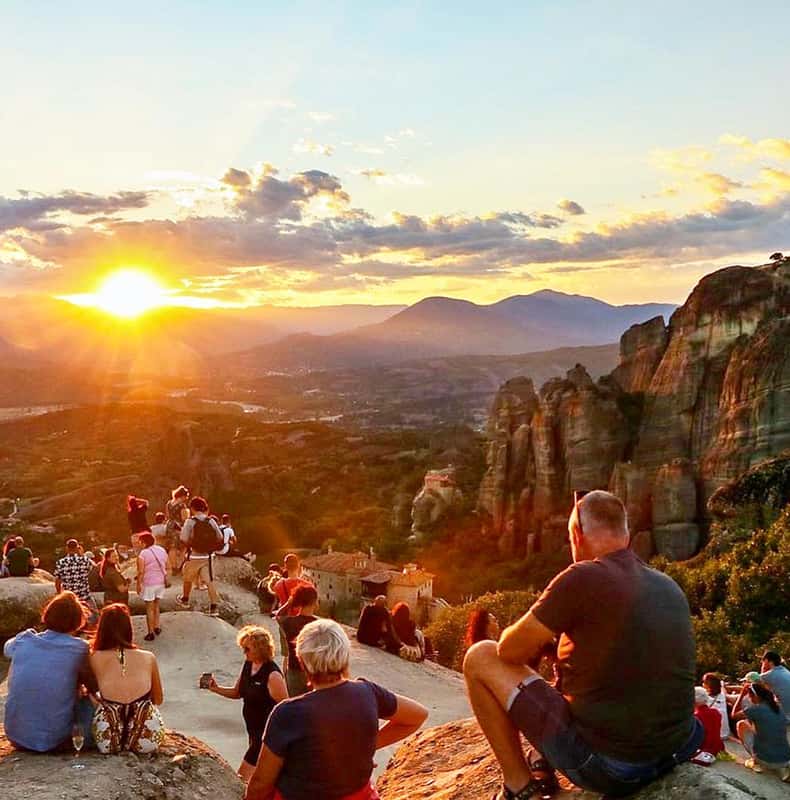
Sunset Rock is signposted from the monastery road and has a small gravel shoulder for parking. The rock itself is a large flat boulder at the road edge with a drop on one side. From the top of the boulder you can see Roussanou in the near foreground, with Varlaam and Grand Meteoron stacked on the ridge behind and above it. On a clear evening the three monasteries turn from pale grey to rose to amber as the sun drops behind the Pindus mountains to the west. The light lasts roughly 20 minutes in this quality. Arrive 30 to 40 minutes before sunset to find a spot before the small area fills.
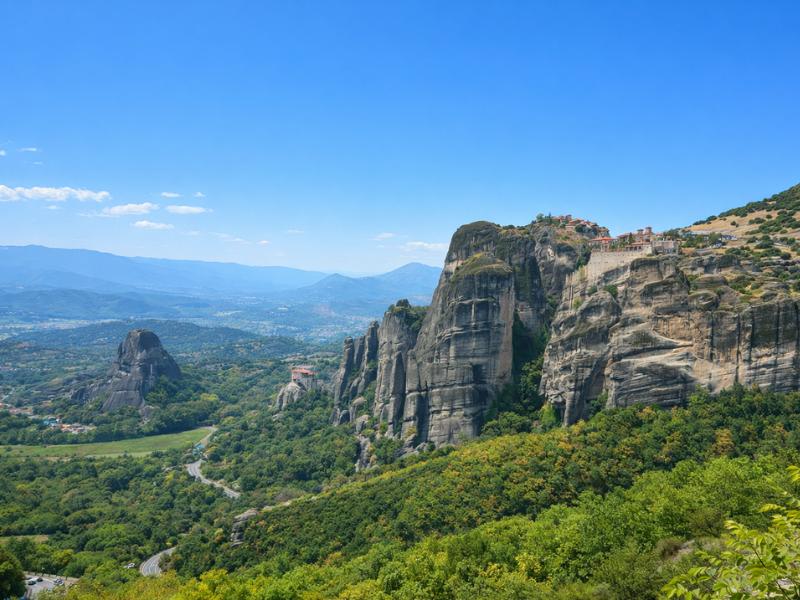
The unsigned 180-degree viewpoint between Grand Meteoron and Roussanou is the spot that most independent travelers miss and guided tours usually include. Driving back down the road from Grand Meteoron toward Roussanou, roughly 1.2 km from the Grand Meteoron car park, there is a small gravel shoulder on the right just after a sharp right-hand bend. From that pull-off, looking south, you can count five of the six monasteries at once in a single panoramic sweep. This is the frame that appears in most professional photography of Meteora. It requires no walking and no equipment, just knowing where to stop.
The north face Varlaam viewpoint is less crowded and different in character from the sunset-facing spots. Walk from the Grand Meteoron parking lot back down the road and look for stone steps on the right leading up to a set of large boulders. From the top, Varlaam appears from an angle visitors almost never see from the road, with Roussanou behind it and a different cluster of formations in the foreground. This works equally for sunrise and sunset depending on the time of year.
For sunrise specifically: the paths above the Grand Meteoron parking lot head northeast into the forest and emerge on elevated rock surfaces with unobstructed east-facing views. The walk takes about 10 minutes from the car park, and you can have the entire view to yourself because virtually nobody else is up there that early. The light on Grand Meteoron itself from that elevated position during the first 30 minutes after sunrise is worth the 05:30 alarm.
The guided sunset tour is the easiest way to hit all the key viewpoints without navigating the schedule and parking. These run daily from Kalambaka and Kastraki, last about 4 to 4.5 hours, include a monastery visit in the late afternoon, the Badovas caves, and end at Sunset Rock for the last light. The view from a crowded Sunset Rock at peak summer still beats any view you’ll get at midday from inside a monastery courtyard.
Trying to plan your last afternoon around the light? Here’s a look at the best Meteora sunset spots so you don’t end up at a mediocre viewpoint while the good ones empty out.
Explore a guided evening with monastery scenery, hermit caves and sunset viewpoints. Local minibus travel connects the stops beyond a single lookout.
Caves and Hermit Caves: The Hidden Side of Meteora
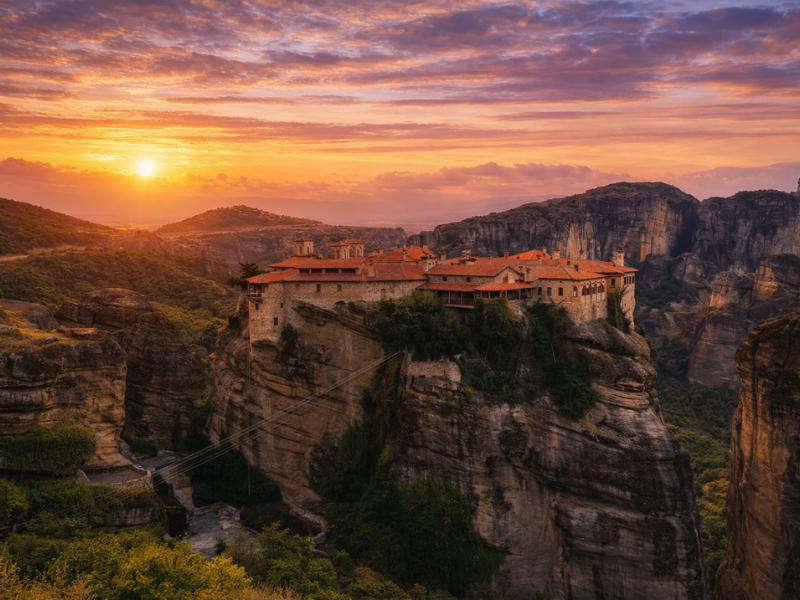
Before there were monasteries at Meteora there were hermit monks living in carved rock shelters. The earliest arrived in the 9th century, more than 400 years before Saint Athanasios built Grand Meteoron. The Hermit Caves of Badovas, behind Kastraki village at the base of the Pyxari rock, are where the largest surviving cluster of these cave shelters can be seen. Entry is free. The caves themselves cannot be entered safely, but the wooden ladders and rope scaffolding still clinging to the cliff face are visible from the trail below. The walk from Kastraki takes about 20 minutes.
The hermit caves tell a different story from the monasteries. The monasteries are collective enterprises: organized, funded, staffed by communities, built with materials hauled up by winch over years. The hermit caves are the opposite, single monks who climbed up alone and lived in smoke-blackened hollows, relying on donations of food pulled up by rope from the valley. The scale of commitment involved in that life is difficult to convey in a monastery courtyard but becomes clearer standing underneath the cliff at Badovas, looking up at the tiny cave openings fifty meters above the valley floor.
At the base of Pyxari rock you can see the skete of Agios Antonios, partially built into a large natural cavity at the cliff’s foot, and above it the hermit caves of Agios Grigorios (St. Gregory). A small restored monastery, the St. Nikolaos Badovas monastery, stands in the valley nearby, likely founded in the mid-14th century. The site preserves all three stages of Meteora’s monastic development in a single view: individual hermit caves in the cliff, a skete built into a cave at the base, and a proper monastery on the valley floor. It is a compressed history lesson in about 200 meters of vertical rock face.
A separate but related site: the cave chapel of Agio Pnevma (Holy Spirit), on the rock of the same name behind Kastraki, is considered by local tradition to be the place where Varnavas, the first recorded hermit of Meteora, established his cell in the 10th century. The guided hiking tour that visits this site climbs to the top of Agio Pnevma rock, passing through the tunnel sections carved into the cliff and emerging onto the summit with views across the full Meteora formation. This 3-hour guided hike runs from the Geological Museum in Kastraki’s central square from March through October, is suitable for children aged 7 and older, and is consistently the most positively reviewed activity in the area after the monasteries themselves.
The Byzantine Church of the Dormition of the Virgin Mary in the old town of Kalambaka is a separate site but worth mentioning alongside the caves as part of the pre-monastery layer of history. Built in the 6th or 7th century and decorated with 11th-century frescoes, it is one of the oldest standing churches in mainland Greece. The walls of the church incorporate carved blocks from an earlier Greek temple, believed to have been dedicated to Apollo. Entry is free and the church is included on most of the evening sunset tours as a stop before the viewpoints.
Recommended tours by season
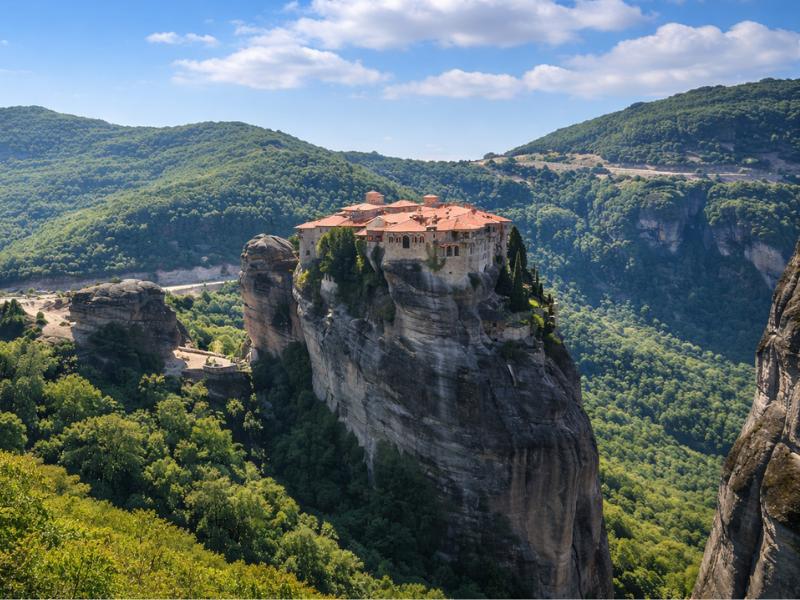
Early Morning Meteora Tour – Small Group with Local Guide
Four hours in a small group with a local guide. A practical choice in the warmer months, when a later start runs into heat on exposed rock.
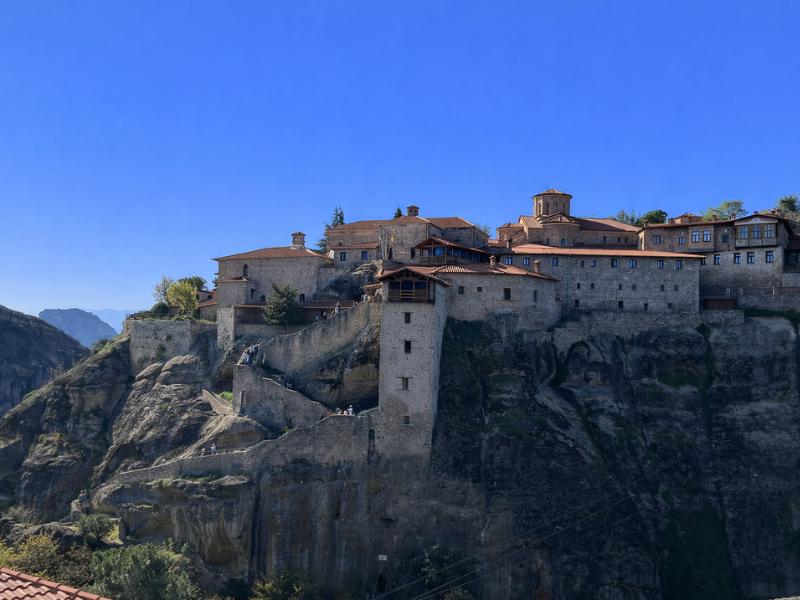
Small-Group Meteora Hiking Tour from Kalambaka – Transfer & Monasteries
A four-hour walk from Kalambaka with a transfer and monastery visits. Fits spring and autumn, when the forest trails are at their most comfortable.
Small-Group Meteora Sunset Tour – Monasteries Glow & Hermit Caves
A four-hour late-afternoon tour covering a monastery, the hermit caves, and the main viewpoints. Runs year-round, including the shorter days of winter.
Meteora Via Cordata Guided Tour from Kastraki – Great Saint Summit
A three-hour guided tour from Kastraki to a summit on the rocks. Best reserved for spring and early autumn, the main climbing seasons here.
Check your date before arranging a separate cave-viewing stop. The sunset route combines hermit-cave context with monastery scenery and viewpoints.
What to Do in Kalambaka and Kastraki
Compare Kalambaka’s transport convenience with Kastraki’s trail access and village setting before choosing where to base your independent time.
 Kalambaka is the larger town, 6 km from the monasteries, with the train station, the bus station, the widest range of restaurants and hotels, and the Byzantine Church of the Assumption in the old quarter. Kastraki is a smaller village 2.5 km north of Kalambaka, directly under the rock formations, with quieter guesthouses, the best direct trail access, and the kind of taverna atmosphere that requires a slower evening to appreciate. Most travelers with a car or rental stay in Kastraki; travelers arriving by public transport stay in Kalambaka.
In Kalambaka the Byzantine Church of the Assumption of the Virgin Mary is the main standalone attraction. Built in the 6th or 7th century, decorated with 11th-century Byzantine frescoes, and incorporating columns and carved stone from an earlier pagan temple, it is genuinely old in a way that puts the 14th-century monasteries in context. The church sits in the old quarter at the northern end of town, a 15-minute walk from the main square. The frescoes inside are extensive and well preserved. Admission is free.
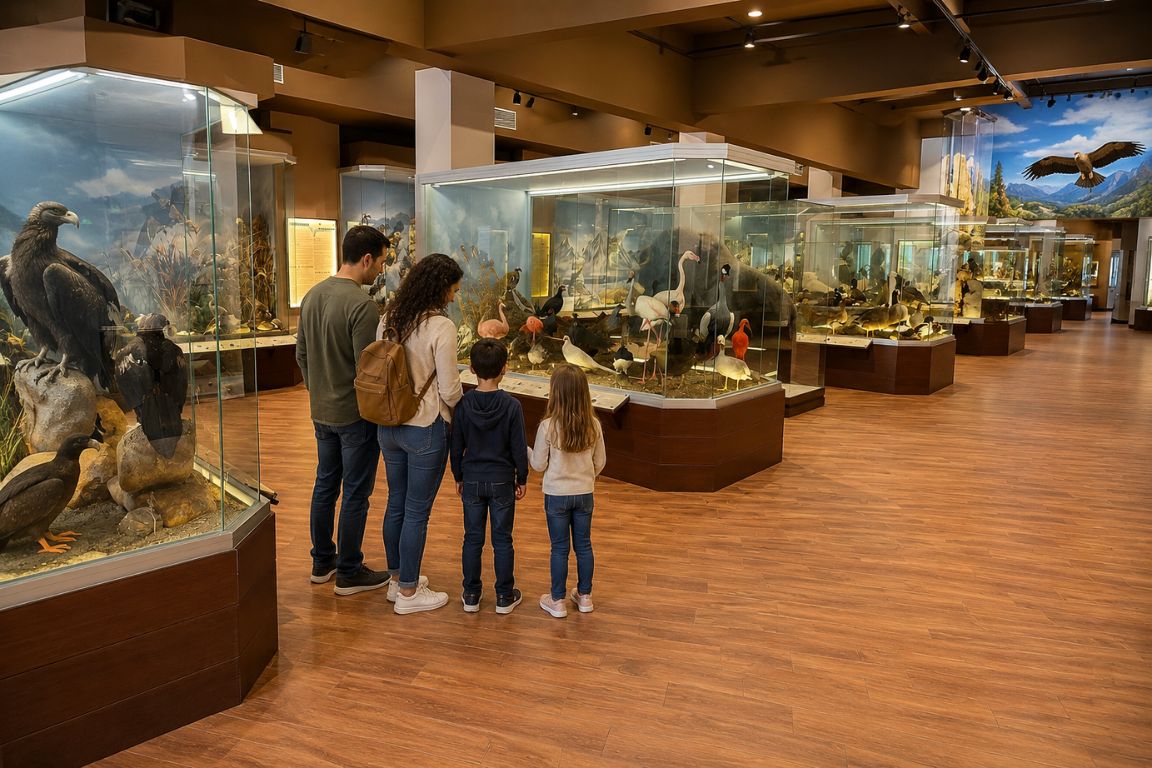
The Natural History Museum of Meteora and Mushroom Museum on Kalambaka’s main street is a combined institution that sounds odd but works. The natural history collection covers the geology, flora, and fauna of the region with particular attention to the rare species of the Natura 2000 zone that covers the rock complex. The mushroom section is a personal collection that has grown into a genuinely interesting display of fungi from the surrounding forests. Admission is modest. The Theopetra Cave, 4 km from Kalambaka, is a separate archaeological site where continuous human habitation going back 130,000 years has been documented. Finds here include what is believed to be the oldest known man-made structure, a stone wall built across the cave entrance approximately 23,000 years ago, possibly a windbreak or defensive barrier.
Kastraki’s old habitation, the Mesochori quarter, is the original core of the village and worth a slow walk. Stone houses, cobblestone lanes, and small Orthodox chapels from the Byzantine period sit directly under the vertical rock faces. The Doupiani rock at the edge of the village is the training climbing area and often has climbers visible on the face during morning and late afternoon hours. The chapel of Agios Georgios Mandilas, a cliffside chapel reached by a short scramble, hosts a local festival every spring where residents climb the rock face to offer scarves to the saint. The tradition dates back centuries and is still practiced by local families.
For eating: Taverna Gardenia on the main street of Kastraki has been run by the same family since 1998 and is consistently recommended for traditional Greek cooking, homemade dishes, and local wine. Panellinio on Kalambaka’s main square is good for lamb chops and Greek classics with outdoor seating. Meteora Restaurant on Trikalon Street in Kalambaka serves slow-cooked stews and casseroles from an open kitchen. Meteoron Panorama, on the road between Kalambaka and Kastraki, has the best views from any restaurant in the area, with a terrace that looks directly at the rock formations during dinner.
Not sure whether to base yourself in Kalambaka or Kastraki? Here’s a full guide on where to stay in Meteora tours for every budget and travel style.
Day Trips from Meteora
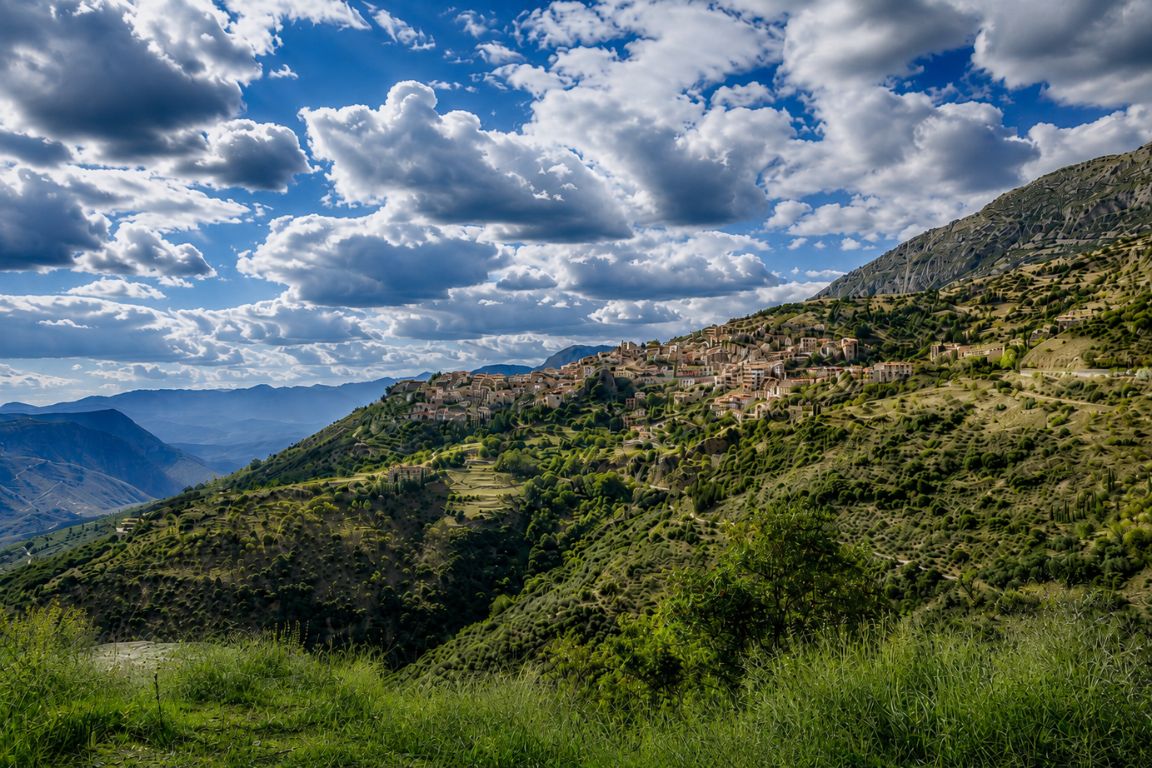 Trikala is 23 km from Kalambaka and worth a half-day: the Byzantine castle ruins on the hill above the old town, the Litheos river, the old quarter (Varousi), and the only example of work by Ottoman architect Mimar Sinan surviving on Greek soil, the Kursunlu Mosque, all within walking distance of each other. Lake Plastira is about an hour by car, a mountain reservoir surrounded by 18 villages with walking trails, kayaking, horseback riding, and the kind of slow mountain-lake atmosphere that requires a deliberate detour. Delphi is 3 hours by car and the classic mainland circuit pairing with Meteora.
Trikala is the most accessible day trip and requires the least planning. A local KTEL bus runs from Kalambaka to Trikala in about 30 minutes for a couple of euros each way. The town has a working urban character that contrasts with the monastery circuit and the tourist-oriented restaurants of Kalambaka. The Varousi neighborhood on the hill below the castle is a preserved Ottoman-era quarter with stone houses, narrow streets, and a handful of cafes. The Byzantine castle dates from the 5th century and was expanded through the Ottoman period. The view from the castle walls over the Thessalian plain and back toward the Meteora rock silhouette is one of the better high-ground views in the region that doesn’t require climbing monastery steps.
Fitting Meteora into a tight Greece itinerary? This guide on the Meteora day trip from Athens is built for travelers who only have one shot at it.
Lake Plastira requires a car and a full day. The lake was created in 1962 as a reservoir and sits at 780 meters altitude in the Agrafa mountains, about an hour from Kalambaka via a road that climbs through forest above the Thessalian plain. Eighteen villages with slate-roofed stone houses ring the shoreline. The Laberos beach area has a lakeside restaurant, kayak and paddleboat rentals, and horseback riding. The Paratiririo viewpoint near the village of Kalivia offers a panoramic sweep of the entire lake. Autumn is the best season when the surrounding forest is in color and the mountain air has clarity. The lake is genuinely quiet and the contrast with Meteora’s tourist circuit is complete.
Delphi is the other major pairing. The drive takes about 3 to 3.5 hours across the Thessaly plain and through the southern Pindus mountains to the slopes of Mount Parnassus. The route passes Thermopylae, where the Leonidas monument is a roadside stop that takes 15 minutes. Delphi itself needs at least 3 hours for the archaeological site and museum. The combination of Meteora and Delphi in a two-day itinerary, with an overnight in Kalambaka between them, covers two of the most important sites in mainland Greece. Most travelers doing this circuit drive it north to south (Meteora first, Delphi on the way back to Athens) or south to north depending on their starting point.
Not sure which one to prioritize with limited time in Greece? This breakdown of Meteora vs Delphi covers what each site actually offers and who each one is better suited for.
| Trikala | 23 km | ~30 min | Old town, Byzantine castle, local market, Kursunlu Mosque |
| Theopetra Cave | 4 km | ~10 min | Prehistoric archaeology, 130,000 years of human habitation |
| Lake Plastira | ~60 km | ~1 hr | Mountain lake, villages, hiking, kayaking, autumn foliage |
| Delphi | ~230 km | ~3-3.5 hrs | UNESCO archaeological site, Temple of Apollo, museum |
| Thermopylae | ~140 km | ~1.5 hrs | Battle site, Leonidas monument, hot springs (roadside stop) |
Keep nearby excursions independent from a Meteora base. If Delphi is competing for limited itinerary time, compare its travel demands and logistics with Meteora first.
What to Eat and Drink in Meteora
The cuisine here is central Greek mainland cooking: meat-forward, slow-cooked, generous in portion, and built around local ingredients from the Thessalian plain and the forests surrounding the rock complex. Lamb is the dominant protein and appears in stews, grilled chops, and oven-baked preparations. Wild mushrooms from the local forests are a seasonal specialty in autumn. The local pies (pitas) made with wild greens, cheese, and hand-rolled pastry are made differently here from the versions found on the Greek islands, with thicker, more substantial pastry and stronger flavored greens.
Lamb chops from Panellinio on Kalambaka’s main square are a practical first meal after the monasteries. Thin, heavily seasoned, charred on the grill, and eaten with lemon: this is not refined cooking but it is exactly what the occasion calls for after a morning of stone staircases in the heat. The restaurant has been there since 1950. The square has outdoor seating in season.
Taverna Gardenia in Kastraki is the more consistent recommendation for a full evening meal. Family-run since 1998, locally sourced, with homemade dishes and local wine from Thessaly. The menu includes eggplant saganaki, stuffed peppers, and the Thessalian version of moussaka, denser and more heavily spiced than the tourist version you’ll find in Athens. The atmosphere in the evenings is the kind that keeps people at the table long after they intended to leave.
Meteora Restaurant on Trikalon Street in Kalambaka cooks from large pots of slow-cooked stew and casserole. The gigantic beans (gigantes), the veal meatballs, and the stuffed eggplant are all made from recipes that haven’t changed significantly since the place opened. The interior is covered in decades of accumulated souvenirs and memorabilia. It is a reliable choice any night of the week.
For a meal with a view, Meteoron Panorama on the road between Kalambaka and Kastraki faces directly toward the rock formations. The quality of the cooking is secondary to the location, but the location is worth paying for at least once during a stay. Late afternoon on a clear day with the rocks in warm pre-sunset light is the time to be here.
On the drink side: Thessaly produces good wine, particularly from the vineyards around Trikala and the western foothills of the Pindus. The local red, often unlabeled and brought to the table in a carafe, tends toward something rough and assertive, which matches the food. Ouzo after a long day on the rocks, as Fodors put it, is the local custom while contemplating monastic asceticism from a poolside bar. The monks would probably have something to say about that but the taverna owners are unlikely to argue.
Keep dining flexible, then choose between Kalambaka convenience and a slower Kastraki evening based on where you plan to finish the day.
What Our Travelers Do: Activity Patterns from 14,400+ Guided Visits
Explore an Athens overnight itinerary with a sunset tour and a second morning activity, with hotel options to bring the stay into the same plan.
| % who book a sunset tour in addition to morning monastery visit | ~47% |
| % who hike at least one trail segment | ~38% |
| Most cited “didn’t know this existed until I arrived” | Hermit caves (~61% of visitors who saw them) |
| % who say sunset was the single best moment of the trip | ~53% |
| % who wish they had stayed an extra night | ~44% |
| Most common one-day regret | “Left before sunset” (~31% of day-trippers) |
Frequently Asked Questions
After reviewing the answers, use the selector to choose among the available guided trip formats or continue with the independent options described in the article.
Is there anything to do in Meteora besides the monasteries?
Quite a lot. The hiking trail network through the rock formations and forest is excellent for half-day to full-day walks. Rock climbing guided sessions run for complete beginners. The Hermit Caves of Badovas near Kastraki are free to visit and almost never crowded. The sunset viewpoints, particularly Sunset Rock (Psaropetra), are some of the best views in Greece. Kalambaka has a 7th-century Byzantine church and a natural history museum. Day trips reach Trikala, Lake Plastira, and Delphi.
Check the sunset route for your date before arranging the rest of the evening. Local transfers connect cave history, monastery scenery and viewpoint stops.
Is hiking in Meteora difficult?
Most hiking routes at Meteora are easy to moderate. The ancient trail network through the oak and plane forest connects the monasteries at a gentle gradient. A full circuit on foot takes 5 to 6 hours but shorter sections of 45 minutes to 2 hours are practical from either Kastraki or Kalambaka. Signage is poor, so a trail app, printed map, or guided hike is strongly recommended. The worst summer heat makes midday hiking unpleasant in July and August; early morning starts or spring/autumn timing work best.
Explore forest and rock formations on a four-hour guided walk with local accommodation transfers, then compare that commitment with your independent trail plans.
Can beginners go rock climbing at Meteora?
Yes. Guided introduction sessions run on top-rope routes of 20 to 25 meters that require no prior experience. All equipment is provided. The guides are certified and English-speaking. Sessions run from the Kastraki area and last about half a day. The best climbing seasons are spring and early autumn. Climbing is prohibited on the six monastery pillars by agreement with the monastic communities.
A sightseeing or hiking tour is not a substitute for specialist climbing guidance. Use the detailed climbing overview to review the activity and restrictions before contacting an appropriate operator.
What are the Hermit Caves of Badovas?
They are the ancient cave shelters where hermit monks lived from the 9th century onward, before the monasteries were built. Located behind Kastraki village at the base of Pyxari rock, the caves are visible from the trail below but cannot be entered. Access is free and the walk from Kastraki takes about 20 minutes. Most guided hiking and sunset tours include a stop here. They preserve the remains of wooden ladders and rope scaffolding still visible on the cliff face.
Check your date before arranging separate local rides. The sunset route brings hermit-cave history and panoramic stops into one guided evening.
What are the best day trips from Meteora?
Trikala is closest at 23 km, worth a half-day for the old town and Byzantine castle. Lake Plastira is about an hour by car, a mountain reservoir with hiking and water activities. Delphi is the classic pairing at 3 to 3.5 hours by car, combining two major UNESCO mainland sites in a two-day circuit. Theopetra Cave, 4 km from Kalambaka, is one of Europe’s most significant prehistoric sites with 130,000 years of documented habitation.
Explore Delphi’s archaeological site and two Meteora monasteries in one two-day itinerary. Coach travel and an overnight stay connect the destinations.
What should I eat in Meteora?
Central Greek mainland cooking: lamb grilled or slow-cooked, local wild greens pies, gigantes (giant slow-cooked beans), and Thessalian moussaka. Taverna Gardenia in Kastraki and Meteora Restaurant in Kalambaka are the most consistently recommended. Panellinio on Kalambaka’s main square is reliable for lamb chops and outdoor dining. Meteoron Panorama has the best view from any restaurant in the area.
Keep restaurant choices independent and use the village guide to decide whether Kalambaka convenience or a Kastraki evening better fits the rest of your plan.
Want to fit more than monasteries into your time here?
We build itineraries around trails, caves, viewpoints, and dinner, not just the monastery circuit. The easy hiking tour and the sunset tour are the two shortest ways to cover trails, caves, and viewpoints in one outing.
Written by Michael Angelos
Greek tour guide since 2009 · Founder, Meteora Tours
Michael has guided over 14,400 travelers through the monasteries and rock formations of Meteora since founding the agency.