Where to Stay in Meteora?
Kastraki and Kalambaka are both great bases for Meteora, but Kastraki offers better views, easier monastery access, and a more authentic village atmosphere.
Choose the base first: Kastraki for scenery and village atmosphere, or Kalambaka for transport and evening convenience. Local tours collect from either town, while an accommodation package is relevant only if you are starting in Athens. Choose A Tour For This Itinerary
Last updated: June 28, 2026
Kalambaka vs Kastraki: At a Glance
For a car-free stay, check the final journey from your base to the monasteries before choosing between station convenience and village scenery.
| Population | ~12,000 (town) | ~1,500 (village) |
| Distance between centers | ~2 km, 15-20 min walk, 5 min taxi (~€5) | |
| Train/bus station | Yes (both) | No (taxi to Kalambaka needed) |
| Views of rock formations | Good from upper town and some hotels | Immediate: rocks overhead from anywhere in village |
| Walk to nearest monastery | ~45-60 min uphill to Holy Trinity | ~30-45 min to St. Nicholas Anapafsas |
| Restaurant variety | High: tavernas, fast food, cafes, bars | Limited: several good tavernas, closes earlier |
| Atmosphere | Lively town, tourist-oriented main street | Quiet village, locals and travelers mixed |
| Parking | Available, can be busy in summer | Most hotels have on-site parking |
| Best for | Families, train travelers, one-night stays | Couples, photographers, hikers, 2+ nights |
| Typical hotel price range | €55-€180/night (Prices verified June 2026) | €60-€200/night (Prices verified June 2026) |
Should You Stay in Kalambaka or Kastraki?
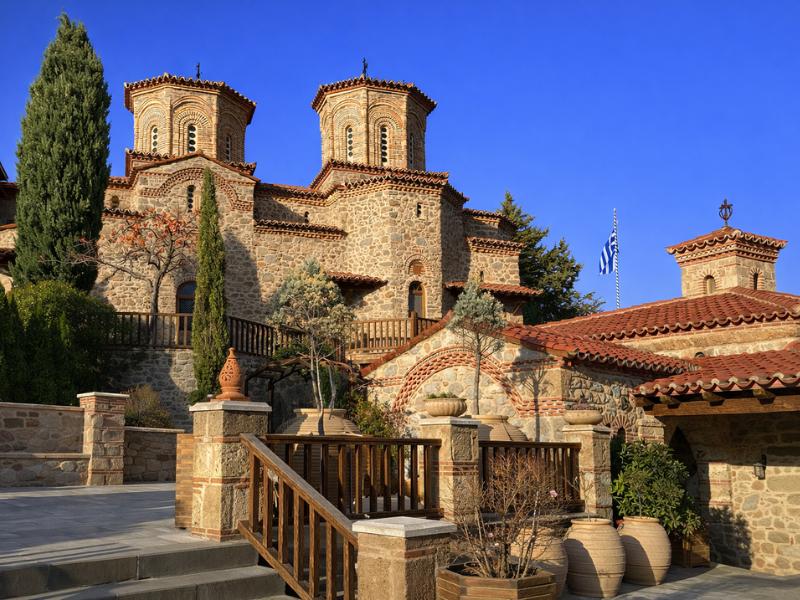
Stay in Kastraki if you have a car, want to wake up with the rocks directly overhead, and are spending at least two nights. Stay in Kalambaka if you’re arriving by train or bus, want the widest choice of restaurants in the evening, or are only staying one night and need logistics to be as simple as possible. Both towns are within 5 minutes of the monastery circuit by car. The difference is entirely about what your base feels like, not how quickly you can get to the site.
The question gets asked thousands of times a year in travel forums, and the answers are surprisingly consistent: experienced travelers who’ve stayed in both lean strongly toward Kastraki. Not because Kalambaka is bad, but because Kastraki is what people imagine when they picture staying at the foot of Meteora. The rocks are not in the distance. They are above the village. You walk out of your hotel and they are right there, filling the northern sky, and in the early morning the birds in the oak trees below the cliff face are louder than any road traffic.
Kalambaka earns its place as the practical choice. It’s a real town with real infrastructure: a supermarket, a pharmacy, a range of restaurants that stay open later, the train station if that’s how you’re arriving. Some travelers who stay in Kastraki find themselves walking or taxiing to Kalambaka for dinner anyway. If you’re staying one night and leaving by early train the next morning, Kalambaka makes the itinerary simpler.
The fifteen-minute walk between them along a well-lit road means the choice is not irreversible. You can stay in Kastraki and eat in Kalambaka. You can stay in Kalambaka and spend your evenings watching the light on the rocks from Kastraki’s viewpoints. But if you have to choose a base for two nights and you have a car, choose Kastraki. We’ve been saying that to travelers for seventeen years. Once the room is booked, the small-group hiking tour from Kalambaka covers the monasteries from town.
Want to skip the guesswork? Here’s how to visit Meteora tours with a plan that actually fits a real travel schedule.
Explore a two-day Athens itinerary with sunset and morning outings. Hotel-included options with breakfast let you combine the stay and transport.
What Is Kalambaka Actually Like as a Base?
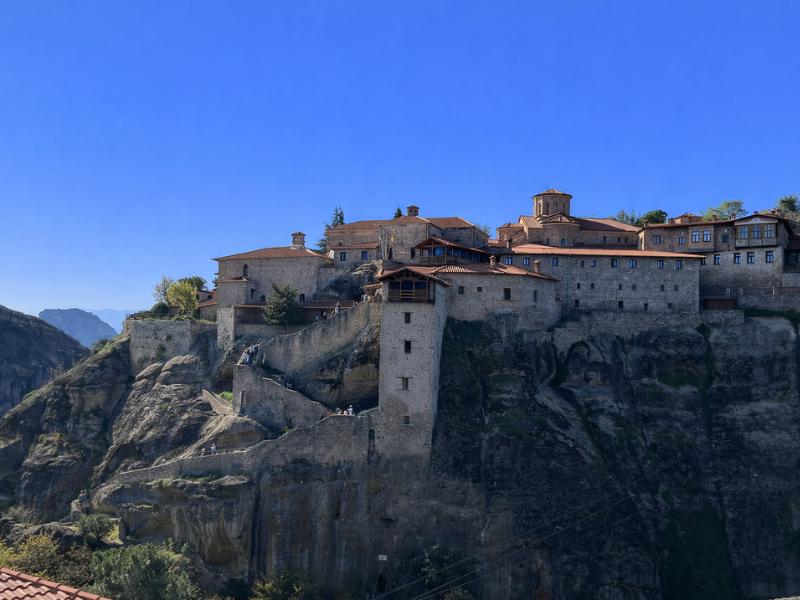
Kalambaka is a functional, reasonably attractive Greek town of around 12,000 people. The main commercial street runs east-west and is lined with tavernas, tourist shops, cafes, and hotels. The upper quarter of town climbs toward the rocks and has a different character: quieter, more residential, with a Byzantine church and some guesthouses that offer better views and less noise than the main drag. It’s the kind of base that delivers everything you need without surprising you.
Kalambaka was heavily damaged during World War II and much of what you see today is postwar construction. This is worth knowing because travelers who arrive expecting a picturesque medieval Greek town sometimes feel slightly deflated by the main street, which has the functional, slightly anonymous feel of a tourism-dependent town that was rebuilt quickly. The rocks behind it are extraordinary. The town itself is honest but not photogenic in the way that Kastraki is.
The upper section of Kalambaka, the area around the Church of the Dormition of the Virgin Mary, is more interesting. The Byzantine church dates to the 4th century, contains remarkable mosaics, and sits at a point where the rock formations begin to feel genuinely close rather than scenic backdrop. Hotels on the upper fringe of town here offer some of the best value views in the area, for travelers who want Kalambaka’s convenience with something closer to Kastraki’s atmosphere.
What Kalambaka does well: late-night dining, variety, transport connections. The train station is a ten-minute walk from most hotels. Tour operators and taxi ranks are concentrated here. If you’re joining a morning guided tour, most pickups start in Kalambaka. For solo travelers, older travelers, or families who want maximum flexibility and not having to call a taxi every time they want dinner, it’s the right base.
Not sure if Meteora is a good fit for a family trip? This breakdown on visiting Meteora tours with kids walks you through the logistics, the stairs, and the parts kids actually enjoy.
Check your date before arranging separate rides from town. The morning minibus includes local accommodation pickup, three monastery visits and return transport.
What Is Kastraki Actually Like as a Base?
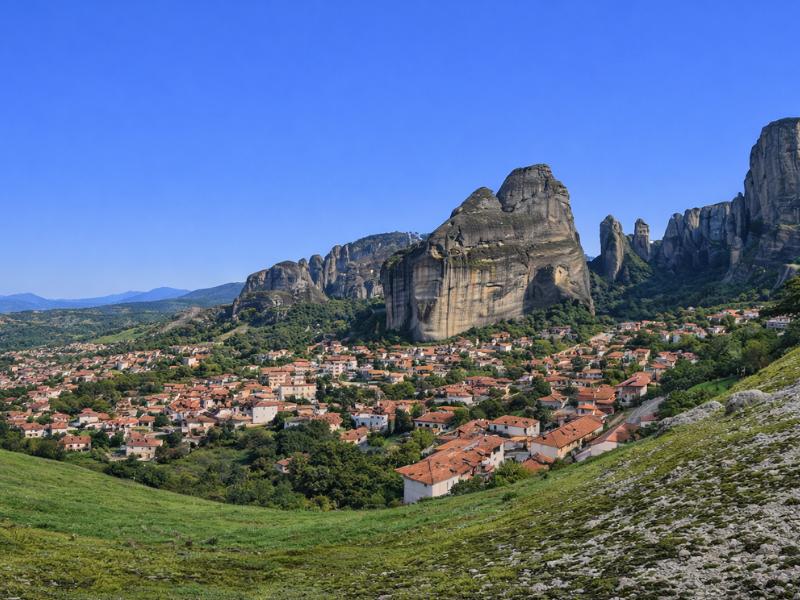
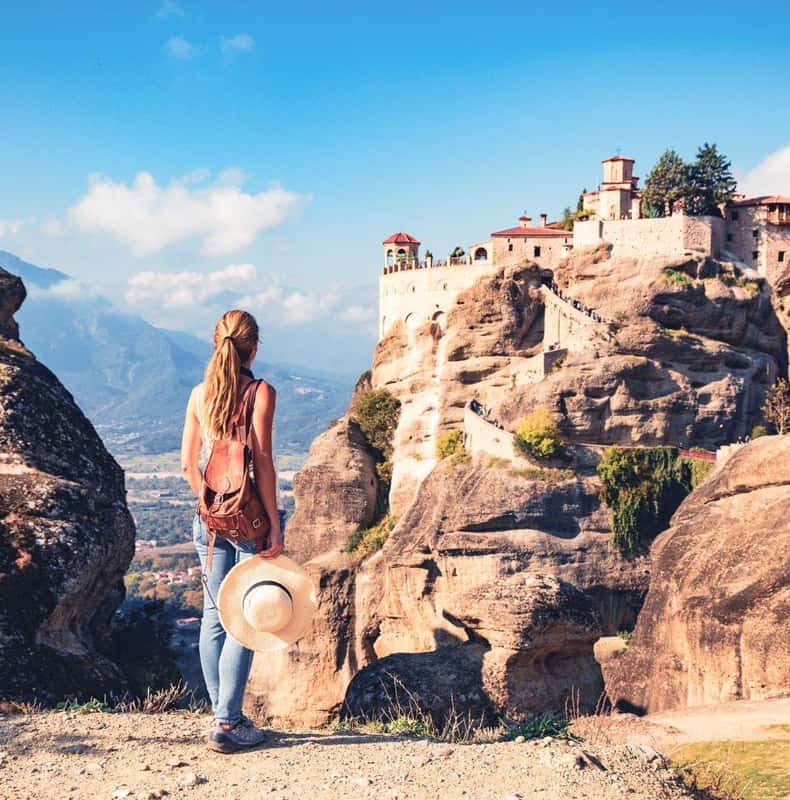
Kastraki is a small, largely traditional Greek village built directly against the base of the Meteora rock formations. About 1,500 people live here year-round. The streets are narrow and some are cobbled, the houses are stone with clay roofs, the village square has a church and a children’s playground and older men at tables outside in the evenings. The Doupiani rock formation rises directly from the northern edge of the village, and from certain points in the upper lanes, the nearest monasteries are visibly overhead.
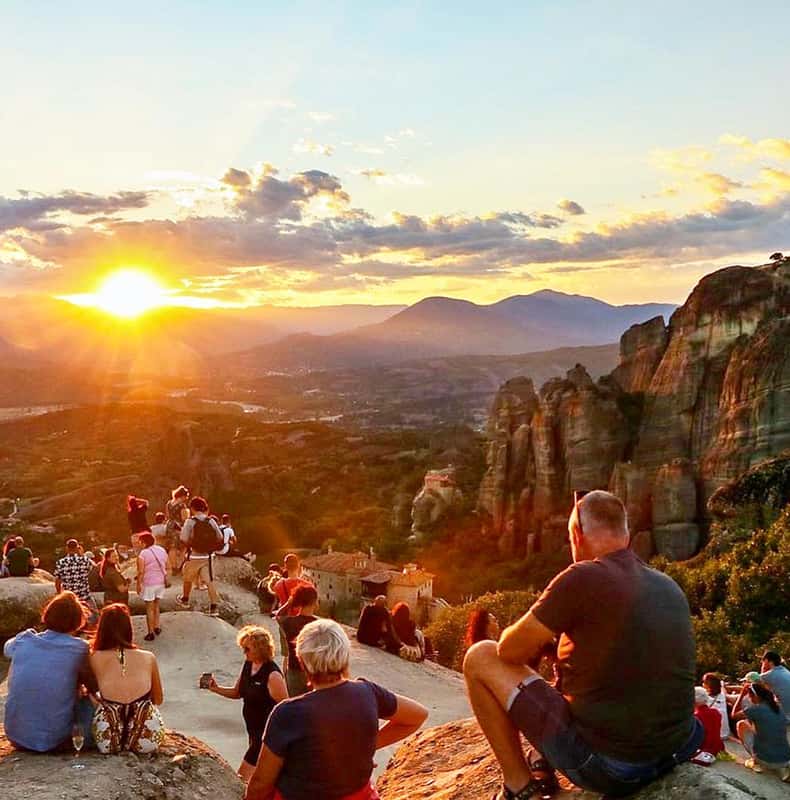
People who stay in Kastraki use words like “magical” and “atmospheric” with unusual consistency, and it’s not marketing language. The thing they’re describing is specific: being inside the landscape rather than adjacent to it. In Kalambaka, the rocks are visible. In Kastraki, they’re present. There’s a night-time quality to the village, after the day-trip coaches have gone and the light fades on the formations, that travelers consistently describe as one of their strongest memories of Meteora. The rocks don’t disappear at night. They just change character.
Kastraki has restaurants and a bakery and a small grocery. It has a handful of tavernas where locals and visitors eat at the same tables. It doesn’t have a fast food strip or a row of souvenir shops selling the same ceramic owls. The evening winds down earlier than in Kalambaka, typically by 22:00 or 23:00 at most establishments. If you want to eat after that, you’re in a taxi to Kalambaka. For some travelers this is a downside. For others it’s part of what they came for.
One thing that surprises people about Kastraki: you can hear the roosters in the morning. And the church bells. The village is quiet enough that ambient sounds travel. Waking up to that, with the first light hitting the rock face outside your balcony, is the version of Meteora that most travelers describe having wanted and not known they’d find.
Explore monastery scenery, hermit caves and sunset viewpoints on a local route with accommodation transfers, then keep village dining as a separate part of the evening.
Which Town Has Better Views of the Rock Formations?
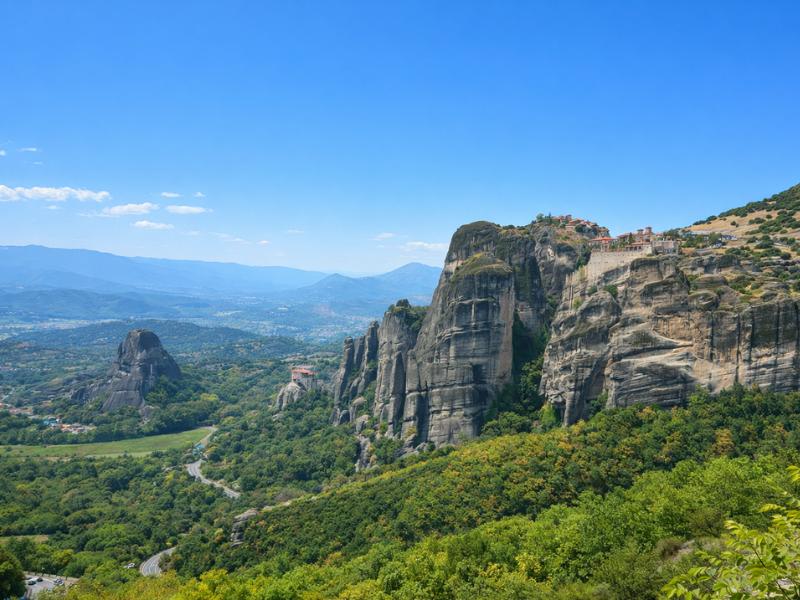
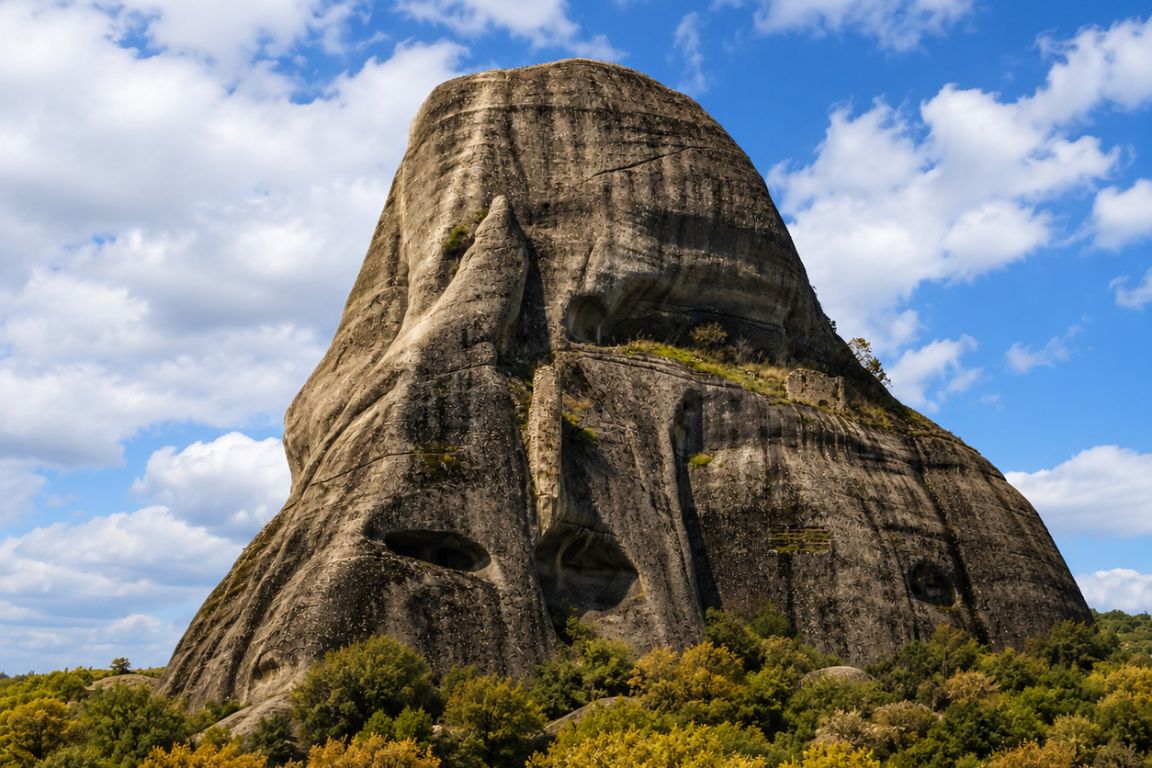 Kastraki, without much debate. The village sits directly at the base of the formations, and the Doupiani rock rises from the village’s northern edge. From a balcony at Doupiani House or the upper terraces of Hotel Meteora at Kastraki, the pillars fill the horizon in a way that no Kalambaka hotel can replicate. Kalambaka offers good views from its upper section and from select hotels with view rooms, but the geometry of the town places the rocks at a slightly greater distance.
The view room caveat in Kalambaka is worth understanding before booking. Several Kalambaka hotels advertise Meteora views, and the views are real, but at some properties “Meteora view” means a partial glimpse of rocks from a corner of the balcony rather than formations filling your horizon. When booking in Kalambaka and prioritizing views, call or email the property directly, ask which specific rooms have unobstructed rock views, and request one of those rooms explicitly at booking. In Kastraki, this problem largely disappears because the village is inside the landscape: the formations are north and east of most hotels, and most balconies face that direction.
| Rocks directly overhead from hotel | Kastraki (upper village hotels) | Doupiani House, Pyrgos Adrachti, Hotel Meteora at Kastraki all offer this |
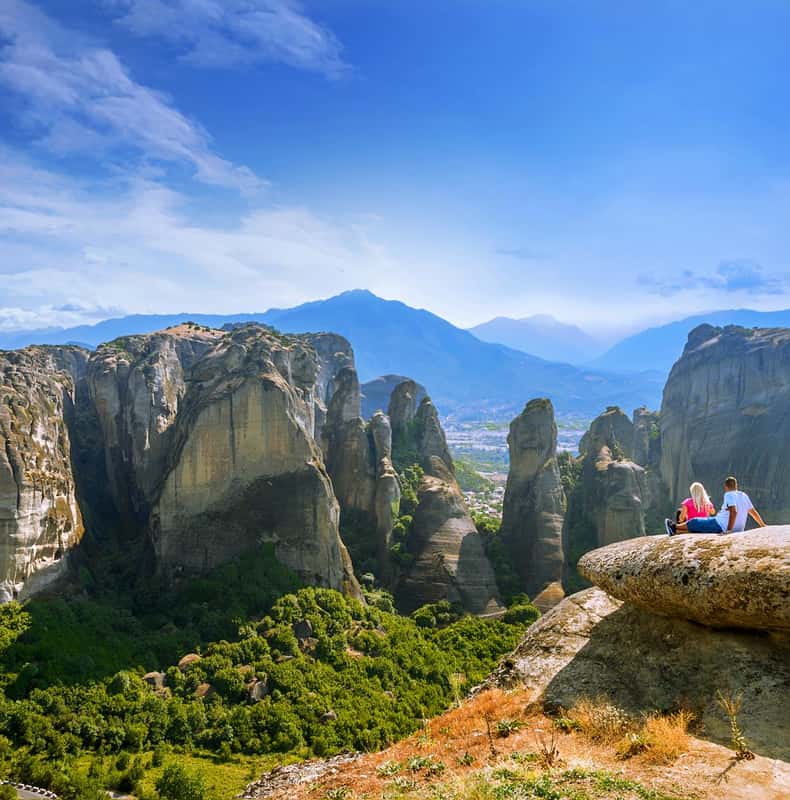
| Panoramic view of multiple pillars | Main Observation Deck (upper monastery road) | 5 monasteries visible at once; 10 min drive from either town |
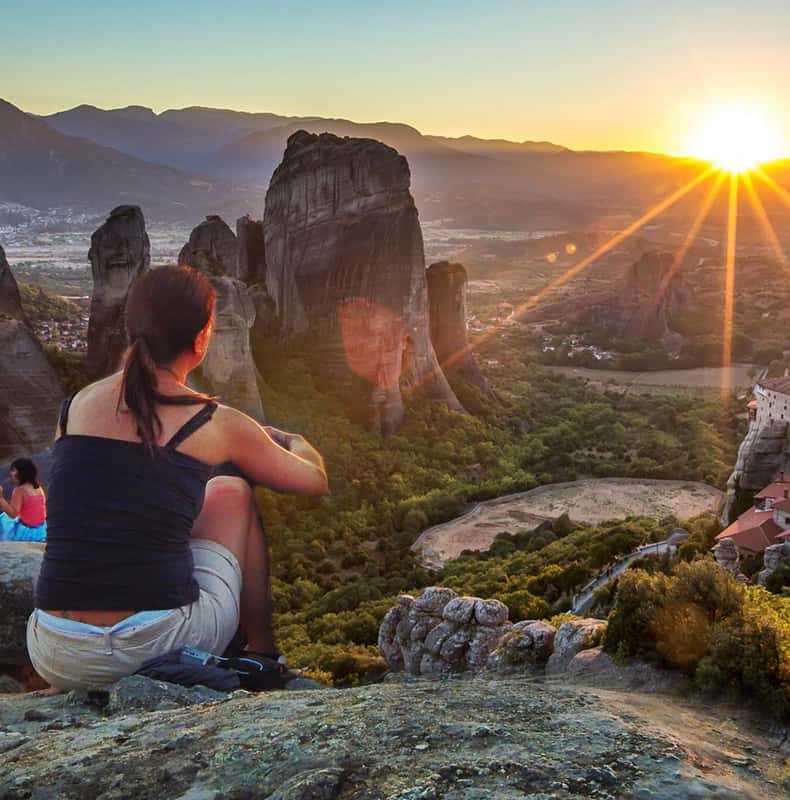
| Sunset view from hotel balcony | Kastraki (west-facing rooms) | Rocks turn amber to copper; best from upper Kastraki hotels |
| Rocks visible from room without view upgrade | Kastraki | Most hotels in Kastraki face the formations by default |
| Best view room in Kalambaka | Upper Kalambaka guesthouses or Divani hotel | Request a Meteora-view room specifically; not guaranteed |
| View of all 6 monasteries simultaneously | Monastery road viewpoints | No hotel in either town offers this; drive or walk up |
Check the sunset route for your date before organizing separate transfers. A local guide and minibus connect the views beyond your accommodation.
Where Should You Stay If You Don’t Have a Car?
Recommended tours by season
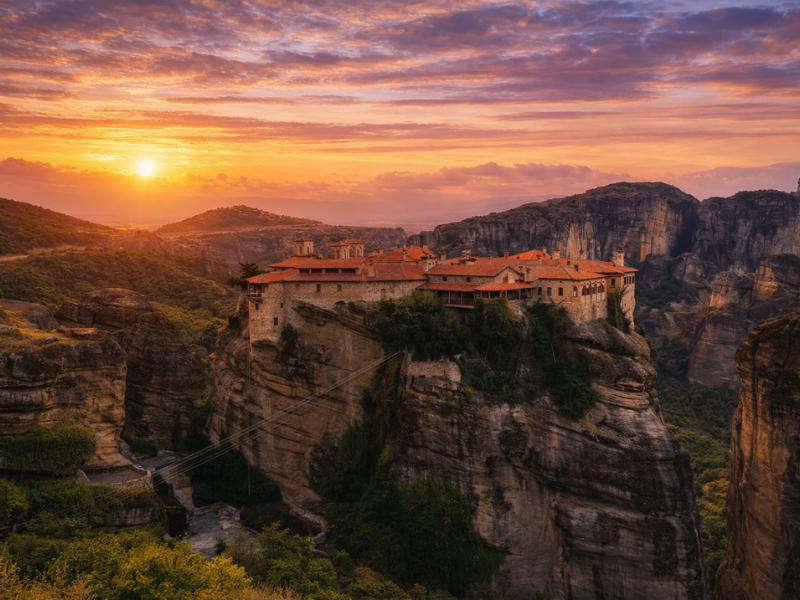
Early Morning Meteora Tour – Small Group with Local Guide
Four-hour small-group visit with a local guide, timed for the morning. A practical pick in the long, hot months.
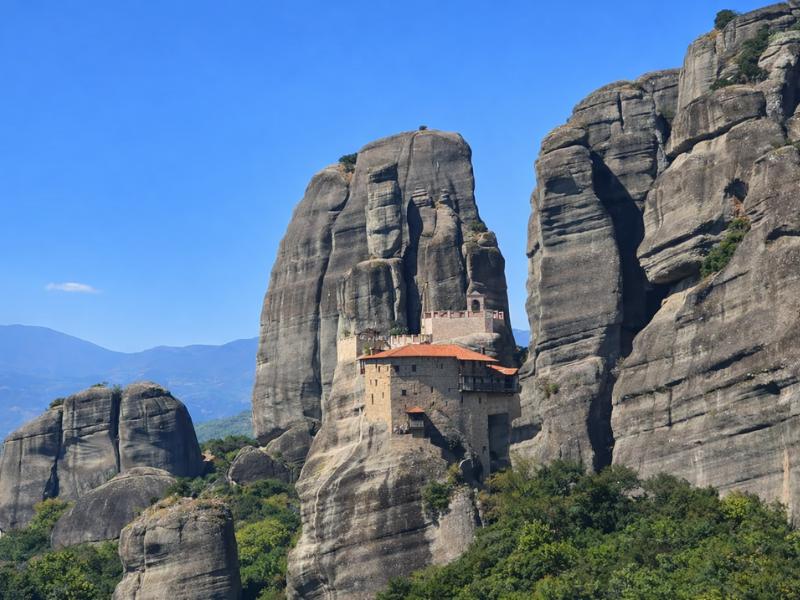
Small-Group Meteora Sunset Tour – Monasteries Glow & Hermit Caves
Four-hour small-group tour of monasteries and hermit caves at sunset. Works well when you already have a room for the night.
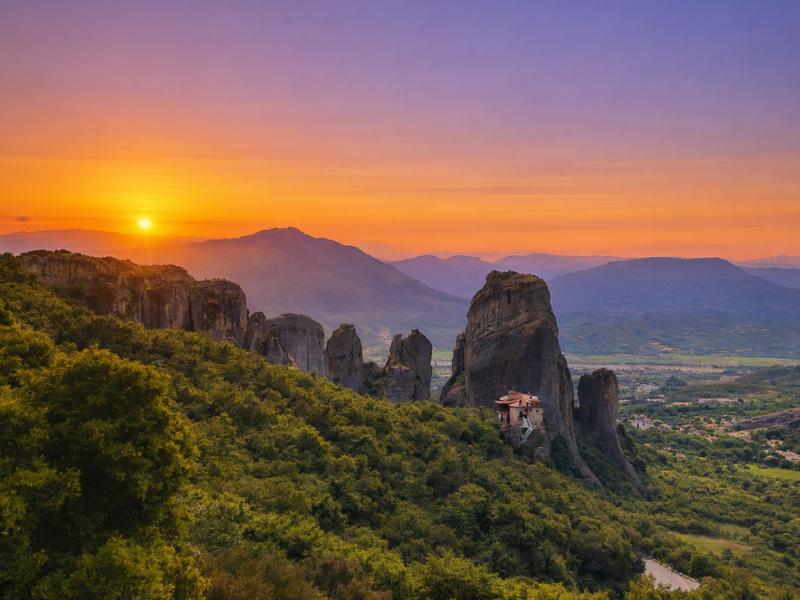
Athens to Meteora: Full-Day Tour with Expert Local Guide & Greek Meal
Fourteen-hour day trip from Athens with a local guide and a Greek meal. Useful when you would rather not stay overnight.
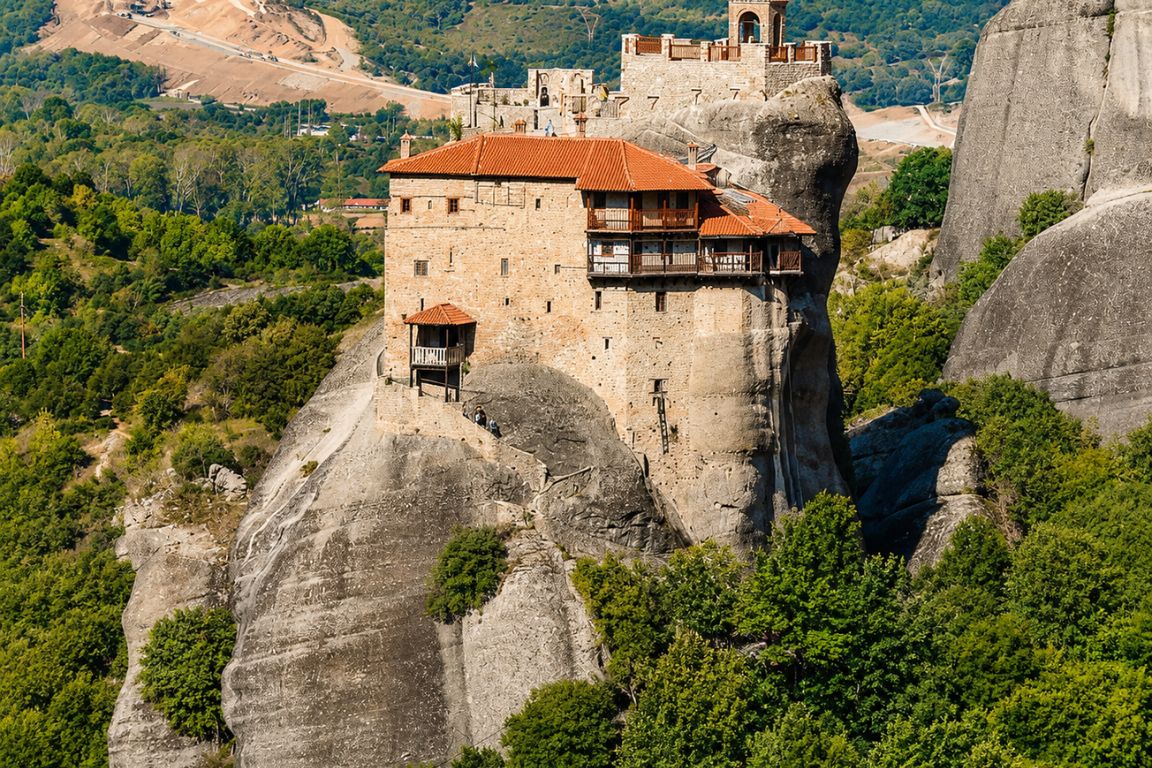
2-Day Meteora Experience from Athens – Sunset, Sunrise & Hotel Stay
Overnight package from Athens with hotel, sunset visit, and a second morning at the rocks. The stay is booked with the tour.
 Kalambaka, without hesitation. The train station and bus terminal are both there. Taxis from the station to any hotel in Kalambaka cost almost nothing. From Kalambaka, guided tours pick up at your hotel, taxi ranks are plentiful, and in summer a local bus runs to the monasteries from the town center. Kastraki is reachable from Kalambaka by a short taxi ride (roughly €5-€7), so you can still base yourself there without a car, but you add a transfer to every evening out.
The “no car” scenario breaks down into a few specific situations. If you’re arriving by train or the KTEL bus from Athens, you land in Kalambaka and your hotel should be a five-minute walk or a short taxi from the station. Choosing Kastraki means a transfer immediately on arrival with luggage. That’s manageable but adds friction. For a one-night stay timed around an early train departure, Kalambaka is clearly the simpler choice.
If you’re staying two nights without a car and want to experience Kastraki, the logistics are workable. The taxi ride between towns costs around €5 each way. From Kastraki, St. Nicholas Anapafsas monastery is about 45 minutes on foot and several other monasteries are accessible via the trail network, so you don’t necessarily need transport for the monasteries themselves. You do need it for dinners in Kalambaka if Kastraki’s limited evening options don’t work for your group.
One practical note for carless travelers: ask your Kastraki hotel to book a taxi for you the night before any early departure. While taxis generally operate around the clock between the two towns, you don’t want to be standing on the village road at 05:30 hoping one appears. The hotel will sort it, and it costs around €5.
We’ve got a full breakdown on how to get to Meteora by bus, train, or tour if you want to know exactly what each option costs and how long it actually takes.
Explore three monastery interiors and panoramic stops with pickup and return in Kalambaka or Kastraki. Your base connects to the route by minibus.
How Much Does Accommodation Cost in Each Town?
Both towns have accommodation across a wide range. Budget guesthouses start around €50-€60 per night in both locations. Mid-range hotels with rock views run €80-€130. The top boutique and luxury options in Kastraki (Tsikeli, Doupiani House, Pyrgos Adrachti) sit at €120-€200+ in peak season. Kalambaka’s best option, the Divani Meteora Hotel, runs €130-€180+ with its spa and two pools. Prices drop significantly outside July and August, sometimes by 30-40%.
Prices verified June 2026. Peak season (July-August) and weekends carry a premium. Spring and autumn rates can be 30-40% lower. Greece also applies a nightly Climate Crisis Resilience fee that varies by hotel category and season, typically paid on-site. Check your booking for the current amount.
A practical note on booking view rooms: in Kastraki, most hotels face the formations and a standard room often has the view you came for. In Kalambaka, “view room” is a specific category at many hotels and costs more than standard. The Divani Meteora Hotel, for example, has rooms with varying degrees of Meteora visibility. Book the rock-view room directly with the hotel and confirm it at check-in.
The best-value stay in the area, in the opinion of travelers who’ve done both towns, is a mid-range Kastraki guesthouse with balcony views in the €80-€120 range. You pay slightly more than a comparable Kalambaka room, but the views and atmosphere represent significantly better value for what the trip is actually about.
| Budget guesthouses | €50-€70 | €50-€75 |
| Mid-range with views | €80-€130 | €80-€140 |
| Boutique / upper-mid | €110-€160 | €120-€180 |
| Luxury / best in area | €130-€200+ (Divani) | €150-€220+ (Tsikeli, Doupiani House) |
Enter comparable visitor-priced totals for the same dates and number of nights, including any separately payable charges, to compare two stays on a per-person basis.
What Are the Best Hotels in Kalambaka?
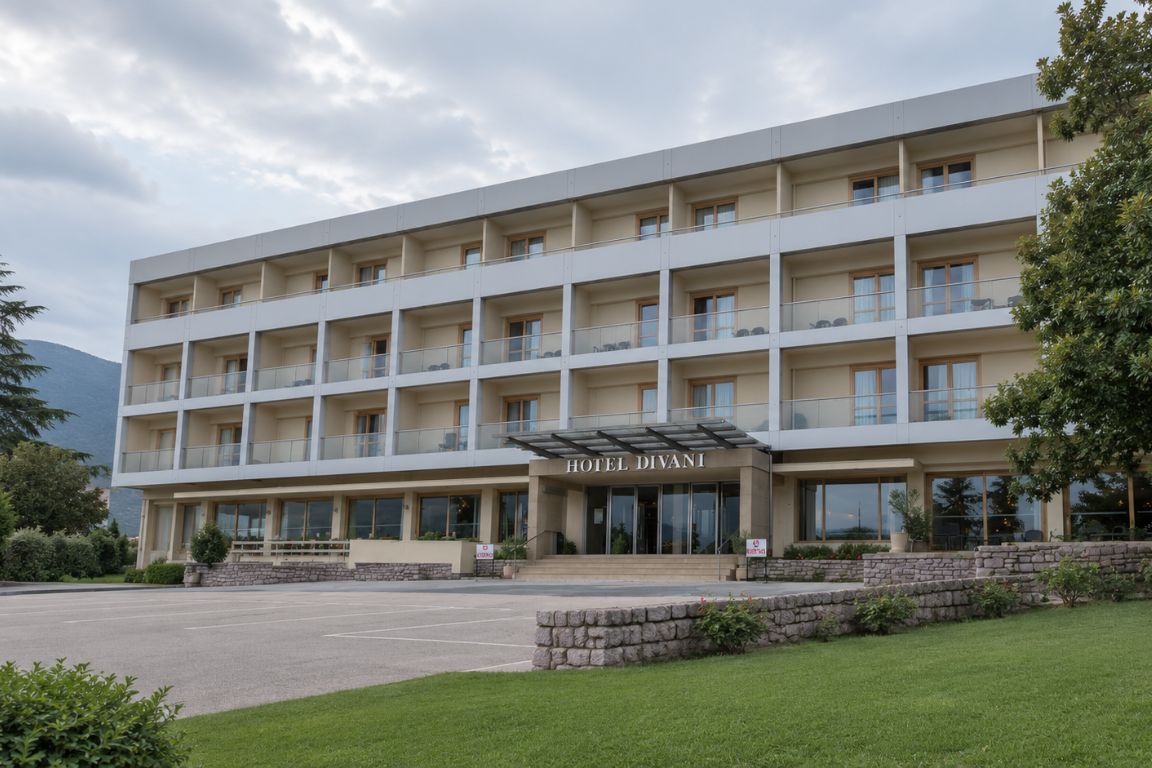 Kalambaka’s best hotel for most travelers is the Divani Meteora Hotel, with 165 rooms, two pools (outdoor and indoor/spa), and many rooms with Meteora balcony views. For boutique and more local character, the Dellas Boutique Hotel on the road toward Kastraki sits between the two towns and offers excellent views with a more personal atmosphere. For budget stays, Kosta Famissi Hotel and the Monastiri Guesthouse offer solid value near the center.
The Divani is the obvious large-hotel choice and handles tour groups alongside independent travelers. Its spa, pools, and fitness facilities are the most comprehensive in the area. Rooms are spacious and the breakfast buffet is well-regarded. The downside cited by some reviewers: the hotel caters to coach tour groups and can feel corporate in scale. Request a balcony room with explicit Meteora views when booking, and specify at check-in.
The Dellas Boutique Hotel is worth mentioning specifically because it solves the Kalambaka-or-Kastraki question by sitting geographically between the two. It has rock views, a more boutique feel than the Divani, and is a short drive from both town centers. Travelers who want the convenience of Kalambaka with better immediate scenery often find this the right compromise.
| Divani Meteora Hotel | Families, spa seekers, comfort travelers | Two pools, spa, fitness center, near train station |
| Dellas Boutique Hotel | Couples, design-conscious travelers | Between the two towns; rock views; boutique character |
| Alsos House | Travelers wanting quiet, nature-close stay | Close to rocks, garden setting, away from main drag |
| Monastiri Guesthouse | Budget travelers, train arrivals | Near train station, good value, family-run |
| Kosta Famissi Hotel | Budget-conscious travelers | Central, affordable, reliable for short stays |
If you’d rather let us worry about accommodation logistics while you focus on the visit itself, Meteora Tours can arrange accommodation as part of a multi-day package. We know which rooms in which properties have the views and which don’t.
Compare your shortlisted room and transport totals with the alternative stay, using current quotes for the same dates and party.
What Are the Best Hotels in Kastraki?
Before choosing a trail-side base, check what the walk from town to the monasteries involves and how it fits your planned outings.
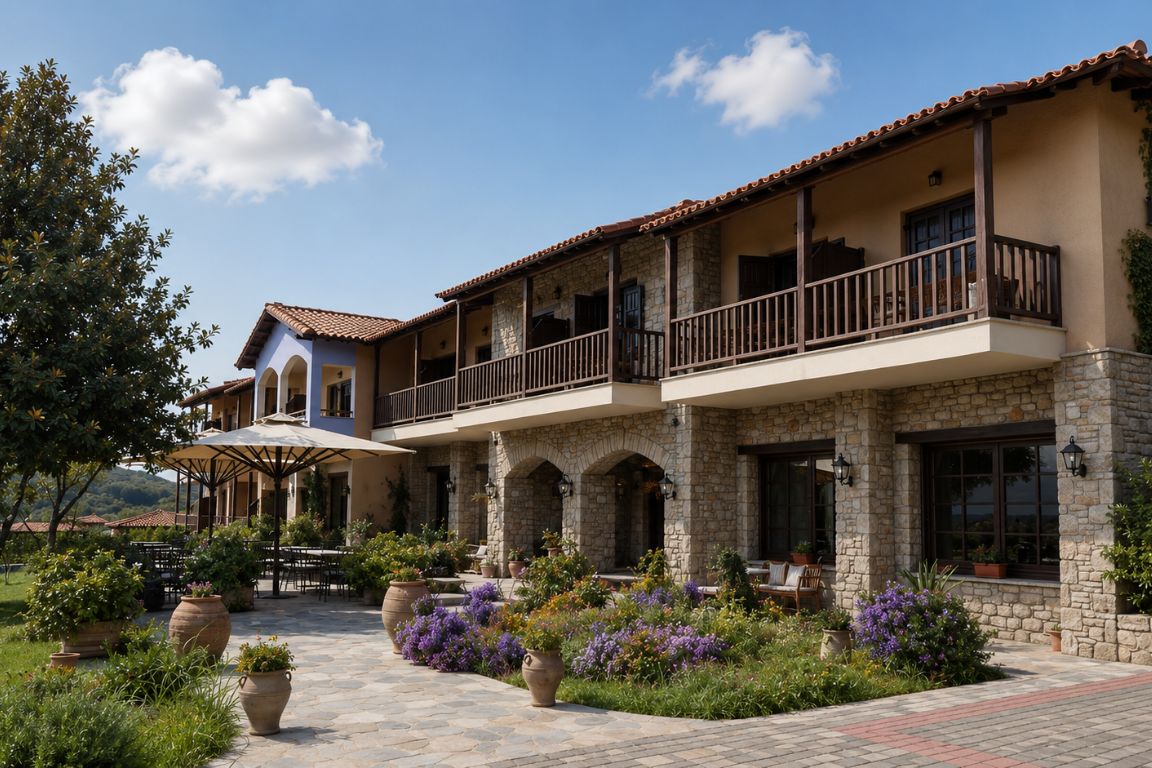 The top hotels in Kastraki are Doupiani House for charm, views, and family ownership; Hotel Meteora at Kastraki for the pool with rock views and resort-level facilities; and Tsikeli Boutique Hotel for adults-only boutique character with stone-and-timber design. For hikers specifically, the Vavitsas guesthouse sits close to the main trail network. Pyrgos Adrachti offers panoramic terrace views that are exceptional at sunset.
Doupiani House is consistently one of the most-recommended hotels in the Meteora area, across platforms and years. It sits at the highest point of Kastraki in a six-acre garden adjoining the Doupiani rock formation, which is both its address and its view: you wake up to that specific pillar through the window. The traditional stone-and-wood construction, the breakfast served on the pergola with local produce and homemade condiments, and the hand-drawn hiking maps the owners provide to guests who want to walk rather than drive, add up to an experience that independent travelers describe with the same language people use for particularly good guesthouses in the Greek islands: specific, personal, not replicable at scale.
Hotel Meteora at Kastraki sits at the highest point of the village and has a pool with unobstructed rock views. Guests consistently describe the view from the pool area as the best single image they took on the trip. The hotel is larger than Doupiani House, more resort-feeling, and appeals to travelers who want comfort and setting simultaneously. It’s about a 20-minute walk from Kastraki’s central restaurants but the hotel calls taxis on request and rides cost under €5.
Tsikeli is adults-only, eco-friendly, and operates with a barista for breakfast, a philosophy about materials (earthy stone and timber throughout), and a cafe-bar on the premises. Some suites have private hot tubs or saunas. It suits couples looking for a more intimate stay, and photographers who want a base from which to shoot the formations at different times of day without moving far.
| Doupiani House | Couples, families, repeat visitors | Traditional stone-and-wood; panoramic garden terrace; hiking maps provided; local breakfast |
| Hotel Meteora at Kastraki | Comfort travelers, families, summer stays | Pool with direct rock views; resort facilities; modern rooms |
| Tsikeli Boutique Hotel | Adults only; couples; design and food-focused travelers | Stone-and-timber eco design; barista breakfast; some suites with hot tubs |
| Pyrgos Adrachti | View-seekers; sunset watchers | Hillside position; panoramic terrace; quietest location in area |
| Boutique Holy Spirit | Budget-conscious boutique travelers | Village center location; eclectic character; good value |
| Vavitsas Guesthouse | Hikers; trail-focused visitors | Closest accommodation to the main hiking trail network |
Can You Walk to the Monasteries from Either Town?
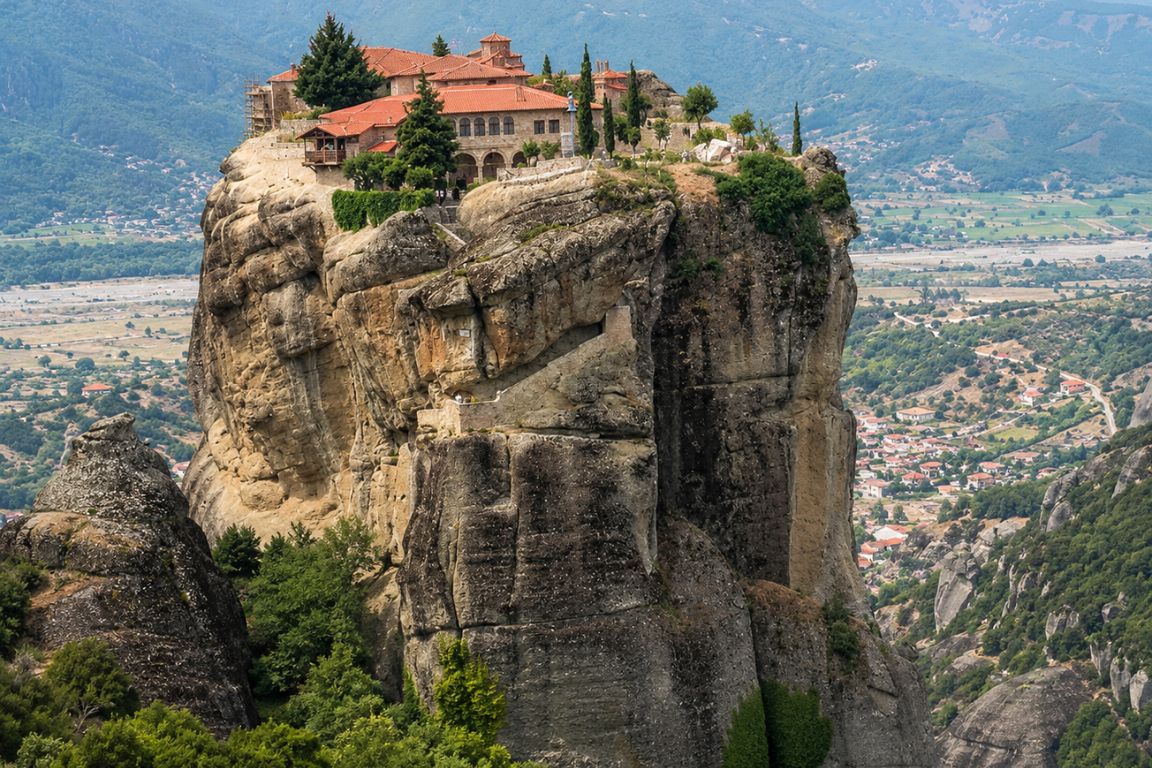 Yes from both, but the experience is different. From Kastraki, St. Nicholas Anapafsas is about 45 minutes on foot via trail, and the western monasteries (Grand Meteoron, Varlaam) are reachable in roughly 2 hours along the monk’s paths through the rock forest. From Kalambaka, the eastern side (Holy Trinity, St. Stephen’s) is accessible via a 45-60 minute climb. The full monastery circuit on foot from either town is an 11.5 km route requiring 5 to 6 hours: challenging, but the monks built the paths and they knew the terrain.
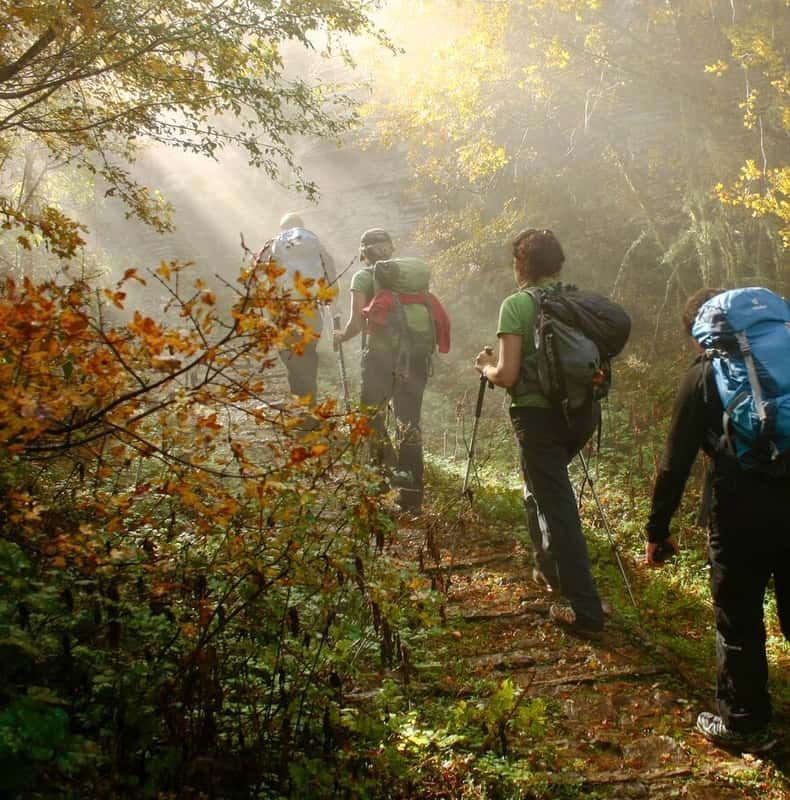
The trail situation in Meteora is extraordinary and frustrating in equal measure. The paths are real, some of them centuries old, and the experience of approaching a monastery along the route the monks themselves used is completely different from arriving by car. But the trails have almost no signage. There are no route markers, no distance posts, no arrows at forks. You need a downloaded offline map (apps.me works well) or a physical copy of the TERRAIN hiking map at 1:12,500 scale, and ideally both. Getting genuinely lost is possible if you follow the wrong fork in the rock forest and don’t have a reference.
The practical walk most independent travelers do: from Kastraki, take the trail toward St. Nicholas Anapafsas (30-45 minutes), enter the monastery, then continue along the road and trails to Roussanou and Varlaam. This covers three monasteries in a half-day on foot. Grand Meteoron requires continuing further west on the main road, adding another 45 minutes. The terrain is mixed: some stretches of forest trail, some walking along the paved monastery road. In summer, the road sections between 10am and 2pm are hot and exposed. Start before 08:30 or go after 16:00.
For the full circuit from Kalambaka: the route starts at the northeastern edge of town, climbs to Holy Trinity (100 stone steps at the top), then follows the main monastery road west to St. Stephen’s, Roussanou, Varlaam, and Grand Meteoron, returning to Kastraki and then Kalambaka via trail. It covers approximately 18 km with significant elevation change and takes a full day. It is the best way to understand Meteora’s physical scale, and it is achievable by any reasonably fit traveler who starts early and brings water.
One thing nobody puts in the walking guides: there are no water points on the trails. The canteens near the monasteries are inconsistent in what they stock. Bring a full water bottle from your hotel and refill if you can at the Grand Meteoron, where there is a drinking fountain.
There are six open to visitors but you won’t have time for all of them. Here’s a breakdown on which Meteora monasteries are best to visit based on views, crowds, and what’s inside.
Check the guided hike before filling your stay with other outings. Local accommodation transfers connect you with an eight-kilometre walk through the forest and rocks.
What Our Travelers Choose: Accommodation Patterns from 14,400+ Guided Visits
| Travelers who stayed in Kastraki vs Kalambaka | ~64% Kastraki / ~36% Kalambaka |
| Kastraki stayers who would return to Kastraki | ~91% |
| Kalambaka stayers who would switch to Kastraki next time | ~47% |
| Most-cited reason for choosing Kastraki | Views from hotel / village atmosphere (~73%) |
| Most-cited reason for choosing Kalambaka | No car / train arrival / restaurant variety (~68%) |
| Travelers who wished they’d stayed longer overall | ~61% |
Treat aggregate preferences as context, then make the decision from your own arrival method, stay length, dining needs, and desired atmosphere.
Frequently Asked Questions
Use the transport guide to connect your chosen base with arrival, monastery visits and the journey onward.
Which town is closer to the Meteora monasteries?
Kastraki is slightly closer, particularly to the western monasteries (Grand Meteoron, Varlaam, Roussanou) and to St. Nicholas Anapafsas, which is walkable from the village. Kalambaka is closer to the eastern monasteries (Holy Trinity, St. Stephen’s). In practical terms, both towns are under 10 minutes by car to any of the six. The difference in driving time is negligible.
Driving differences are small, so compare the six monastery profiles if a particular side of Meteora or visitor-access consideration will shape your base choice.
Can I stay in Kastraki and get to the train station in the morning?
Yes, easily. A taxi from Kastraki to Kalambaka train station takes about 5 minutes and costs around €5-€7. Ask your hotel to arrange it the night before for early departures. Taxis generally operate around the clock in the area, but advance arrangement removes any uncertainty.
For an early departure from Kastraki, arrange the transfer with your property against the confirmed timetable and review the available ways to get around after arrival.
Is Kastraki too quiet for a stay? Are there enough restaurants?
Kastraki has several good tavernas and they are genuinely good: Taverna Gardenia is frequently cited as one of the best places to eat in the entire Meteora area. The village closes down earlier than Kalambaka, typically by 22:00-23:00. For travelers who want late-night options or variety, a taxi to Kalambaka takes five minutes. For travelers who want a village evening, Kastraki is not too quiet at all during spring and summer.
Explore a sunset outing with monastery scenery, hermit-cave history and viewpoint stops. Accommodation transfers bring you back to your local base afterward.
Is there a bus between Kalambaka and Kastraki?
There is no regular scheduled bus service between the two town centers. Taxis are the standard connection and are inexpensive (€5-€7). In summer, a local bus service runs from Kalambaka up to the monasteries and stops at or near Kastraki on request; check the current schedule locally as it varies by season.
Because local service can vary, review the broader getting-around guidance and keep a walking or taxi alternative rather than basing the stay on an assumed bus connection.
Which town is better in winter?
Kalambaka in winter. Kastraki’s limited dining options become more of an issue when the shoulder season tavernas reduce hours or close entirely. Kalambaka stays more active through the colder months and gives you access to more consistent services. The rock formations in winter mist or light snow are spectacular from either town, but the practicalities favor the larger town when fewer businesses are operating.
Compare winter conditions and seasonal service patterns before choosing the quieter village over Kalambaka’s broader year-round infrastructure.
Do I need to book hotels well in advance?
For summer (July-August) and the spring shoulder season (April-May), yes. The best rooms in Kastraki, particularly those with balcony views at Doupiani House and Tsikeli, fill several months ahead. Autumn is more forgiving. Winter is rarely a problem. As a general rule: if you have specific dates and a preference for a particular property, book as soon as you know your itinerary. The views that make these hotels worth staying in are limited inventory.
Use the base comparison to settle the town first, then verify current availability and the exact room outlook directly with shortlisted properties.
Not sure which base works for your specific trip?
We’ve put travelers in both towns for seventeen years. Tell us your dates, how you’re arriving, and how long you’re staying. Michael and the team at Meteora Tours will tell you exactly where to sleep and why.
Written by Michael Angelos
Greek tour guide since 2009 · Founder, Meteora Tours
Michael has guided over 14,400 travelers through the monasteries and rock formations of Meteora since founding the agency.