Meteora Monastery Dress Code
Meteora’s monasteries have a strict dress code. Here’s what men and women must wear, plus photography rules and tips to avoid problems at the entrance.
With the entrance rules clear, choose a visit format based on your starting point, available time, and preference for monastery stops, walking, or exterior sunset views. Choose A Tour For This Itinerary
Last updated: June 28, 2026
What Is the Dress Code for Meteora Monasteries?
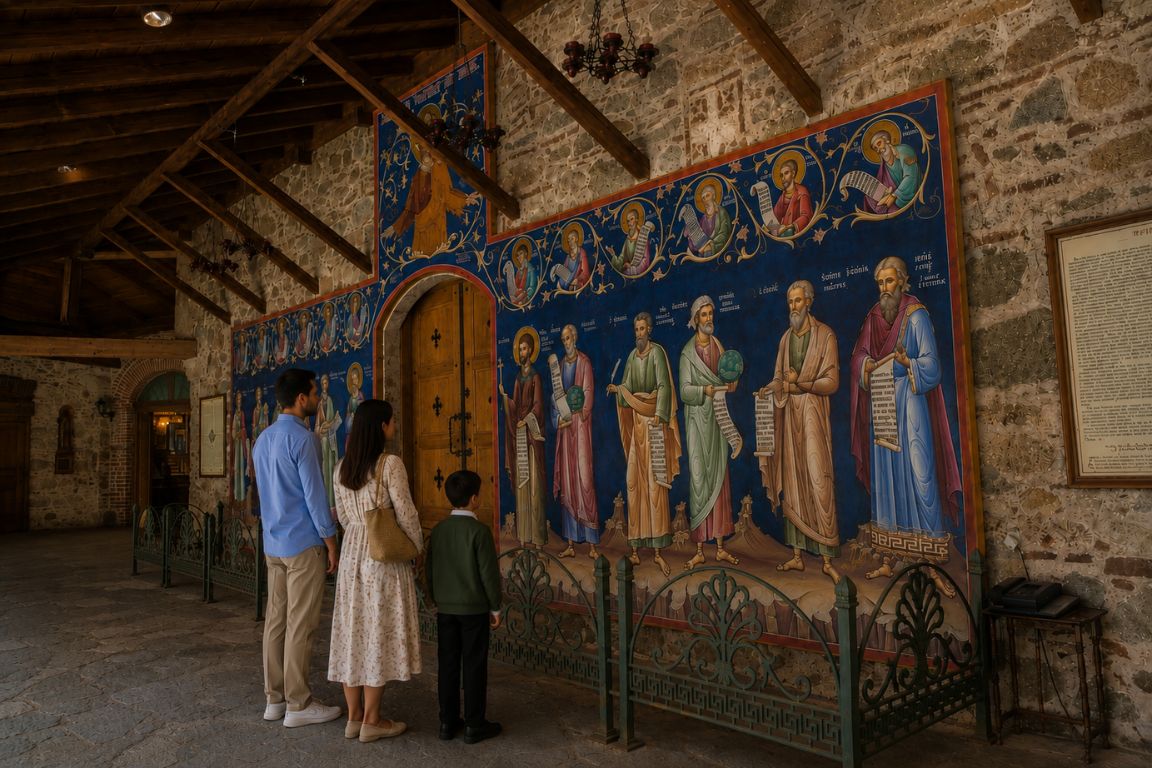 Every visitor entering any of the six active monasteries at Meteora must have knees and shoulders covered. The rule applies regardless of age, nationality, or religion. For men this means long trousers and a sleeved top. For women this means a skirt or dress below the knee and a top with sleeves. Trousers are not accepted as a substitute for a skirt for women, even wide or loose ones. The rules are the same at all six monasteries and are enforced at the entrance by the monks or nuns on duty.
The dress code at Meteora is the same requirement applied at active Orthodox monasteries across Greece and much of the Balkans. It is not specific to Meteora or invented for tourists. The monasteries are working religious communities and the modesty requirements reflect the same standards expected of Orthodox faithful entering a place of worship anywhere in the world.
The enforcement is real. Being turned away at the gate after climbing 300 steps to Grand Meteoron in July heat because you are wearing shorts is not a theoretical risk. It happens to multiple visitors every day during peak season. The solution is simple and takes almost no space in a bag. Understanding exactly what is and is not acceptable before you leave your hotel is the difference between a smooth morning and a frustrating one.
We mention the dress code in every briefing before our tours depart from Kalambaka. It is the single most common cause of problems at the monastery entrance, and it is entirely avoidable. Our guides at Meteora Tours always carry spare wraps for travelers who need them.
First time in the region? Our guide on how to visit Meteora tours walks you through getting there from Athens, what to wear, and how long you actually need.
Explore a morning with three monastery interior visits, photo stops and local guiding, connected by minibus from Kalambaka or Kastraki.
What Men Must Wear
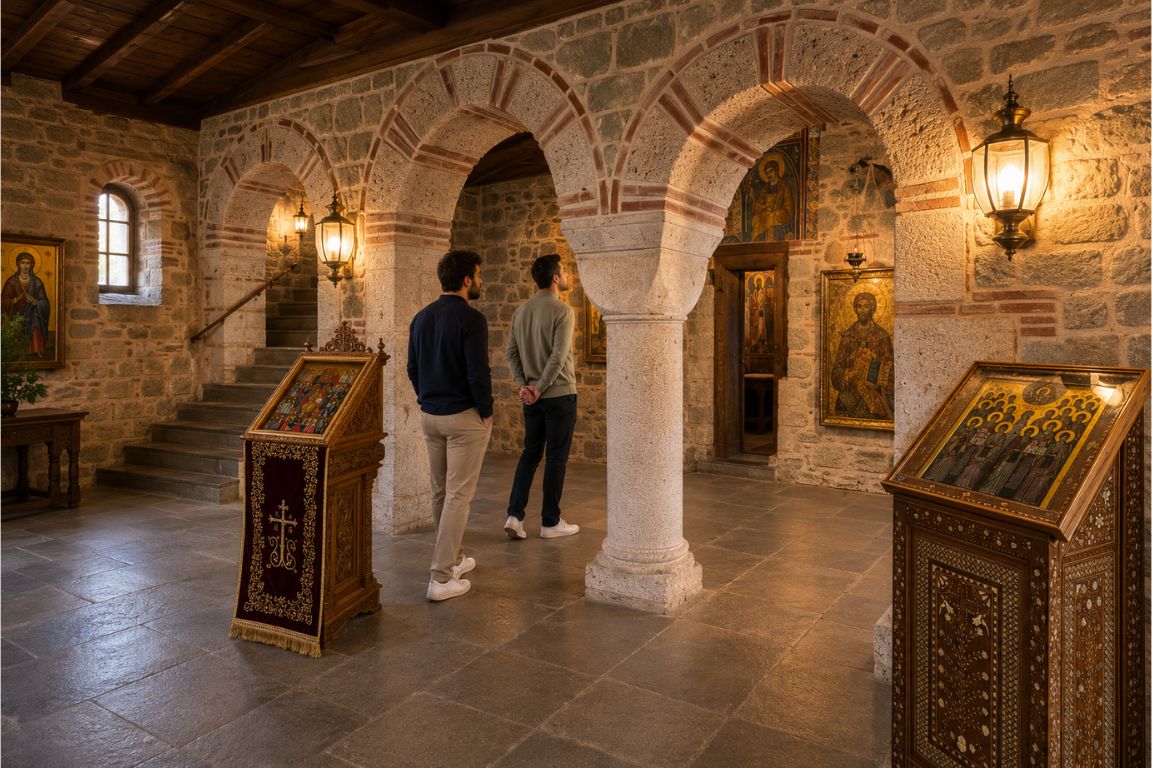 Men must wear long trousers that cover the knee and a top with sleeves. Shorts of any length are not permitted. Sleeveless shirts, vest tops, and muscle shirts are not permitted. A standard short-sleeved t-shirt is fine. A polo shirt is fine. Linen or cotton trousers are the most practical choice for summer given the heat on the staircase climbs.
The most common problem for male visitors is shorts. Men who arrive in knee-length hiking shorts are turned away. The length does not matter: any shorts, including those that finish below the knee, are not acceptable. Long trousers are required. This is the rule consistently reported from every monastery in the complex and there is no workaround.
Unlike the situation for women, the monasteries generally do not provide covering garments for men at the entrance. If a woman arrives in shorts, she can usually borrow a wrap skirt. If a man arrives in shorts, he cannot enter and the monastery will not supply trousers. This is the asymmetry worth noting before packing. Men in groups where everyone else is in appropriate attire will not enjoy waiting outside while the rest of the group visits inside.
The practical packing solution for male travelers spending time at the beach or hiking before Meteora is a pair of lightweight linen trousers that fold flat and weigh almost nothing. Linen handles the staircase heat better than denim or synthetic fabrics. Cotton works too. The point is having them in the bag and putting them on before walking up to the entrance, not discovering the requirement at the gate.
| Long trousers (any fabric) | Yes | Linen or cotton recommended for summer comfort |
| Shorts (any length) | No | Even knee-length shorts are refused |
| Short-sleeved t-shirt | Yes | Must cover shoulder joint |
| Sleeveless top / vest | No | Bare shoulders are not accepted |
| Long-sleeved shirt | Yes | Fine year-round; a thin long sleeve is cooler than it looks in summer |
| Hat | Remove inside | Hats should come off when entering chapels |
If your packed trousers or shirt will not meet the entrance rules, plan where to obtain suitable clothing before heading uphill.
What Women Must Wear
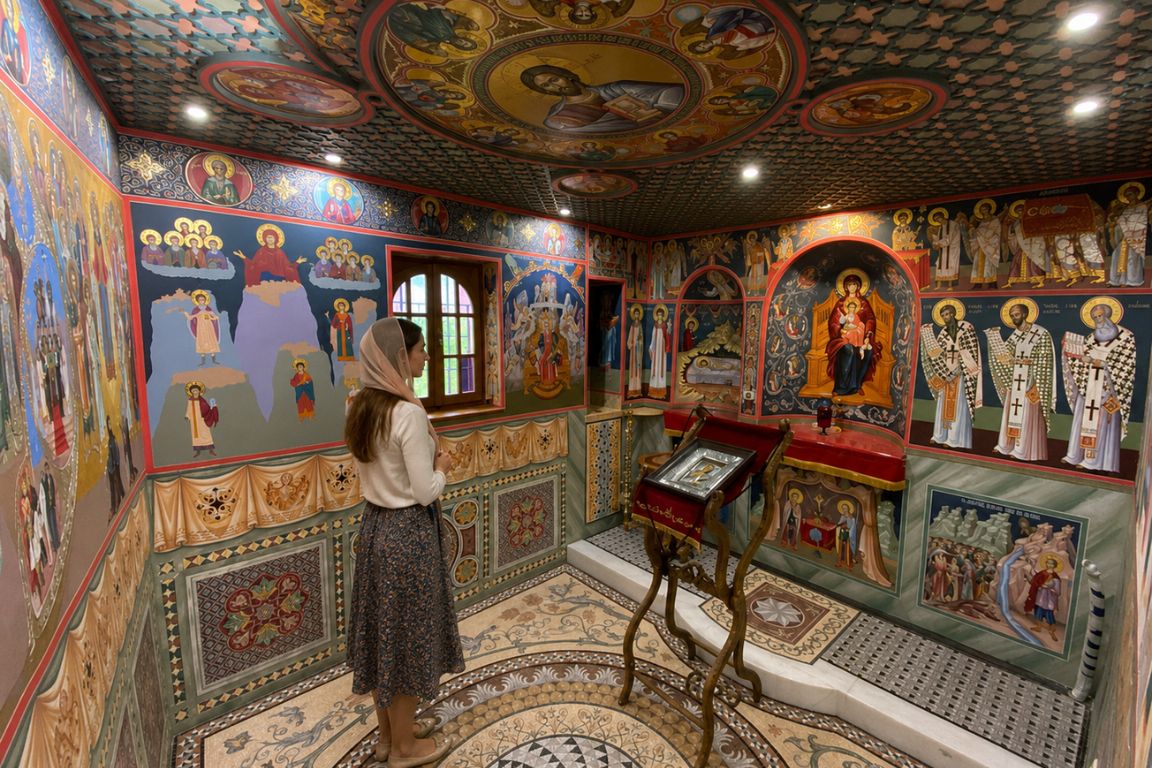 Women must wear a skirt or dress that falls below the knee and a top covering the shoulders. Trousers of any kind, including wide-leg trousers, palazzo pants, linen trousers, and leggings, are not accepted as alternatives to a skirt. This rule surprises many travelers because it goes further than most dress codes at religious sites. The monasteries at Meteora specifically require a skirt, not just leg coverage. A wrap skirt or sarong tied over trousers satisfies the requirement.
The distinction between trousers and skirts matters in practice. A traveler who arrives in smart wide-leg linen trousers and a sleeved blouse, meeting what feels like a reasonable modesty standard, will be turned away at Grand Meteoron because the trousers are not a skirt. This has happened to well-dressed travelers who read the requirement as “cover your legs” rather than “wear a skirt.” The Orthodox tradition being applied here is older than the modern concept of modest trousers and the monasteries apply the historical standard.
The good news for women is that most of the six monasteries keep baskets of wrap-around skirts at the entrance gate specifically for visitors who arrive without one. The borrowed skirt is placed over whatever the visitor is already wearing and tied at the waist. This works and is free. The limitation is that borrowed skirts are shared items that can run low during peak summer midday crowds. Carrying your own is more reliable.
For shoulder coverage, the requirement is that the shoulder joint is covered. A top that shows bare shoulders or upper arms is not accepted. A t-shirt with sleeves works. A blouse works. A light cardigan or shawl over a sleeveless top satisfies the requirement and can be taken off outside. Some travelers who are visiting Meteora on a hot day keep a scarf in their bag specifically to drape over bare shoulders before entering.
| Skirt or dress below the knee | Yes | Must fall below the knee; flowing styles are comfortable for the staircases |
| Trousers / jeans / leggings | No | Not accepted as substitute for skirt, even if covering the full leg |
| Wrap skirt over trousers | Yes | A sarong or lightweight wrap tied at the waist is the practical solution for hikers |
| Shorts | No | Not permitted regardless of length |
| Sleeved top | Yes | Short sleeves work; shoulder must be covered |
| Sleeveless / tank top | No | Bare shoulders not accepted; a scarf or cardigan over a sleeveless top is fine |
| Maxi dress | Yes | Ideal for summer; one item covers both requirements |
| Head scarf | Optional but appreciated | Not required but a thoughtful gesture in the chapels |
The most practical single item for women visiting Meteora in summer is a lightweight wrap skirt or sarong that folds to the size of a paperback book and ties around the waist. In the morning you hike in shorts or whatever is comfortable for the heat and the staircases. At the monastery entrance you put on the sarong over your shorts, enter, and take it off when you leave. This is the standard approach among experienced travelers at the site and works at every monastery.
If you need a skirt or wrap, check the nearby clothing options before relying on a loan garment being available at the entrance.
What Happens If You Arrive in the Wrong Clothes?
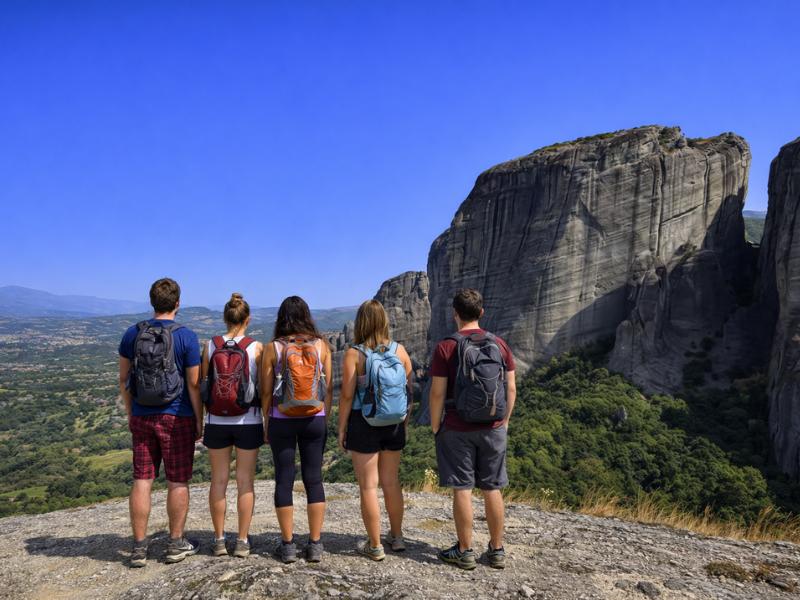
You will be refused entry. The monks and nuns managing the entrance gates apply the dress code consistently and without exceptions. There is no negotiation and no paying a fine instead. If you are wearing shorts as a man, you cannot enter. If you are wearing trousers without a skirt as a woman, you cannot enter. The monastery either provides a borrowable skirt at the entrance or it does not, and you cannot count on availability during busy periods.
For women, most monasteries maintain a basket or rack of wrap-around skirts at the gate. These are plain cotton or synthetic wraps in neutral colors that tie at the waist. They are free to borrow, returned at the exit, and are shared among hundreds of visitors per day. At Grand Meteoron and Varlaam in peak summer this supply can run low by late morning. Arriving early, around 09:30, gives you a better chance of finding one available if you need it. Some monasteries also sell simple skirts near the entrance for a few euros if the borrowed supply is exhausted.
For men, there is no equivalent supply. The monasteries do not keep spare trousers for visitors. A man in shorts who arrives without a change of clothing has no option at the gate. He can wait outside while the rest of his group visits, or return to Kalambaka or Kastraki to find something appropriate and come back. Neither is a good outcome after climbing 200 steps in summer heat.
The solution that works reliably for both men and women: carry the right items in a day bag and change at the entrance. Pack light linen trousers and a sleeved top in your bag before leaving the hotel. Put them on at the monastery gate. Take them off when you leave. The extra weight is minimal and the problem disappears entirely. A lightweight sarong for women weighs less than 100 grams and takes up almost no space.
Not sure whether to base yourself in Kalambaka or Kastraki? Here’s a full guide on where to stay in Meteora tours for every budget and travel style.
Check the morning departure before arranging separate local rides. Pickup and transport between the monastery stops are included in the four-hour route.
Where to Buy or Borrow Clothing Near the Monasteries
If buying suitable clothing changes your budget, add that expense alongside your own transport, admission and other visitor-entered costs.
Wrap skirts are available to borrow free at the entrance of most monasteries. Some entrances also sell simple skirts for a few euros. In Kalambaka town and Kastraki village, souvenir and clothing shops sell lightweight scarves, sarongs, and loose trousers at reasonable prices. A basic sarong suitable for monastery visits costs around €5 to €10 in the shops near the town square.
If you realize at the foot of the staircase that you are not dressed appropriately, the options are: walk back down to the car or taxi and retrieve the right clothing, use the borrowed skirt at the monastery entrance if available, or find a souvenir shop on the monastery road. There are a handful of small canteen-style shops near the monastery car parks that sometimes stock basic shawls and scarves for this exact reason. The selection is limited and the prices are higher than in Kalambaka, but in a pinch they solve the problem.
The most practical pre-visit option is the souvenir shops on Kalambaka’s main street, which stock lightweight printed scarves that work as shoulder covers and can double as a wrap skirt by tying them at the waist. These are the same items sold as tourist gifts but function well as monastery cover-ups. A light cotton or chiffon scarf large enough to tie as a skirt costs around €5 to €8 and is worth buying before the first monastery visit rather than improvising at the gate.
Recommended tours by season
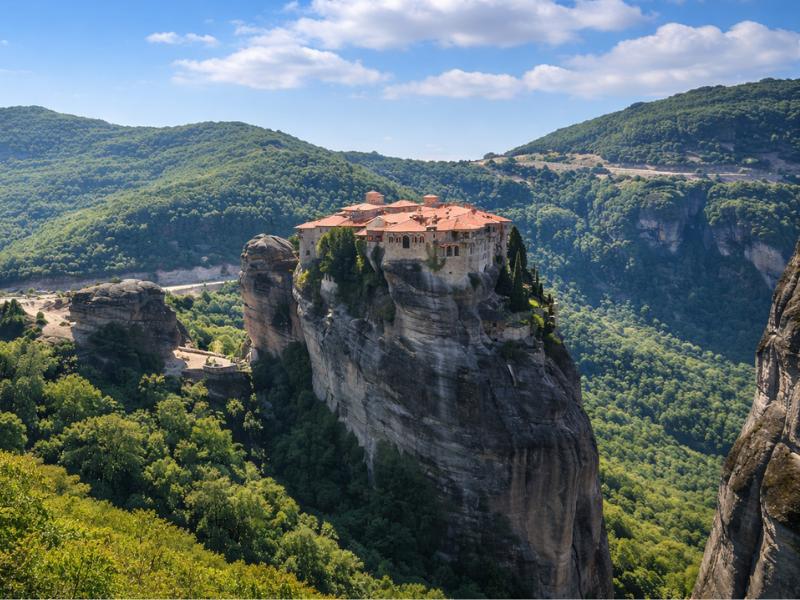
Early Morning Meteora Tour – Small Group with Local Guide
Four hours in a small group with a local guide, starting early from the Kalambaka area. Suited to hot months when the staircases are cooler before midday.
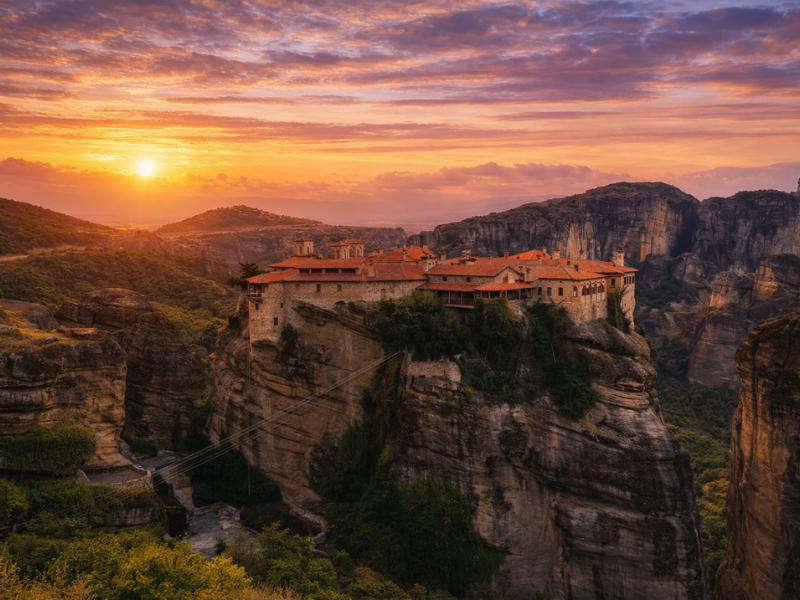
Small-Group Meteora Sunset Tour – Monasteries Glow & Hermit Caves
Four hours in the late afternoon, covering a monastery, hermit caves, and a sunset viewpoint. A fit for shorter autumn days.
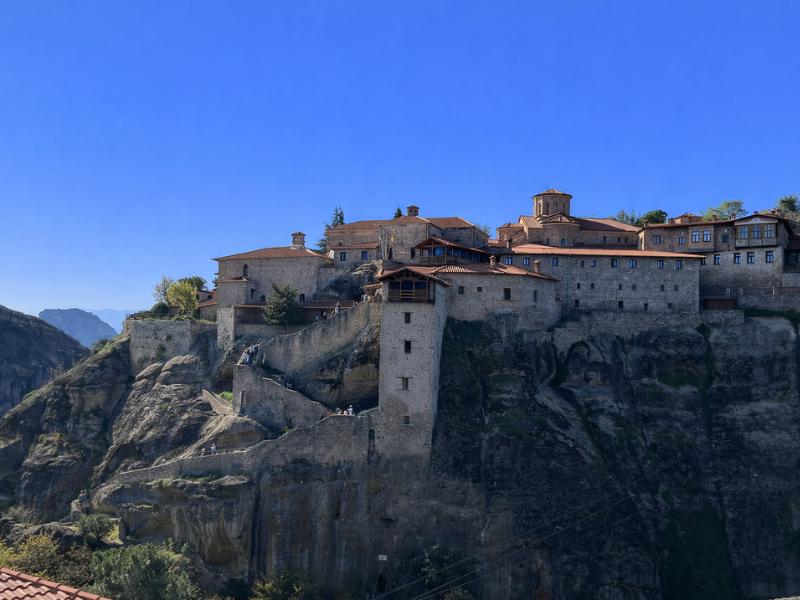
Small-Group Meteora Hiking Tour from Kalambaka – Transfer & Monasteries
A four-hour walk from Kalambaka with a transfer and monastery stops. Plan on the same skirt and long-trouser rules at the gates.
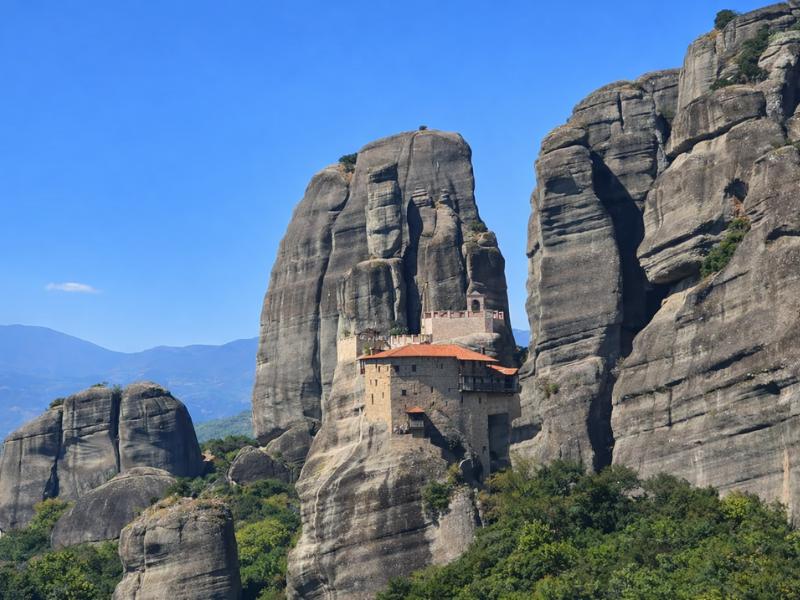
Athens to Meteora: Full-Day Tour with Expert Local Guide & Greek Meal
Fourteen hours from Athens with a local guide, a Greek meal, and entry to three monasteries. Works year-round if you are not based in Kalambaka.
What Not to Bring or Wear
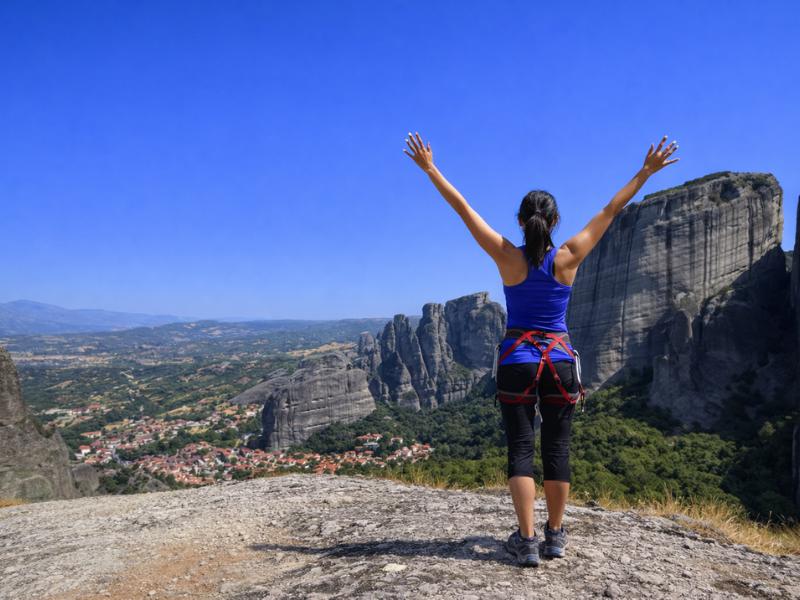
Beyond the specific dress requirements, a few items cause practical problems inside the monasteries. Flip-flops are technically allowed but the uneven stone staircases and cobbled courtyards require more grip than they provide. Large backpacks and wheeled luggage must be left outside or in designated storage areas. Strollers cannot be brought into the monastery buildings. Pets, including dogs, are not allowed inside with the exception of service animals.
Footwear is worth thinking about separately from the dress code. The staircases at Grand Meteoron involve around 300 uneven stone steps that have been worn smooth by centuries of use. They are not steep enough to require special equipment but they are irregular enough that a shoe with a sole providing grip makes the climb meaningfully safer. Flip-flops, smooth-soled fashion sandals, and high heels are all problematic. Sturdy sandals with straps and a textured sole work well in summer. Closed hiking shoes are the most reliable option.
On bags: small daypacks are fine. Large rucksacks that would obscure other visitors in the narrow internal spaces are better left outside. Tripods are not permitted inside the monastery buildings and will be asked to be left at the entrance. Camera bags are generally fine if compact. Vaping and smoking are not permitted anywhere on monastery grounds.
The Code of Ethics published by the local authorities for Meteora also prohibits loud talking, music playing, alcohol consumption, and any behavior that would be inappropriate in a working church. These are active places of worship, not heritage museums. The monks and nuns who live here are present during visiting hours and conducting their daily religious life around the tourist circuit. The dress code is the visible surface of a broader expectation of respectful behavior that extends to volume, comportment, and how you interact with the residents.
Before packing camera equipment, review the separate photography rules so your day bag matches what you can actually use.
Photography Rules Inside the Monasteries
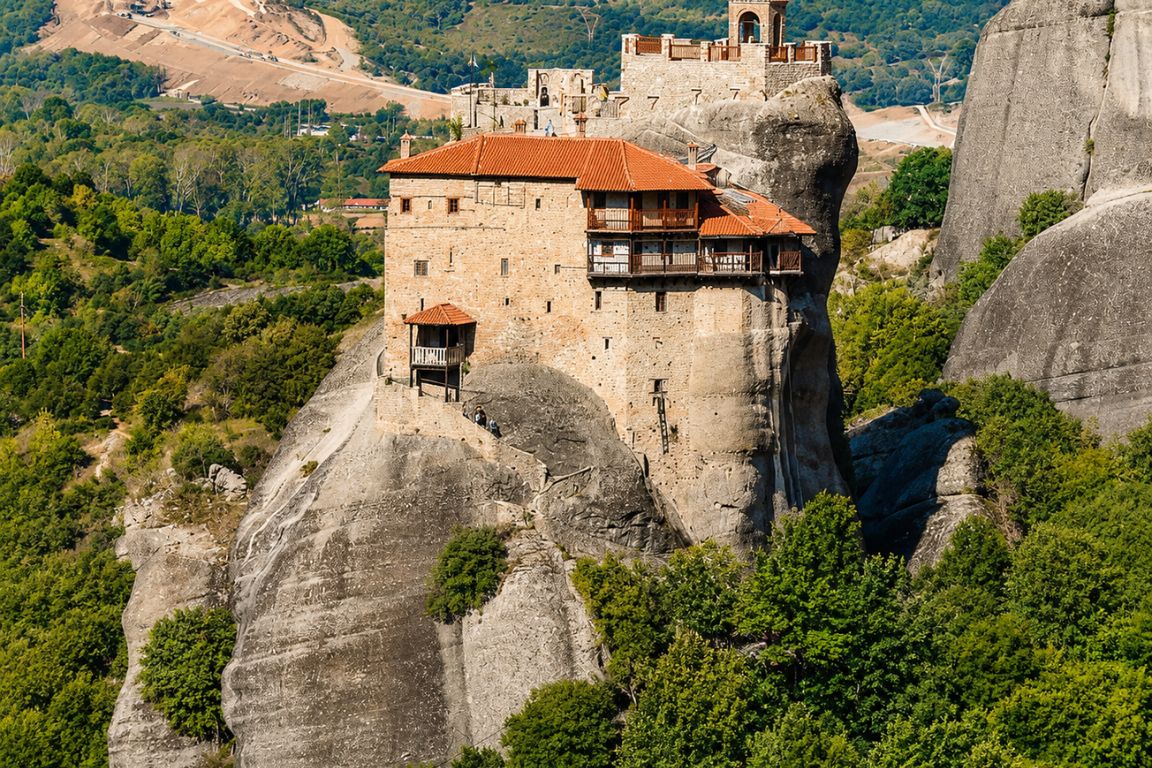 Photography inside the chapels and churches at Meteora is generally not permitted. The rule protects the ancient frescoes, which are damaged over time by flash illumination and by the heat and humidity of large numbers of people in enclosed spaces. Photography in the courtyards, on the terraces, and in the museum areas is usually allowed but depends on the specific monastery and the signage at the entrance. When in doubt, look for posted signs or ask at the gate.
The fresco prohibition is the most important one to understand. Inside the main church of Grand Meteoron, inside the katholikon at Varlaam, inside the chapels at Holy Trinity and St. Nicholas – no photography. This is not unique to Meteora. Orthodox churches across Greece and the Balkans apply the same rule. The frescoes at Meteora date from the 14th to 18th centuries and represent some of the most significant surviving examples of post-Byzantine art. Flash photography is particularly damaging to the pigments. Even without flash, the sheer volume of smartphone cameras in a busy monastery contributes to environmental degradation of the paintings. The rule exists for good reason and is worth respecting even when enforcement is inconsistent.
In practice, the courtyards of all six monasteries are generally photographable. The terraces and external views are photographable. The museum rooms are variable: some allow photography, some do not, and the signage is usually clear at the room entrance. The winch tower at Varlaam, the wine barrel, and the outdoor exhibits can typically be photographed. When you step through the door into a chapel interior, assume photography is not allowed unless you see a sign indicating it is.
Photographing the monks and nuns is not appropriate and in most cases they will actively avoid being in photographs. They are not part of the visitor experience. They live and work here. Pointing a camera at a monk or nun going about their daily prayers without permission is the equivalent of doing the same to someone in their home. Some local guides frame it differently: if you would not photograph a stranger at prayer in their church at home, do not do it here. The same standard applies.
There are six open to visitors but you won’t have time for all of them. Here’s a breakdown on which Meteora monasteries are best to visit based on views, crowds, and what’s inside.
Explore a morning that combines time inside three monasteries with exterior photo stops across the formations, with local transport included.
Other Rules and Etiquette Inside the Monasteries
Once clothing and etiquette are settled, choose a monastery order that fits the time you have for respectful, unhurried visits.
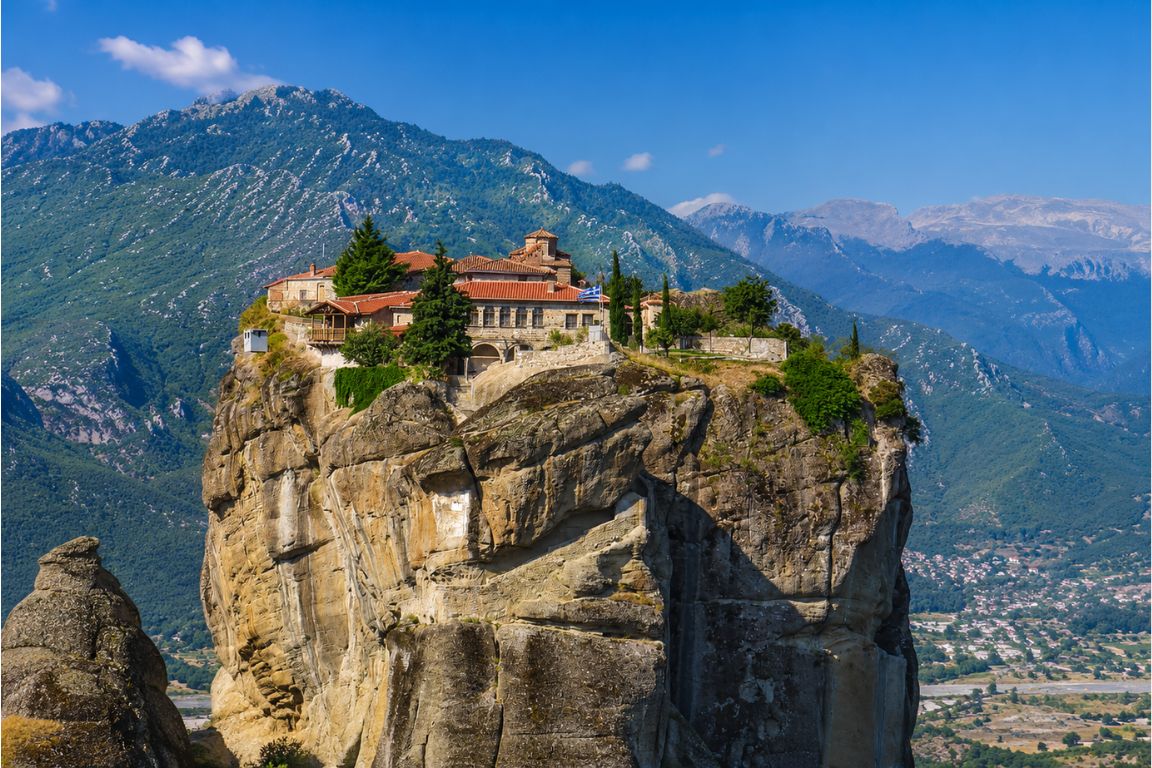 Beyond the dress code and photography restrictions, a few behavioral expectations apply to all six monasteries. Keep noise down: speak quietly, silence phones, and avoid the kind of group conversation volume that is normal in a public outdoor space. During religious services, stand back or leave the immediate area of worship and observe quietly. Eating and drinking are not permitted inside the monastery buildings. Donations are welcome and collection boxes are usually near the entrance.
The noise expectation is genuine and enforced. The monks and nuns at Meteora conduct daily prayer services, vespers, and liturgies throughout the visiting hours. On any given morning, a service may be in progress in a side chapel while visitors move through the main courtyard. During active services, visitors should lower voices to whispers and avoid the chapel doorway. This is not a performance for visitors; it is the actual religious practice of the community. Treating it as background atmosphere to photograph is disrespectful in a way that most visitors would immediately understand if it happened in a church they attended themselves.
Hats should be removed when entering chapels. This is a standard Orthodox convention that applies to men specifically. Remove headwear before stepping inside any chapel or church building and put it back on when you return to the outdoor courtyard or terrace. This is the same expectation that applies in Orthodox churches anywhere in the world.
Donation boxes are placed near the monastery entrance or inside the museum areas. The entrance fee covers part of the maintenance cost but donations contribute to ongoing restoration work, particularly on the frescoes. A small additional contribution is appropriate if you found the visit worthwhile. It is not required but it is the right thing to do at a working religious site.
Dress Code Issues We See: Patterns from 14,400+ Guided Visits
| Most common dress code issue (men) | Shorts at the gate (~68% of male dress code issues) |
| Most common dress code issue (women) | Trousers without a skirt (~54% of female dress code issues) |
| % of independent visitors who used a borrowed monastery skirt | ~29% |
| % of guided tour visitors who had a dress code problem at the gate | ~2% (guides brief travelers before departure) |
| Most cited photography mistake | Flash inside chapels (~41% of photography-related complaints) |
Before departure, return to the core entrance rules and check each traveler’s trousers, skirt or wrap, sleeves and shoulder coverage.
Frequently Asked Questions
After checking the clothing, photography and footwear answers below, compare the available ways to experience Meteora.
Can women wear trousers at Meteora monasteries?
No. The monasteries specifically require a skirt or dress below the knee. Trousers, even wide-leg or linen styles that cover the full leg, are not accepted as a substitute. A wrap skirt or sarong tied over trousers does satisfy the rule, and most monasteries provide free borrowed skirts at the entrance for visitors who arrive without one.
See the complete women’s clothing guidance before choosing a skirt, dress or wrap to wear over trousers.
Can men wear shorts at Meteora monasteries?
No. Shorts of any length are not permitted for men at any of the six Meteora monasteries. Long trousers covering the knee are required. Unlike the situation for women, the monasteries do not generally provide replacement clothing for men at the gate. Arriving in shorts means waiting outside.
Review the men’s entrance requirements before leaving in shorts or other clothing that may not comply.
Do the monasteries provide clothing for visitors who are not dressed correctly?
Most monasteries provide free wrap-around skirts for women at the entrance. Some also sell simple skirts for a few euros. Men are generally not provided with replacement clothing. The supply of borrowed skirts can run low during busy summer mornings. Carrying your own wrap or sarong is more reliable than depending on monastery supply.
Read what to expect at the entrance and why carrying your own compliant layer is more dependable than assuming one will be available.
Does the dress code apply to children?
Yes. The dress code applies to visitors of all ages. Dress children in appropriate modest clothing before arriving at the monasteries. Children under 12 do not pay the entrance fee but must meet the same dress standards as adult visitors to enter.
For age-specific packing and practical planning, use the dedicated family guide alongside the monastery dress rules.
Can I take photos inside Meteora monasteries?
Photography inside the chapels and churches is generally not permitted and this rule protects the ancient frescoes. Photography in courtyards, on terraces, and in some museum areas is usually allowed. Flash photography is never appropriate anywhere inside the monastery buildings. Photographing monks or nuns without their permission is not acceptable. Check signage at each monastery entrance for current rules specific to that site.
Check your date before arranging separate viewpoint transfers. The sunset tour combines monastery scenery, hermit caves and panoramic stops on one local route.
What footwear is best for visiting Meteora monasteries?
Sturdy shoes or sandals with grip are strongly recommended. The staircases are made of uneven stone worn smooth over centuries. Flip-flops and smooth-soled footwear are technically allowed but increase fall risk on the wet or worn steps. Hiking shoes or sandals with textured soles and ankle straps are the most practical choice.
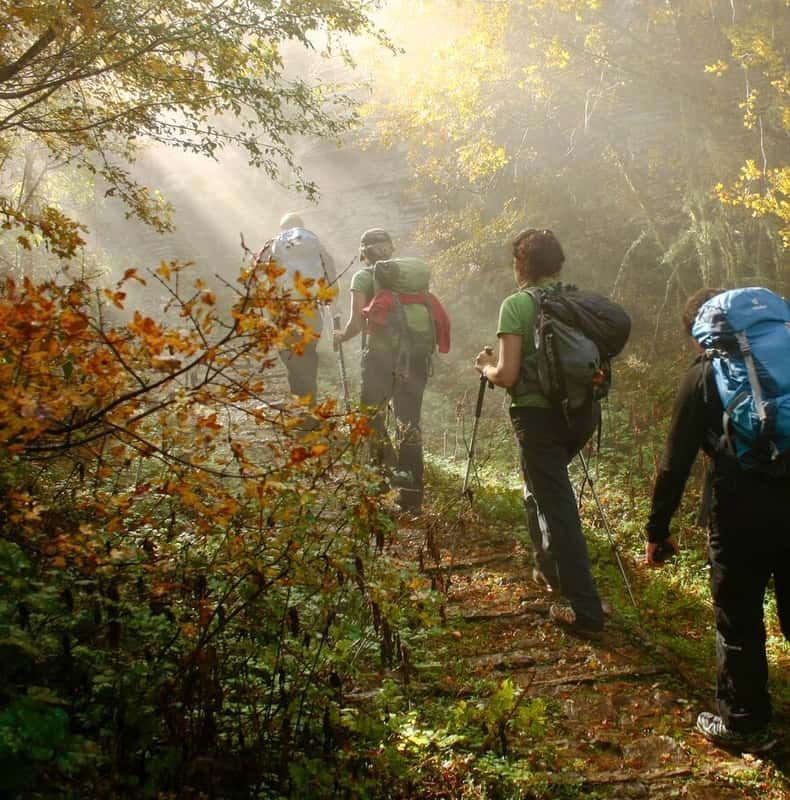
Explore an eight-kilometre route through Meteora’s forest and rock formations with a mountain guide and local accommodation transfers.
Joining a guided morning tour from Kalambaka removes the guesswork entirely.
Our guides brief every traveler on dress requirements before leaving Kalambaka, carry spare wraps for those who need them, and know exactly which monasteries have supplies at the gate. See the Meteora Tours programs here.
Written by Michael Angelos
Greek tour guide since 2009 · Founder, Meteora Tours
Michael has guided over 14,400 travelers through the monasteries and rock formations of Meteora since founding the agency.