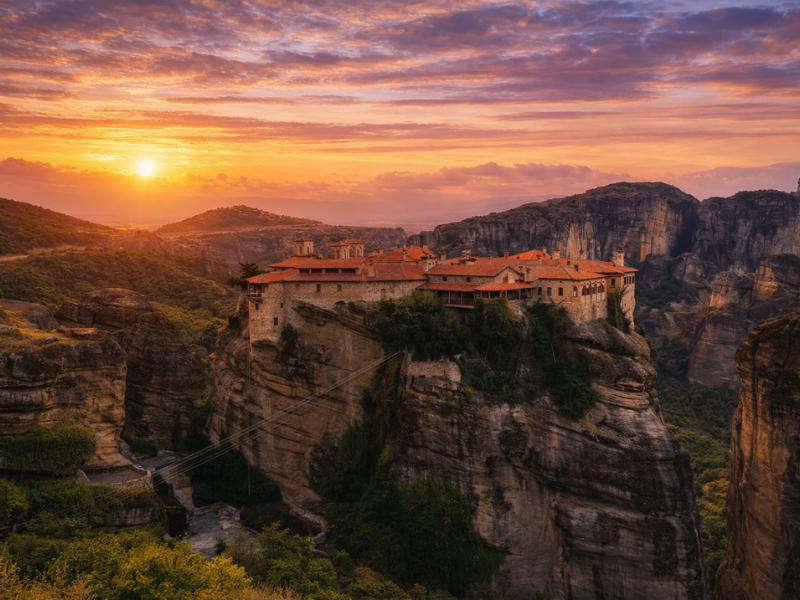
Meteora vs Delphi
Meteora and Delphi are both unforgettable UNESCO sites, but one amazes with dramatic cliff-top monasteries while the other immerses you in ancient Greek history and mythology.
Use the comparison to choose Delphi, Meteora, or both, then match that decision to a verified two-day coach, an overnight Meteora stay, a long Athens day trip, or a DIY plan. Choose A Tour For This Itinerary
Last updated: June 28, 2026
Meteora vs Delphi at a Glance
| Aspect | Delphi | Meteora |
|---|---|---|
| Location | ~180 km northwest of Athens, on Mount Parnassus slopes | ~350-400 km north of Athens, near Kalambaka in Thessaly |
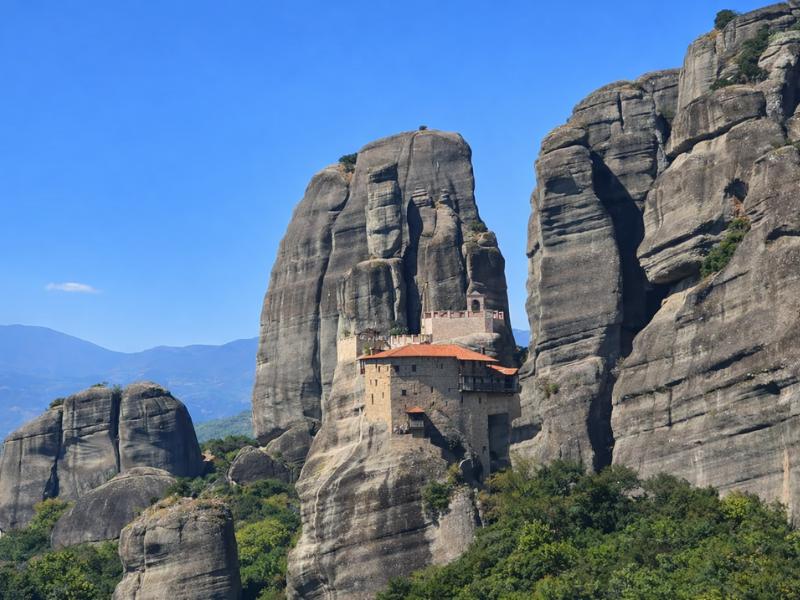
| Main Attractions | Ancient sanctuary of Apollo (Temple of Apollo ruins), Oracle, theater, stadium, archaeological museum | 6 active Eastern Orthodox monasteries (e.g., Great Meteoron, Varlaam, Roussanou) built on sandstone pillars |
| Historical Period | Primarily Ancient Greece (8th century BC – Roman era); center of the ancient world, home of the famous Oracle | Medieval Byzantine era (14th-16th centuries); monastic communities for solitude and protection |
| Type of Experience | Archaeological, historical, mythological; academic/ruins-focused | Spiritual, architectural, scenic; dramatic cliffs + monasteries |
| Visual/Spectacle | Impressive ruins with mountain views; more historical immersion | Breathtaking rock formations and cliffside monasteries; one of the most photogenic sites in Greece |
| Best For | History & mythology enthusiasts, archaeology fans | Nature lovers, photographers, those seeking spiritual/serene vibes |
| Time to Visit | 3-5 hours for main site + museum | Full day (hiking, multiple monasteries) |
| Accessibility | Easier day trip from Athens (bus/tour ~3 hours each way); more compact site | Longer trip; often requires overnight or full-day tour; involves stairs/climbs |
| Visitor Tips | Visit early to avoid crowds; great with prior reading on Greek myths | Wear modest clothing for monasteries; sunset/sunrise views are spectacular |
| UNESCO Status | Yes (Delphi Archaeological Site) | Yes (Meteora) |
Use the decision table to match Delphi, Meteora, or both to your interests, available days, and preferred pace.
Meteora vs Delphi: Which Should You Visit?
If Meteora is your choice, review the monastery clothing rules before planning visits to active religious sites.
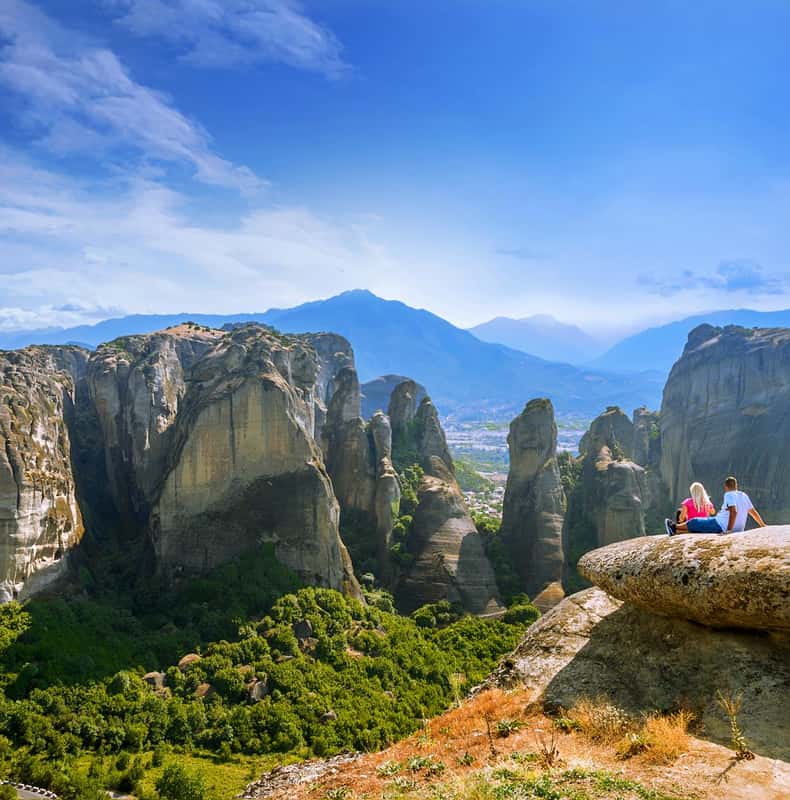
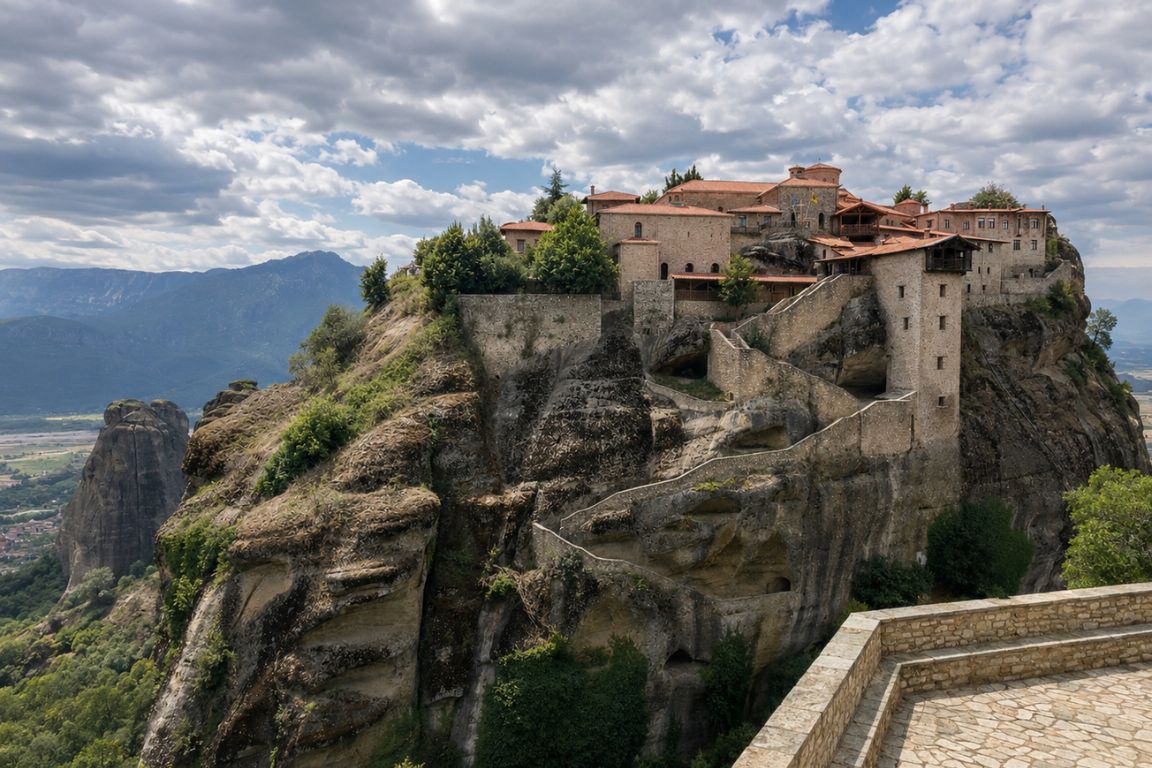 Both are UNESCO World Heritage Sites and among the most extraordinary places in mainland Greece. They are different enough that most travelers who visit both describe the experiences as incomparable rather than interchangeable. Meteora is a landscape experience: soaring rock pillars, working medieval monasteries, hiking trails, and a visual scale that photographs cannot prepare you for. Delphi is an intellectual and mythological experience: the ruins of the place that was once considered the center of the world, where kings consulted the Oracle before going to war, set on a mountain slope with views over an ancient valley of olive trees.
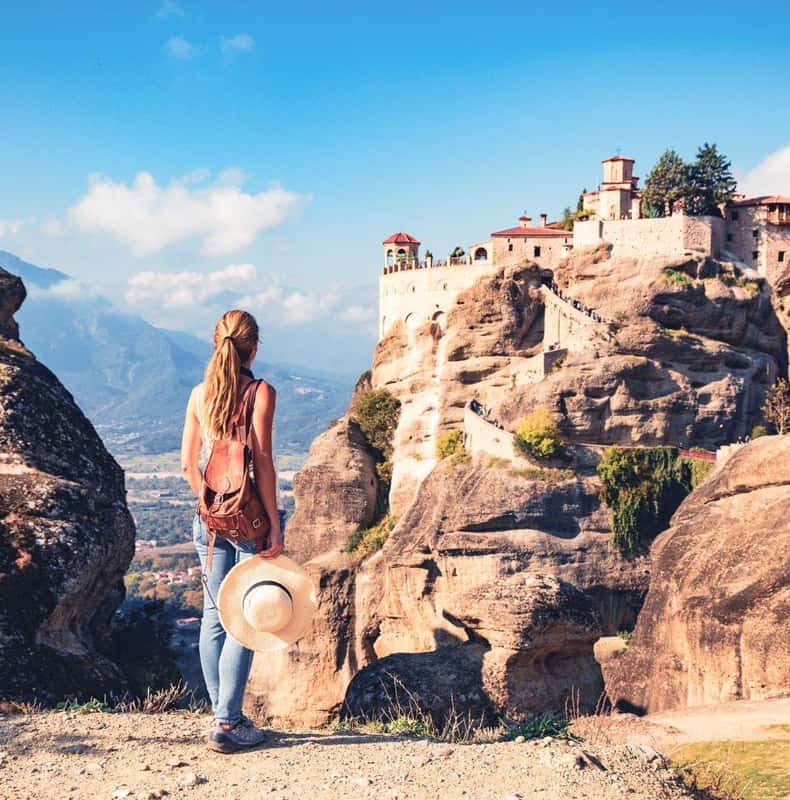
The honest short answer: if you have time for only one, Meteora is more immediately overwhelming and harder to forget. The rock formations and the monasteries on top of them create a visual impact that very few places anywhere in the world can match. Delphi is more layered, more dependent on historical knowledge, and more rewarding the more you know before you arrive. A traveler with no background in classical Greek history will find Delphi’s ruins harder to interpret and less viscerally powerful than Meteora’s living monasteries.
If you can do both, you should. The two sites cover different parts of Greek history and culture and sit on a natural road circuit between Athens and central Greece. Visiting them together over two to three days produces a richer understanding of Greece than either does alone.
Never been to central Greece before? Here’s how to visit Meteora tours without wasting a day figuring out logistics on the ground.
What Is Meteora?
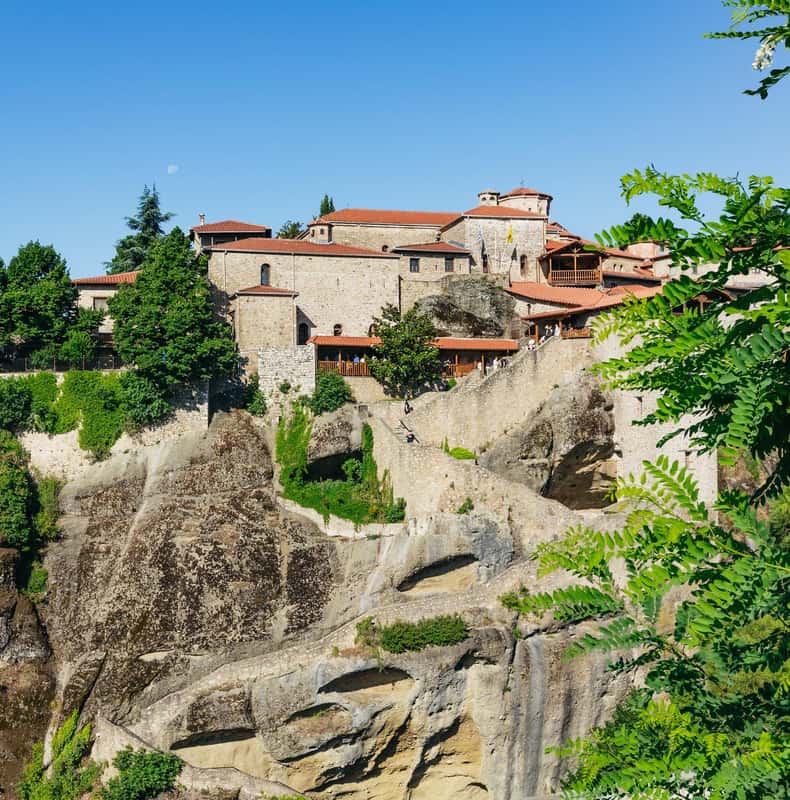
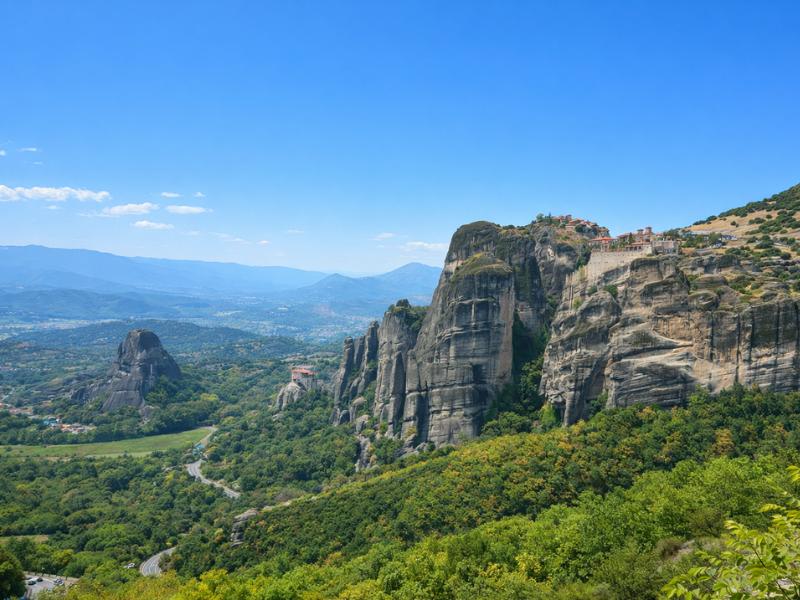
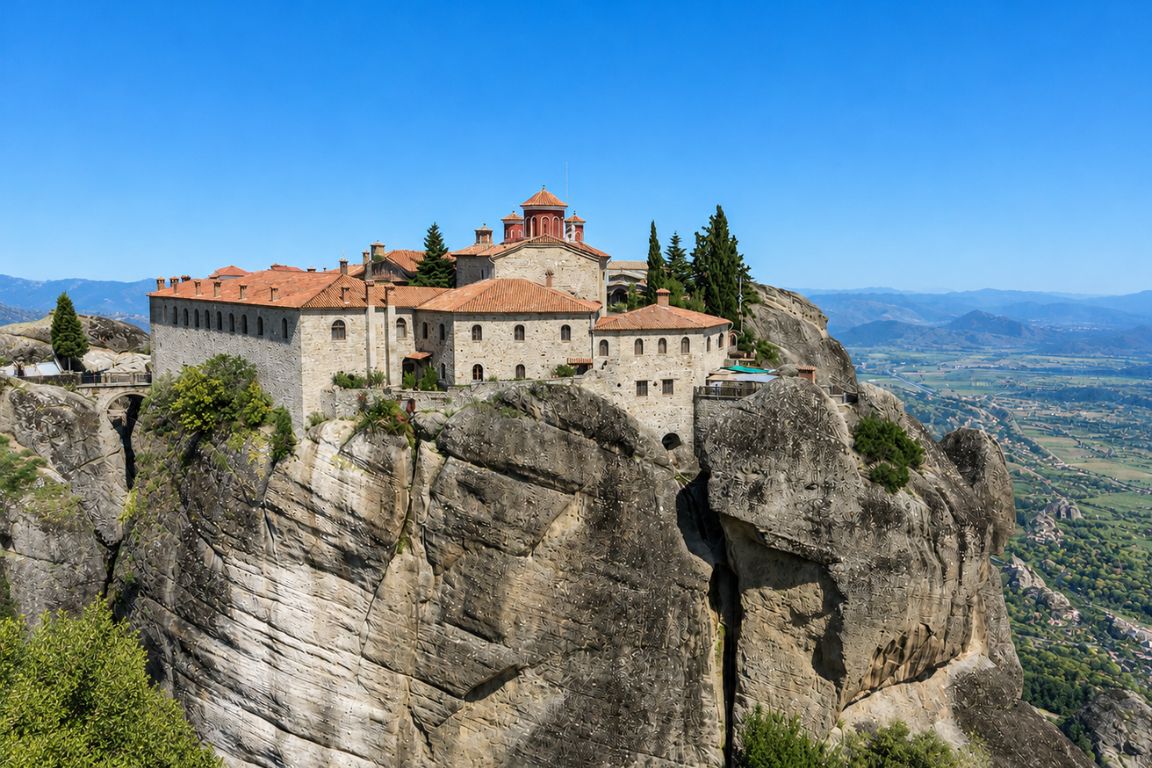
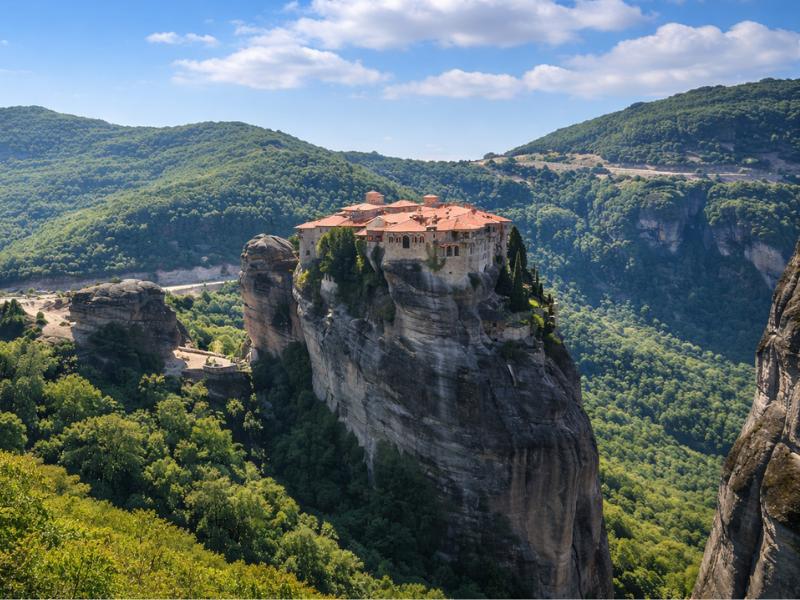
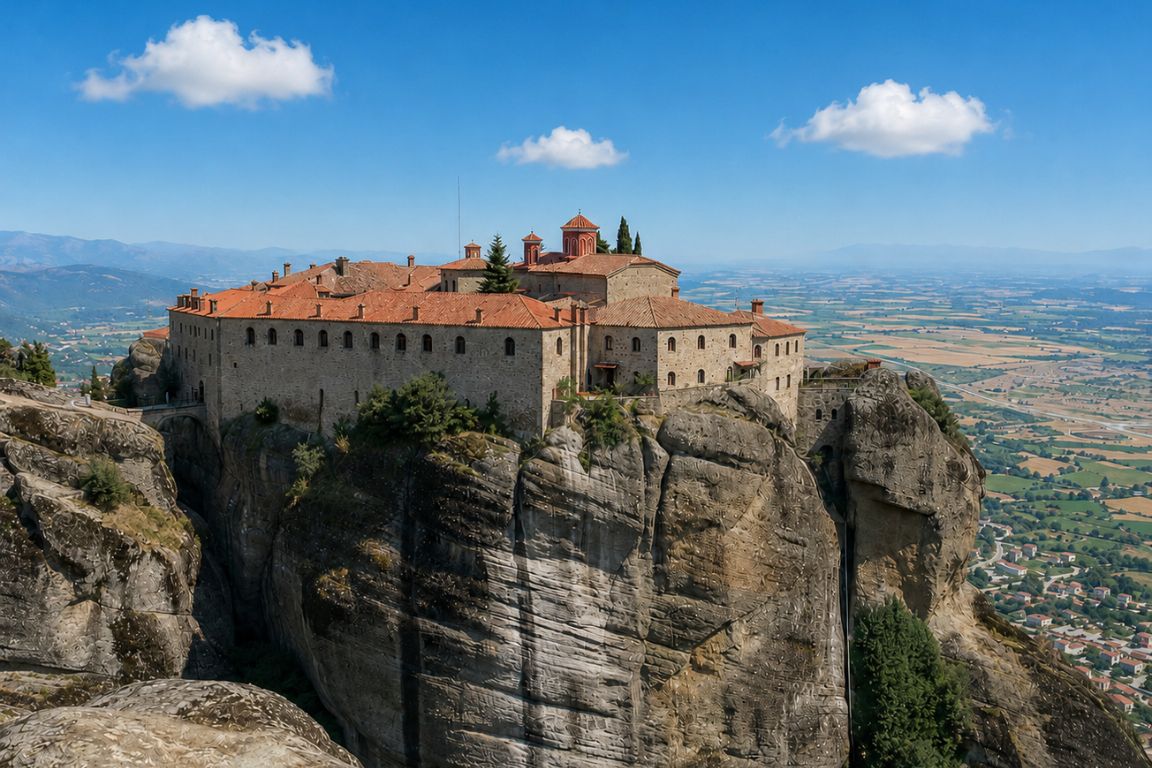 Meteora is a complex of Eastern Orthodox monasteries built on top of massive sandstone rock pillars in central Thessaly, about 350 km northwest of Athens. The name means “suspended in the air.” Originally 24 monasteries were built across the rock complex beginning in the 14th century; six remain active and open to visitors today. The site has been a UNESCO World Heritage Site since 1988. It is the second most visited destination in Greece after the Acropolis.
What makes Meteora unusual beyond its visual drama is that it is not a ruin. The monasteries are functioning religious communities. About 17 monks and 50 nuns live across the six sites. Services are held daily. The frescoes inside the chapels were painted by masters of post-Byzantine art. The winch tower at Varlaam, used to haul supplies and people up by rope until the 1960s, still stands with its original mechanism. The ancient kitchen at Grand Meteoron, the oldest and largest monastery, is still black with centuries of cooking smoke. These are not reconstructions or interpretive displays. They are the working remnants of an unbroken spiritual tradition that has continued on these rocks for 700 years.
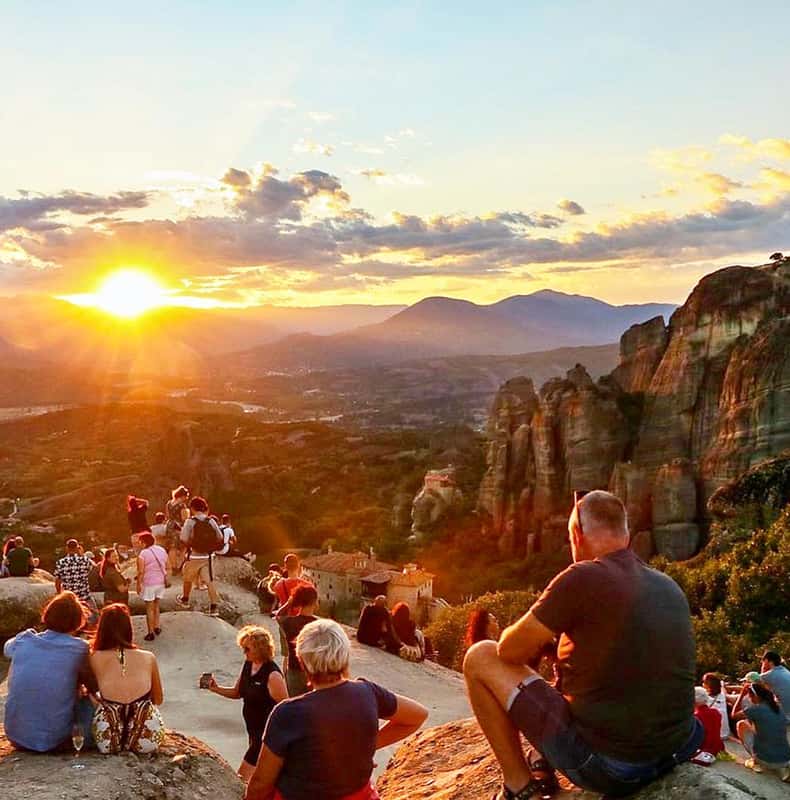
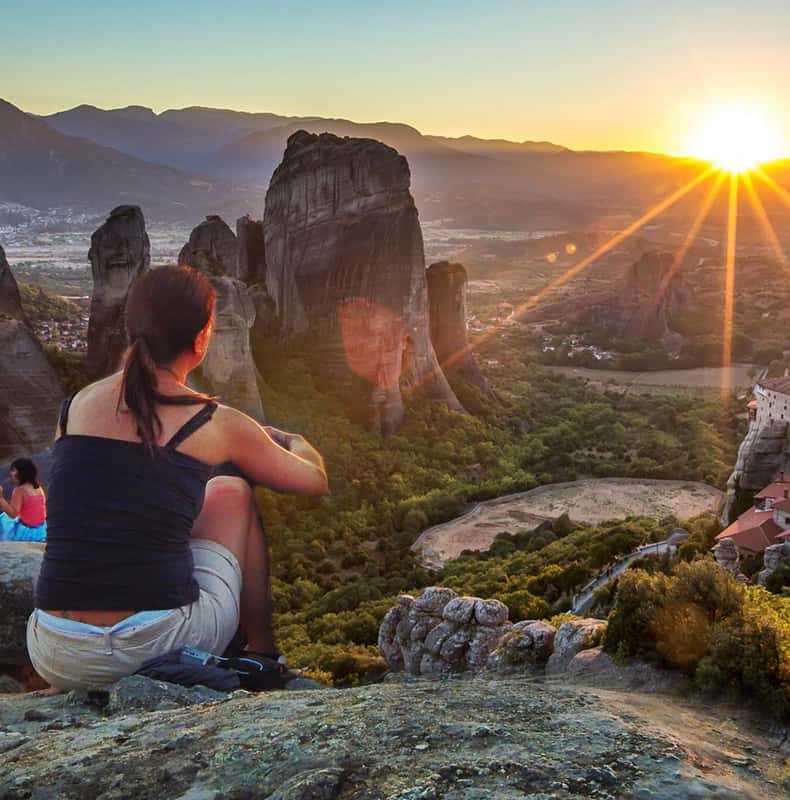
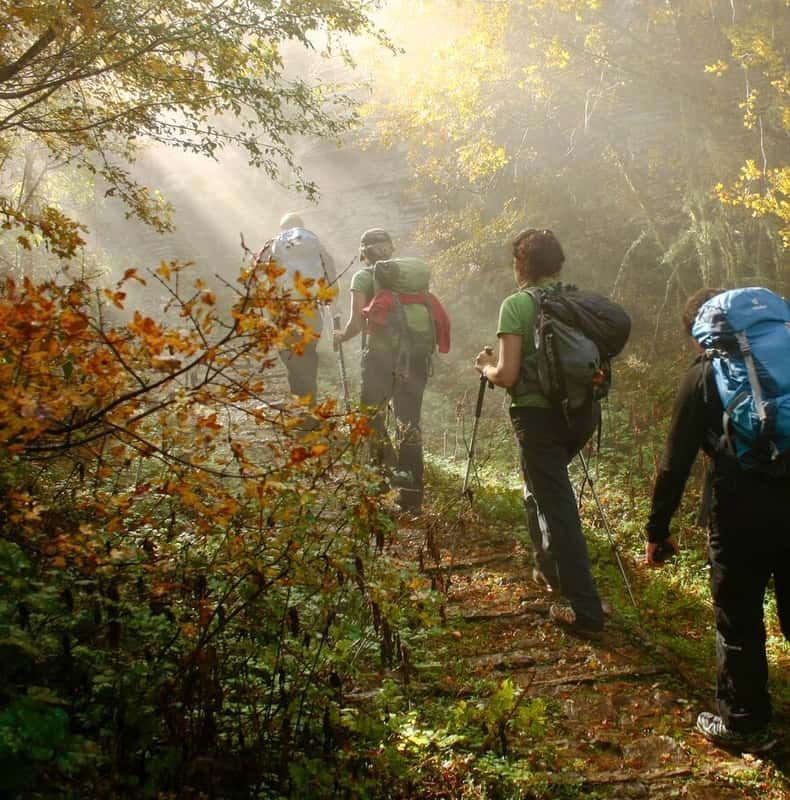
The outdoor experience at Meteora extends well beyond the monasteries. The ancient trail network connects the sites through oak forest and past hermit caves. Rock climbing routes cover nearly 100 distinct pillars. The sunset viewpoints produce light on the sandstone that photographers travel specifically to capture. The two base towns, Kalambaka and Kastraki, have real restaurants and guesthouses that extend the visit into evenings that feel nothing like a day-trip circuit.
Trying to decide between Meteora and another stop in Greece? This guide on whether Meteora is worth visiting lays out exactly what makes it different.
Explore an Athens itinerary that gives sunset its own tour and adds a second guided morning, with hotel options for the stay.
What Is Delphi?
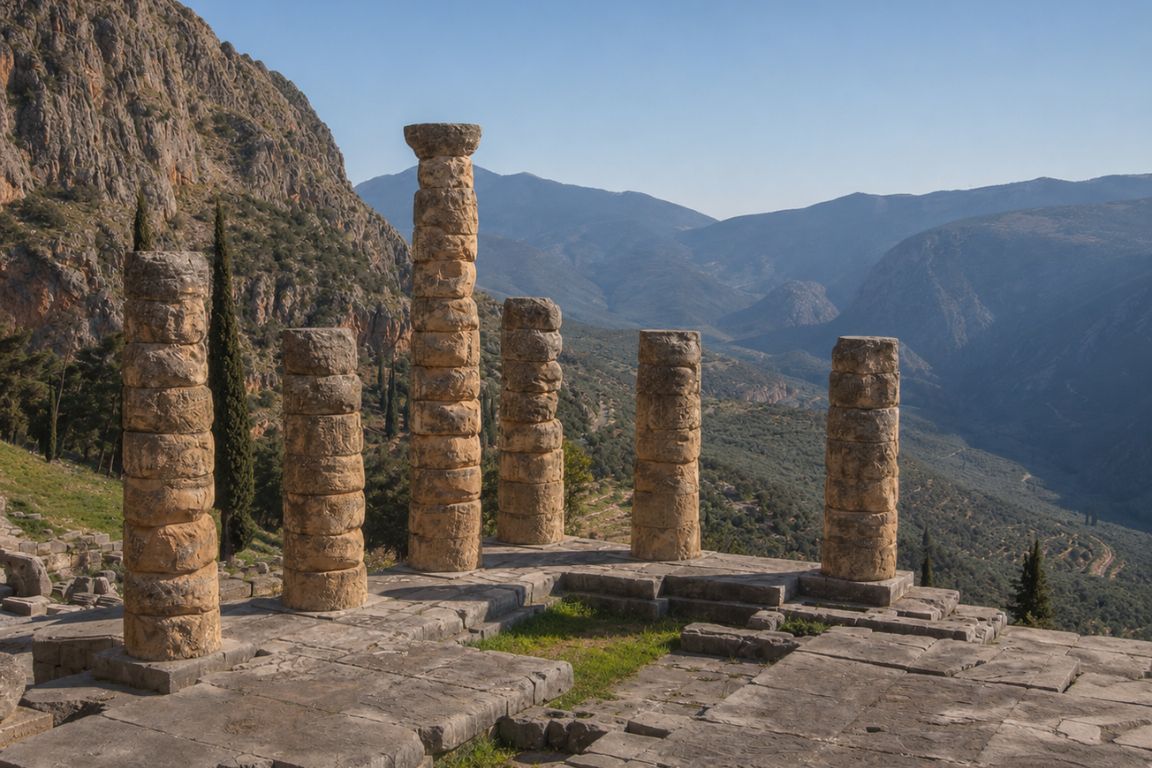
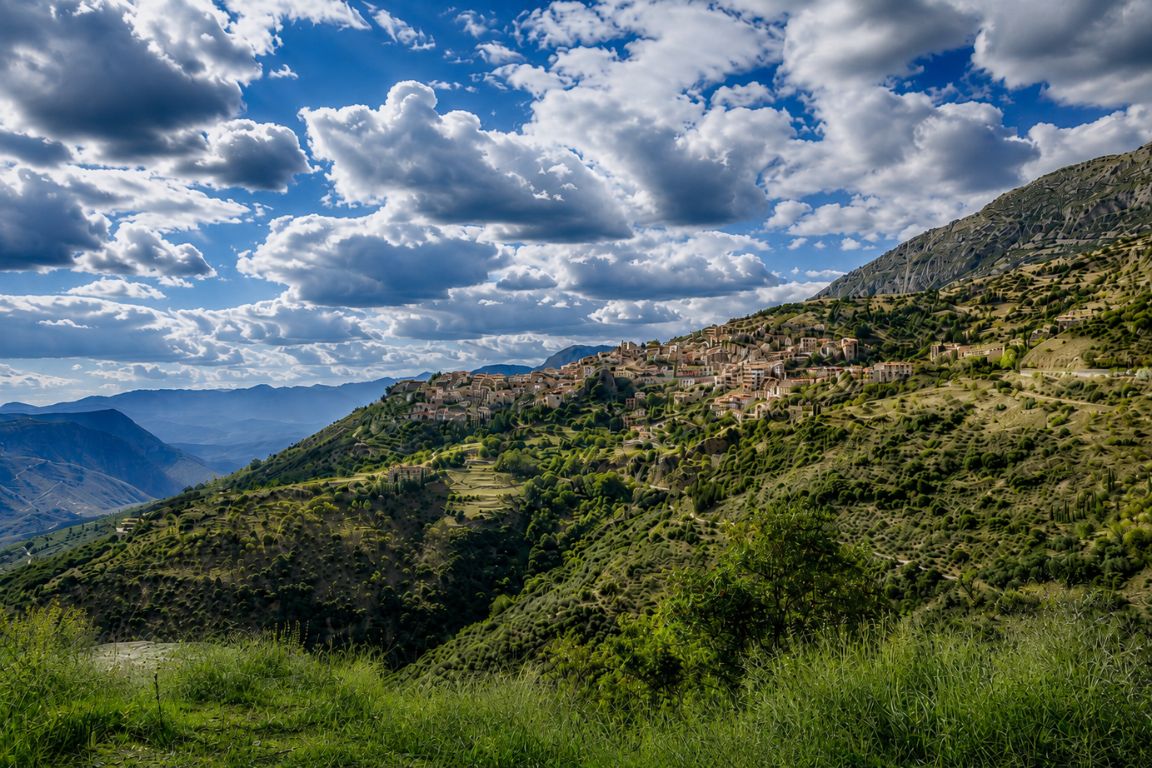 Delphi is an ancient Greek sanctuary on the southern slopes of Mount Parnassus in central Greece, about 180 km northwest of Athens. In antiquity it was considered the center of the world: the Omphalos, or navel of the earth, stood in the Temple of Apollo at the site’s heart, and for almost a thousand years rulers, generals, and ordinary pilgrims came from across the Mediterranean to consult the Oracle, the priestess Pythia, who delivered Apollo’s prophecies from a chamber in the temple. Delphi has been a UNESCO World Heritage Site since 1987.
The main archaeological site follows the Sacred Way, the ancient processional road that climbs through the sanctuary from the entrance to the Temple of Apollo and then up to the theater and the stadium at the top. Along the Sacred Way you pass the foundations and partial remains of the treasuries built by city-states from across the Greek world, each constructed to house offerings and thank the god for favored outcomes. The Treasury of the Athenians, commemorating the victory at Marathon in 490 BC, is the best preserved: fully reconstructed in the early 20th century from scattered original blocks, it stands intact in Parian marble on the upper Sacred Way.
The Archaeological Museum is essential and should not be skipped. The Charioteer of Delphi, a life-size bronze figure from 478 BC, is one of the finest surviving works of early classical Greek sculpture. Without the museum, Delphi is a hillside of ruins with limited interpretive context. With it, the site becomes a coherent picture of the most important religious sanctuary of the ancient Greek world. The combined ticket costs €12 and the museum alone justifies it.
Below the main sanctuary, reached by a 10-minute walk down the road, the Sanctuary of Athena Pronaia contains the Tholos, a circular marble building from the 4th century BC with three restored columns still standing. The Tholos is Delphi’s most photographed structure and one of the most iconic images of ancient Greece. The setting of cliffs behind and the olive valley below makes it a genuinely beautiful ruin in a way that the Temple of Apollo, partly for its partial state and partly for the crowds around it, does not consistently deliver.
If Delphi’s archaeology and museum are the main draw, compare that focused experience with Meteora’s landscape and living monasteries before deciding.
How Far Apart Are Meteora and Delphi?
 Meteora and Delphi are approximately 230 km apart by road, connecting through the Thessaly plain and the Pindus mountains. The drive takes 3 to 3.5 hours. There is no direct public transport between them. The most practical connection is by car: Delphi to Meteora northbound via Lamia and the E65, or Meteora to Delphi southbound on the same route. Both sites are roughly 2.5 to 3.5 hours from Athens by car, making a combined circuit practical over two to three days.
The road between Delphi and Meteora crosses varied terrain. Leaving Delphi northbound, the first stretch climbs over the Parnassus foothills through the town of Amfissa and then drops to the plain of Phocis. The route then joins the E65 highway northbound through Lamia and across the Thessaly plain to Kalambaka. The Thermopylae battle site is a roadside stop about two-thirds of the way from Delphi to Meteora, with the Leonidas monument visible from the road and a short walk from a small car park. The route takes 30 minutes at most to stop and adds genuine historical context to the drive.
From Athens, Delphi is 185 km and roughly 2.5 hours by car via the E75 and the Orchomenos road. Meteora is 350 km and 4 hours from Athens via the E75 and E65 highways. The classic mainland circuit is: Athens to Delphi (morning), overnight in Delphi or the nearby village of Arachova, then Delphi to Meteora (next morning, 3 to 3.5 hours), two nights in Kalambaka or Kastraki for the monasteries and one full day of activities, then return to Athens (4 hours). Three nights and four days covers both sites without rushing either.
Trying to figure out the cheapest or fastest way up? Here’s how to get to Meteora by bus, train, or tour depending on your budget and schedule.
Check the combined tour for your date before arranging transport between the sites. The two-day coach circuit links Delphi and Meteora from Athens.
Which Is Better for First-Time Visitors to Greece?
 Meteora is the more immediately powerful choice for first-time visitors who have not yet formed a strong connection to ancient Greek history. The visual impact of the rock formations and monasteries requires no prior knowledge to experience fully and delivers an emotional response that most visitors describe as unlike anything they have seen. Delphi is more rewarding the more you know before arriving, and can feel like an incomplete experience without that background. That said, Delphi is a faster visit and sits closer to Athens, making it an easier addition to an Athens-centered trip.
The practical breakdown: Meteora cannot be done well in less than one full day, and one overnight stay is strongly recommended to see both the monasteries and the sunset. Delphi fits comfortably into a long day trip from Athens with no overnight needed. For a traveler with one or two days outside Athens on a first Greece trip, Delphi is the more achievable choice. For a traveler who can commit three or more days to mainland Greece, Meteora delivers more.
The emotional register of the two sites is genuinely different. Travelers consistently describe Meteora with words like “overwhelming,” “unlike anything,” and “spiritual.” Delphi gets words like “moving,” “academic,” and “contextual.” Neither description is a criticism. They are different kinds of sites producing different kinds of responses. A traveler who reads mythology before visiting Delphi will find it transformative. A traveler who arrives without that context will find it beautiful but partly abstract.
For families: Delphi is easier with young children. The paths are better defined, the site is more compact, and the physical demands are lower. Meteora’s steep staircases and the necessity of timing around monastery closure days makes it more logistically complex for families, though St. Stephen’s monastery with its flat bridge entrance eliminates the staircase problem for one of the six sites.
First time taking young travelers to a site like this? Our guide on visiting Meteora tours with kids covers pacing, what to bring, and which viewpoints are worth the walk with little ones.
For a family Meteora visit, check the staircase demands and age-related planning guidance before choosing monasteries or comparing the trip with compact Delphi.
Can You Visit Both Meteora and Delphi in One Trip?
Yes, and it is the recommended approach for anyone spending more than three days in mainland Greece. The two sites sit on a natural circuit from Athens and can be combined in a two-to-three day overland trip. The circuit works either direction: Athens, Delphi, Meteora, Athens, or Athens, Meteora, Delphi, Athens. Northbound via Delphi first means arriving at Meteora with the historical context of the ancient Greek world already in place. Southbound via Meteora first means arriving at Delphi after the medieval Byzantine layer and before the ancient classical one, which some travelers find is a useful chronological order.
The most common three-day itinerary: Day 1, drive from Athens to Delphi, spend 4 to 5 hours at the site and museum, overnight in Delphi town or Arachova. Day 2, drive to Kalambaka via Lamia and Thermopylae, check in, afternoon at Kastraki and the sunset viewpoints. Day 3, full morning at the monasteries, depart for Athens in the afternoon. This covers both sites without pressure and leaves time for the Thermopylae stop, a walk through Kastraki, and the hermit caves if wanted.
Two-day versions exist and are realistic but tighter. One day in Delphi with a very long driving day connecting to Meteora, one day in Meteora, return to Athens. This works better with a car than with public transport and requires both sites to be visited efficiently rather than slowly. Rushing Meteora is not recommended: the sunset is one of the main reasons to stay and it cannot be experienced on a rigid day-trip schedule.
Not sure whether one day is enough or if you’re better off staying longer? Here’s how many days you need in Meteora tours depending on your travel pace.
Explore Delphi’s archaeological site and two Meteora monasteries on a two-day Athens circuit with accommodation, breakfast and dinner included.
Meteora vs Delphi: Cost, Time, and Logistics Compared
Enter each itinerary’s complete visitor-calculated total, including transport, admissions, accommodation, meals, and local transfers, to compare like with like.
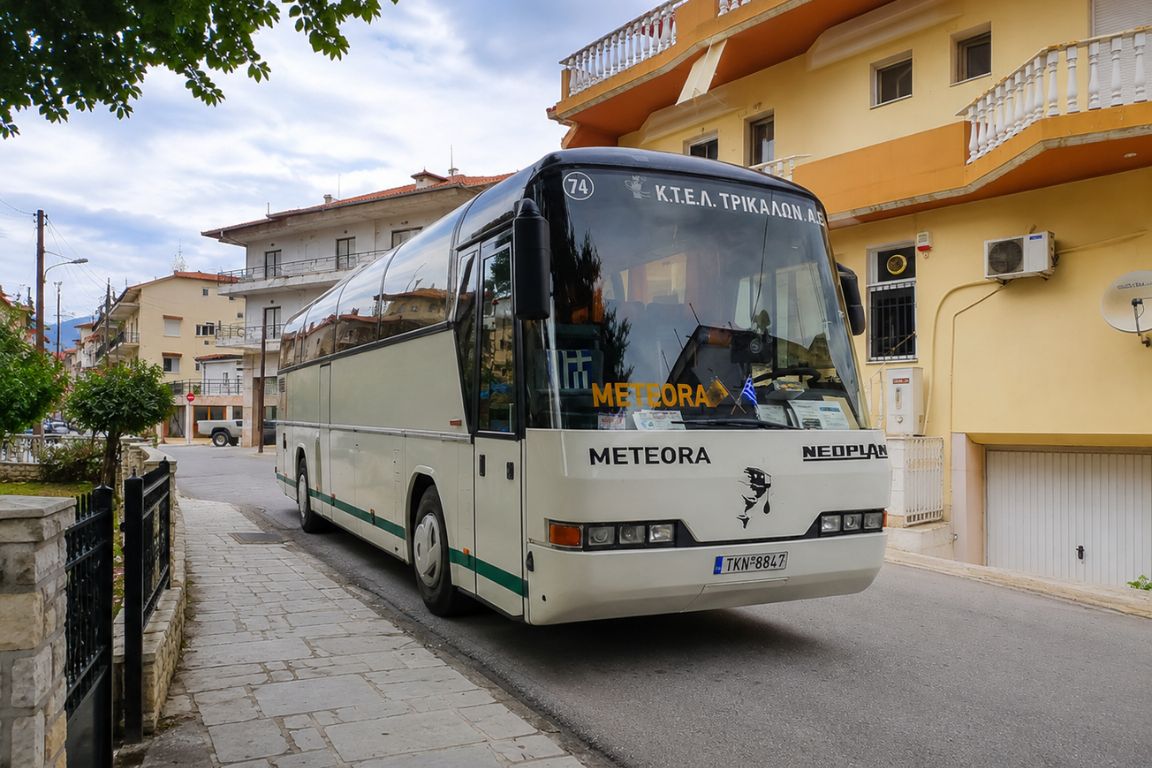 Delphi is cheaper, faster, and easier to reach from Athens. A combined ticket for the archaeological site and museum is €12. A KTEL bus from Athens Liosion terminal reaches Delphi in about 3 hours with no transfers. One full day is enough. Meteora costs more: €5 per monastery up to €30 for all six, and two days are better than one. Getting there by public transport is more complex, requiring a bus to Trikala and a second connection to Kalambaka. A rental car makes both sites significantly more flexible.
Average daily spending at Meteora runs higher than Delphi: the monastery entrance fees alone can reach €30 if you visit all six, and accommodation in Kalambaka and Kastraki is more expensive than the guesthouses in Delphi town. A solo traveler doing two days at Meteora independently should budget roughly €100 to €140 per day including accommodation, food, and entrance fees. Delphi for a day trip from Athens, excluding transport, runs under €40 including the combined ticket and lunch.
Fitting Meteora into a tight Greece itinerary? This guide on the Meteora day trip from Athens is built for travelers who only have one shot at it.
| Distance from Athens | ~350 km, ~4 hrs by car | ~185 km, ~2.5 hrs by car |
| Entry cost | €5 per monastery (up to €30 for all six) | €12 combined site and museum |
| Time needed | 1-2 full days (2 recommended) | 1 long day |
| Public transport | KTEL to Trikala then local bus to Kalambaka; complex | Direct KTEL bus from Athens Liosion, ~3 hrs |
| Type of experience | Visual, active, outdoor, living spirituality | Archaeological, mythological, intellectual |
| Physical demands | Moderate to hard (steep staircases up to 300 steps) | Moderate (uphill walking on uneven paths) |
| Best for | First-timers, photographers, hikers, families with older children | Classical history lovers, day-trippers from Athens, younger children |
| Photography | Exceptional: landscape scale, golden hour, unique compositions | Good: the Tholos is iconic; site overall photogenic in early light |
| UNESCO status | Since 1988 | Since 1987 |
| Overnight needed? | Strongly recommended | Optional but adds depth |
Which One Should You Choose?
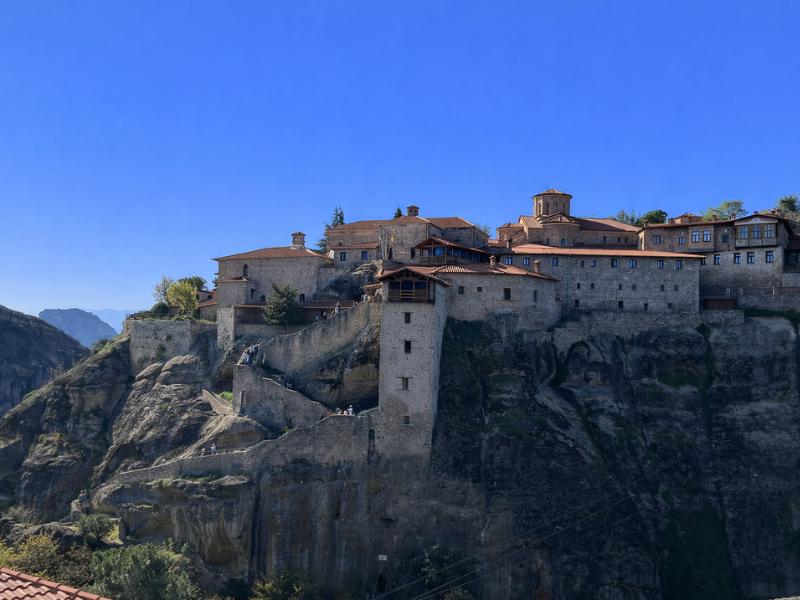
Choose Meteora if you have limited time and want the single most visually overwhelming experience in mainland Greece. Choose Delphi if you are based in Athens, have only a day free, and want a rich historical experience without the logistics of an overnight trip. Choose both if you have a rental car and three or four days to spend on mainland Greece. The two sites together form the strongest combination of ancient and medieval Greek heritage available in one overland circuit.
One thing worth saying clearly: neither site is a consolation prize for missing the other. Delphi is not “the budget Meteora” and Meteora is not “Delphi with better scenery.” They cover different centuries of Greek history and produce different kinds of experiences. The traveler who visits Meteora without Delphi has not seen ancient Greece. The traveler who visits Delphi without Meteora has not seen medieval Byzantine Greece at its most extraordinary. Both belong on any serious mainland Greece itinerary.
| First Greece trip, 1 free day outside Athens | Delphi | Closer, faster, no overnight needed, great by bus |
| First Greece trip, 2-3 free days | Meteora | More time to do it properly; visual impact is stronger |
| 3-4 days mainland Greece, rental car | Both | Natural circuit; different eras, complementary experiences |
| Classical history interest | Delphi | Oracle, Temple of Apollo, Charioteer, Pythian Games |
| Photography focus | Meteora | Golden hour on sandstone pillars is exceptional; the Tholos is photogenic but Meteora is rarer |
| Hiking and outdoor activity | Meteora | Trail network, rock climbing, and the full day outdoors between monasteries |
| Traveling with young children | Delphi | More manageable paths, compact site, no steep staircase climbs |
| Budget travel, no rental car | Delphi | Direct bus from Athens, lower entrance costs, easier logistics |
| Want a living spiritual experience | Meteora | Active monasteries with resident monks and nuns; Delphi is archaeology |
| Return visitor who has already done Meteora | Delphi | A different register entirely; rounds out the mainland Greece picture |
If you are already in Kalambaka, an early-morning small-group tour covers the monasteries without extra planning. From Athens, the two-day Meteora trip with hotel stay matches the overnight circuit outlined above.
Once you choose Delphi, Meteora, or both, compare the available trip formats by departure point, duration, and preferred pace.
What Our Travelers Tell Us About the Meteora-Delphi Decision
| % of Meteora visitors who also visited Delphi on the same trip | ~34% |
| % who said Meteora exceeded expectations vs Delphi | Meteora ~78% vs Delphi ~61% |
| Most common combined circuit starting city | Athens (Delphi first, then Meteora: ~61%) |
| % who wished they had more time at Meteora | ~48% |
| % who would recommend both in the same trip to a friend | ~83% |
Base the decision on your own priorities—archaeology, landscape, travel time, hiking, or an overnight—rather than aggregate traveler responses.
Frequently Asked Questions
Start with the side-by-side comparison, then use the answers below for questions about timing, distance, and travel from Athens.
Which is better: Meteora or Delphi?
They are different rather than comparable. Meteora has greater visual impact and suits first-time visitors, photographers, and hikers. Delphi is richer in classical historical context and suits travelers with an interest in ancient Greek mythology and archaeology. Most travelers who visit both describe them as the strongest two-site combination in mainland Greece.
Choose your priority first, then compare DIY, day-trip, overnight, and combined formats that fit that decision.
Can you visit Meteora and Delphi in one day?
No. They are 230 km apart by road and each requires several hours on site. Attempting both in a single day would mean driving 6 to 7 hours total and spending perhaps two hours at each site, which is not enough for either. A two-to-three day circuit from Athens is the minimum realistic itinerary.
Check the two-day circuit before squeezing the sites into one day. Coach transport and an overnight stay connect Delphi’s archaeological site with Meteora monastery visits.
How far is Delphi from Meteora?
Approximately 230 km by road, connecting via Lamia and the E65 highway. The drive takes 3 to 3.5 hours. There is no direct public transport; a car is the most practical way to travel between them.
For an independent connection, review the route guidance for reaching Meteora from Delphi and other starting points before allocating the travel block.
Is Delphi worth visiting compared to Meteora?
Yes, for different reasons. Delphi is one of the most historically significant sites in the ancient world, where the Oracle of Apollo influenced political decisions across the Mediterranean for nearly a millennium. The museum alone contains some of the finest surviving classical Greek sculpture, including the Charioteer of Delphi. It is a different kind of site from Meteora but not a lesser one.
Review Delphi’s sanctuary, museum, and Tholos highlights to decide whether its archaeological depth matches your interests.
Which is easier to visit from Athens?
Delphi is easier. It is 185 km from Athens versus 350 km for Meteora, and a direct KTEL bus from Liosion terminal makes the journey in about 3 hours with no transfers. Meteora requires either a rental car or a bus connection via Trikala, and strongly benefits from an overnight stay.
Explore a 14-hour return trip with coach travel, local guiding and three monastery visits. It is a concrete way to fit Meteora into an Athens stay.
Written by Michael Angelos
Greek tour guide since 2009 · Founder, Meteora Tours
Michael has guided over 14,400 travelers through the monasteries and rock formations of Meteora since founding the agency.